Why Understanding Peptide Pharmacokinetics Is Critical for Reliable Research Outcomes
Peptides can look deceptively simple on paper: dose, measure, publish. In the lab, they rarely behave that politely. A 2025 study reported that nearly 40% of peptide-based research projects ran into avoidable problems traced back to basic pharmacokinetic blind spots. That number should make anyone budgeting animals, assays, and staff time pause. If you don’t know what the peptide is doing inside the model, your “effect” might be timing noise, a sampling artifact, or plain misinterpretation.
Peptide pharmacokinetics is the unglamorous work of tracking absorption, distribution, metabolism, and excretion (ADME). Those four steps dictate exposure, bioavailability, and target engagement, which is what your signaling readouts actually reflect. A peptide that gets clipped by proteases in minutes may look inactive, even when it’s potent at the receptor in vitro. Big difference.
Data interpretation falls apart fast when PK is treated as an afterthought. Picture a peptide intended to support hypertrophy signaling, but it’s cleared from circulation before your first post-dose sample. You’ll be tempted to call it negative data. It might be, but it might also be a dosing interval problem.
And here’s the part people don’t like hearing: “good peptide” doesn’t rescue a poorly designed PK plan.
Research-grade peptides should be paired with real pharmacokinetic assessment, not vibes. Methods like LC-MS/MS, stability checks, and targeted batch testing can map concentration over time, but only if you’ve defined what “exposure” means for your endpoint. Otherwise you’re flying blind. I’ve seen teams spend weeks optimizing a downstream biomarker, then realize their sampling schedule never captured Cmax or the active window (a painful meeting, every time).
Amino Pharm supplies peptides with clinically tested purity (99%, US made) to reduce variability, but even clean material won’t fix missing PK groundwork. If you’re trying to answer the question behind “how do peptide pharmacokinetics impact research outcomes? a detailed guide,” start here: exposure drives interpretation. Without it, you’re guessing.
Absorption Dynamics of Peptides: Impact on Experimental Design and Data Interpretation
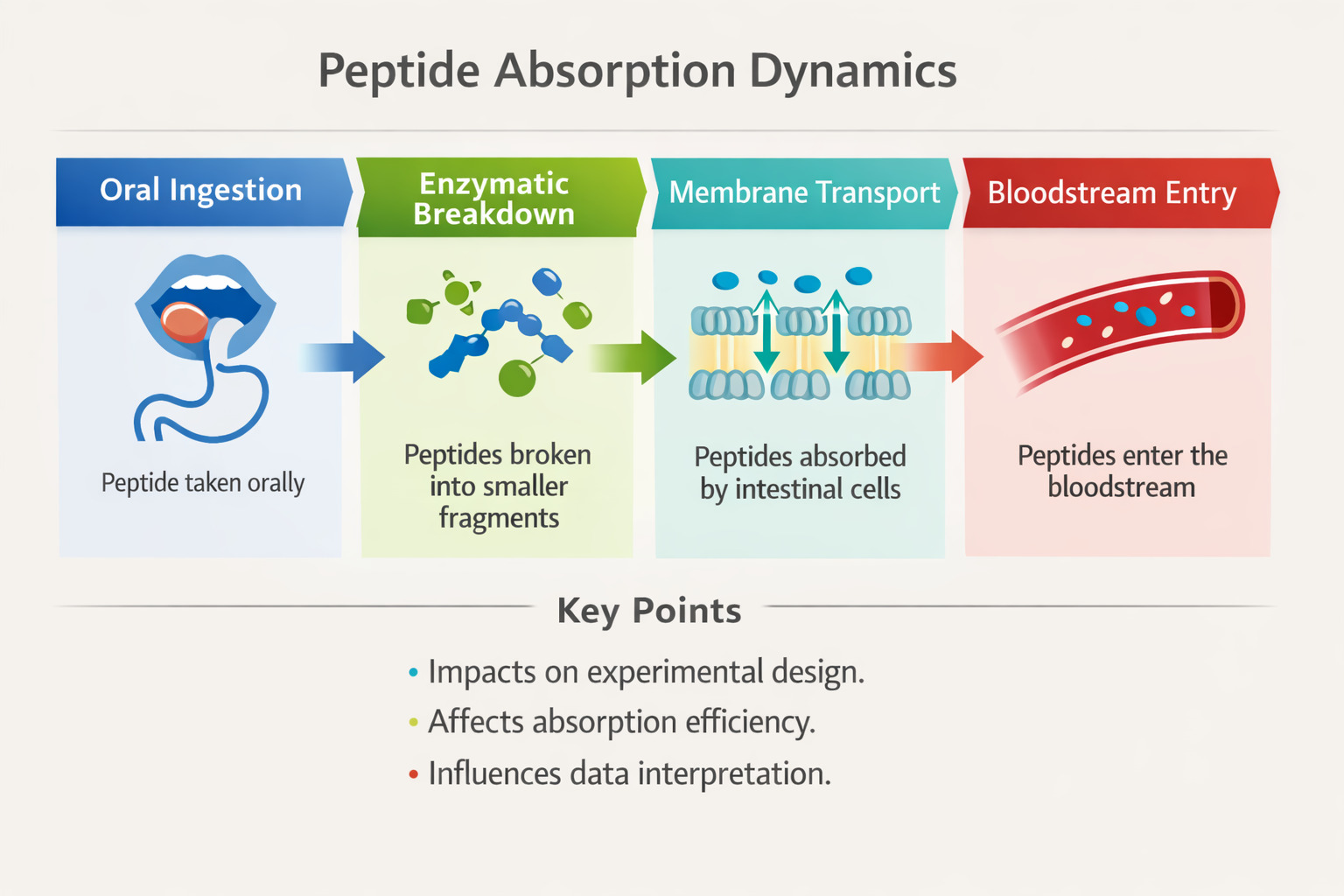
Route of administration changes the entire experiment. Oral, intravenous (IV), subcutaneous, intranasal, they aren’t just different in convenience, they produce different absorption kinetics, different peak concentrations, and different variability. Peptides are fragile molecules. Enzymatic degradation, poor membrane permeability, and formulation details can dominate what you see downstream.
Oral dosing is usually a dead end for most peptides. GI proteases and low permeability mean little intact compound reaches systemic circulation. A few engineered or protected oral formats can work, but they’re exceptions, and they often come with their own confounders (food effects, variable transit time, inconsistent exposure).
IV dosing puts the peptide straight into the bloodstream, so absorption isn’t the limiting step. That’s why IV is the cleanest way to characterize clearance and initial distribution, but it’s not always practical in routine animal work. Subcutaneous injections are common for growth hormone related peptides and recovery oriented compounds because absorption is slower and more sustained. But “subQ” isn’t a single PK profile, local blood flow, tissue proteases, and injection volume can all shift the curve. Intranasal delivery can be fast and sometimes supports CNS exposure, yet it’s notoriously variable between subjects (and yes, technique matters more than people admit).
Design choices hang on these absorption dynamics. Dosing frequency, sampling timepoints, and even what you call “response” depend on when exposure peaks and how long it stays above an effective concentration. A peptide with a 20 minute half-life after subcutaneous dosing may require multiple daily doses to maintain receptor occupancy, while an IV bolus might give you a clean single peak for mechanistic studies. Miss the window and you’ll miss the mechanism.
Formulation can move the needle. Stabilizers, permeation enhancers, depot formulations, or nanoparticle encapsulation may protect against degradation and improve uptake. Research-grade peptides from reliable sources like Amino Pharm often include batch testing data that hints at purity and identity, but stability in your vehicle at your temperature is still your responsibility (annoying, but true).
Here’s a quick comparison:
| Route | Absorption Speed | Bioavailability | Challenges | Typical Use Cases |
|---|---|---|---|---|
| Oral | Slow to negligible | Very low | Enzymatic degradation, poor uptake | Rarely used, special formulations only |
| Intravenous (IV) | Immediate | 100% | Invasive, short half-life | Pharmacokinetic studies, acute dosing |
| Subcutaneous | Moderate | Variable (50-80%) | Local degradation, injection site variability | Growth hormone, muscle recovery peptides |
| Intranasal | Rapid | Moderate | Variable absorption, mucosal irritation | CNS-targeted peptides, some systemic delivery |
Your experimental design has to respect these differences. Timing sample collection to capture Tmax and early exposure can separate a real signal from noise. Batch testing helps with consistency, but if you don’t understand absorption, you’re still half blind.
If you want to get serious about peptide research, don’t skip the basics of absorption and PK. For a solid start, consider reading a peptide certificate of analysis a researchers checklist to understand what your peptide batch tells you about purity and stability. For more on delivery constraints, this study on therapeutic peptides and their delivery (sciencedirect.com) lays out practical barriers and formulation strategies with useful specificity.
Remember, how peptides enter the system can matter as much as what they do once they’re there. Design accordingly.
Distribution Patterns of Peptides: Navigating Tissue Targeting and Off-Target Effects
Distribution isn’t a checkbox, it’s where PK starts to feel like biology. How a peptide moves through compartments shapes efficacy, off-target activity, and whether your animal data has any chance of translating. Worth noting.
Plasma protein binding is one of the first variables to pin down. Once in circulation, many peptides bind proteins like albumin or alpha-1-acid glycoprotein. That binding changes free fraction, which is what typically drives receptor interaction and tissue diffusion. Tight binding can act like a slow-release reservoir, sometimes helpful for sustained exposure, sometimes a problem if you need rapid target engagement. Growth hormone releasing peptides are a good example, shifts in binding can change apparent duration of action and recovery-related readouts. But high binding can also limit tissue penetration, so you may see strong plasma exposure with weak tissue effect.
Then there’s tissue permeability. Peptides are generally hydrophilic and larger than typical small molecules, so membrane crossing is limited and distribution becomes tissue-dependent. Organs with fenestrated endothelia, like liver and kidney, often see higher exposure. Skeletal muscle is a different story, and CNS is its own special headache. Volume of distribution (Vd) helps summarize this: low Vd suggests confinement to plasma and extracellular fluid, higher Vd implies broader tissue distribution. If your peptide doesn’t reach muscle interstitium, its impact on hypertrophy signaling will be modest no matter how impressive the receptor assay looked.
Animal model selection matters here more than people like to admit. Rodents don’t share human plasma protein profiles, vascular permeability, or tissue composition. I’ve watched a peptide show wide tissue distribution in mice, then tighten up dramatically in a larger species, with the same nominal dose and “same” assay. The result looked like a loss of efficacy, but it was really a distribution shift. If you’re aiming for translational relevance, you need to compare distribution drivers, not just endpoints.
The practical takeaway is simple. When working with research-grade peptides from suppliers like Amino Pharm, with clinically tested compounds at 99% purity, factor distribution into your plan early. Batch testing helps control what you start with. Distribution tells you where it actually goes, and where off-target effects might show up. That’s the difference between a blunt instrument and a targeted tool (and I’ll take the targeted tool every time).
Metabolic Pathways of Peptides: Enzymatic Degradation and Stability Challenges
Peptides are fragile in vivo, and metabolism is usually the reason. Enzymatic degradation can turn a promising sequence into inactive fragments long before it reaches the target, which is why metabolism belongs in the same conversation as efficacy.
Proteolysis does most of the damage. Peptidases in plasma, tissues, and especially liver cleave peptide bonds, often in sequence-dependent ways. Aminopeptidases and endopeptidases don’t cut randomly, so residue choice and terminal protection can swing half-life dramatically. As a rule of thumb, certain motifs resist cleavage longer, while other sequences get shredded in minutes. Hepatic metabolism also reduces systemic exposure, and the route of administration changes how much of that you see. IV and subcutaneous dosing can produce different PK profiles partly because first-pass effects differ, or disappear entirely.
Species differences aren’t academic here, they can wreck your conclusions. Enzyme expression and activity vary across models, and the direction of the bias isn’t always obvious. Rats often show higher plasma peptidase activity than humans, which can make a peptide look unstable and force aggressive dosing schedules that wouldn’t be needed clinically. You’ll sometimes see a peptide with a 10 minute half-life in mice and closer to 2 hours in humans. If you don’t account for that, your study can “fail” for reasons that have nothing to do with pharmacology.
To extend stability, researchers use chemical modifications. Cyclization, D-amino acid substitution, and N-methylation can reduce enzymatic recognition or block access to cleavage sites. Lipidation is another common strategy, attaching a fatty acid chain to increase plasma protein binding and slow renal clearance. Delivery systems matter too. Nanoparticle encapsulation or polymer conjugation can shield peptides from enzymes and stretch exposure.
Here’s a quick comparison of typical modifications and their effects on peptide metabolism:
| Modification | Mechanism | Impact on Stability | Common Use Cases |
|---|---|---|---|
| Cyclization | Locks peptide in rigid shape | Increases half-life 2-5x | Growth hormone analogs |
| D-Amino Acid Substitution | Resistant to peptidases | Doubles or triples stability | Muscle recovery peptides |
| N-Methylation | Steric hindrance to enzymes | Moderate improvement | Signaling pathway peptides |
| Lipidation | Enhances plasma protein binding | Extends circulation time | Sustained release formulations |
| Nanoparticle Encapsulation | Physical protection from enzymes | Variable, up to 10x | Targeted delivery systems |
The trade-off is real. Some modifications reduce receptor affinity, alter signaling bias, or change tissue distribution. You’re balancing stability against biological activity, and there isn’t a universal “best” answer. For research-grade peptides, sourcing from suppliers like Amino Pharm, with clinically tested purity and consistency, makes it easier to compare unmodified and modified versions without wondering if impurities are driving the differences.
Batch testing still matters when you run PK. Small shifts in purity, oxidation state, or incomplete modification can change degradation rates enough to move your exposure curve. And remember, these peptides aren’t for human use, only research. But if you want to predict or optimize efficacy, you can’t treat metabolism as optional.
For a detailed look at how peptides handle these metab
olic hurdles, the recent Advance in peptide-based drug development: delivery … (nature.com) paper compiles useful cross-species data on how modifications affect stability and PK. And if you’re tightening supplier controls, understanding the importance of gmp certification is a practical read for reducing avoidable variability in metabolic studies.
Excretion Mechanisms: Clearance Rates and Their Influence on Peptide Research Outcomes
Peptide excretion is usually renal, hepatic, or both. Smaller peptides are often cleared through the kidneys via glomerular filtration. Larger peptides, or those with high plasma protein binding, may avoid rapid renal clearance and shift elimination toward hepatic pathways. Liver clearance can involve proteolysis followed by biliary secretion or further metabolic transformation. Two pathways means two chances for your predictions to be wrong.
Half-life variability is one of the biggest operational headaches in peptide work. Some peptides disappear in minutes, including several growth hormone releasing peptides, while modified analogs can persist for hours. That directly dictates dosing schedules, sampling density, and how you interpret pharmacodynamics. A 10 minute half-life may force frequent dosing or even infusion to maintain effective concentrations. Longer half-life compounds simplify logistics, but they can blur acute pharmacodynamic relationships because exposure doesn’t fall cleanly between timepoints.
Clearance affects more than dosing. It shapes the readouts you rely on. If a peptide clears quickly, you may miss peak pathway activation and underestimate efficacy. If it clears slowly, accumulation can inflate toxicity signals or distort recovery metrics. Reproducibility suffers when batch-to-batch variation changes clearance, especially if purity or microheterogeneity differs. This is why consistent batch testing and using research-grade peptides from trusted suppliers like Amino Pharm, with clinically tested, 99% purity, US-made peptides, matters. Without that control, your PK profile can drift and your entire design starts to wobble.
One example that comes up often: peptides aimed at muscle growth typically depend on sustained signaling over hours to support recovery and hypertrophy. Fast clearance means you’ll need repeated dosing or engineered analogs to see a meaningful effect size. But if clearance is impaired in a disease model, say renal insufficiency, accumulation can exaggerate both efficacy and adverse signals. That’s how “promising” turns into “misleading” in a hurry.
Bottom line: understanding excretion and clearance isn’t optional if you want data that holds up. It’s not just what you dose, it’s what the system does with it afterward.
Analytical Techniques for Peptide Pharmacokinetic Profiling: Ensuring Data Accuracy and Reproducibility
Measuring peptides in biological samples is hard work. You’re trying to quantify low-abundance analytes in a messy matrix of proteins, salts, lipids, and degradation products, often while concentrations change quickly. The workhorse method is liquid chromatography with tandem mass spectrometry (LC-MS/MS). It separates peptides by chemistry, then identifies and quantifies them by mass-to-charge transitions. With a well-validated method, LC-MS/MS can reach picomolar sensitivity, which is exactly what you need when clearance is rapid and the exposure window is narrow.
Immunoassays still matter, especially for higher-throughput screening or labs without mass spec capacity. They rely on antibodies against a sequence or epitope, but cross-reactivity and matrix effects can limit specificity. That’s a real problem when your peptide resembles endogenous fragments or when metabolites share epitopes. Biosensors are getting attention for near real-time monitoring with minimal prep, using aptamers or molecularly imprinted polymers, but most platforms still lack the validation depth you’d want for anything approaching regulatory-grade work.
Validation parameters are where good PK studies separate from shaky ones. Sensitivity determines whether you can quantify late timepoints. Specificity tells you whether you’re measuring the intact peptide or a close cousin. Reproducibility across runs, analysts, and instruments keeps longitudinal studies honest. Without that, you’ll chase phantom signals or miss real shifts in exposure.
Quantifying peptides in plasma or tissue homogenates brings extra traps. Proteases can keep degrading your target after collection unless inhibitors are added immediately and samples are handled cold. Matrix components can suppress ionization in LC-MS/MS, biasing concentrations downward. Sample prep like solid-phase extraction or immunoprecipitation helps clean things up, but every added step is another place variability creeps in (and it will, unless you control it).
Here’s a quick comparison of common analytical methods used in peptide pharmacokinetic profiling:
| Method | Sensitivity | Specificity | Throughput | Challenges |
|---|---|---|---|---|
| LC-MS/MS | Picomolar detection | High (mass-based) | Moderate | Matrix effects, complex prep |
| Immunoassay | Nanomolar detection | Moderate (cross-reactivity) | High | Antibody specificity, interference |
| Biosensors | Variable | High (if well-designed) | Potentially high | Early-stage, validation lacking |
No single technique fits every scenario. Combining LC-MS/MS with immunoassay data can help cross-check results, especially when you’re studying peptides tied to growth hormone release, muscle recovery, or other fast signaling pathways where timing is everything.
Sourcing matters here, too. Your analytical standards should match what you dose. Amino Pharm’s peptides come with batch testing data confirming purity and identity, which helps reduce the chance that your “PK problem” is actually a material mismatch.
If you want more context on peptide mechanisms beyond clearance and detection, the discussion in semaglutide peptides understanding mechanism of semaglutide research peptide is a useful companion to routine PK planning.
The challenge isn’t just measuring peptides. It’s measuring them precisely, reproducibly, and in a way that supports pharmacokinetic modeling you can defend.
Batch Variability and Peptide Purity: Hidden Variables Affecting Pharmacodynamics and Experimental Outcomes
Batch-to-batch variability in peptide synthesis isn’t a minor annoyance, it can warp your pharmacokinetic readouts and contaminate your conclusions. Every time you order a research-grade peptide, small shifts in synthesis conditions, purification, or storage can nudge purity up or down. A 1 to 2% purity difference sounds harmless on paper. In practice, it can move the needle on exposure, apparent potency, and even the shape of your dose response curve.
Impurities and degradation products are the quiet troublemakers. By-products that slip in during synthesis, truncated sequences, oxidized variants (hello, methionine sulfoxide), residual solvents, don’t just “dilute” the active. They may bind differently, trigger off-target signaling, or change how quickly proteases chew through the parent compound. That’s pharmacodynamics in the real world: the same nominal dose can look weaker, stronger, or simply different than what your mechanism suggests.
Picture a growth hormone releasing peptide study aimed at muscle recovery. One batch gives a clean signal, another batch gives scatter, and suddenly you’re questioning your assay, your animals, your hands. We’ve seen this exact pattern in labs where the only thing that changed was the vial. The culprit is often boring, purity drift and a couple of unreported related substances that alter receptor interaction or in vivo half-life.
Pharmacokinetics, absorption, distribution, metabolism, excretion, tracks purity more closely than many teams expect. Impurities can shift apparent clearance by changing enzymatic degradation rates or by competing for binding and transport. Small batch differences can make a peptide clear faster or hang around longer, which wrecks reproducibility and makes ED50 estimates look “unstable.” Big difference.
That’s why batch testing with validated analytical methods belongs upstream of any animal work. HPLC is a baseline check, LC-MS (or LC-MS/MS if you’re quantifying in matrix) tells you what’s actually in the vial, and sequence confirmation helps catch truncations that HPLC can miss. If you’ve ever had a perfect in vitro curve and a flat in vivo response, this is one of the first places I’d look (and yes, it’s an annoying answer).
Documentation is your best defense. Track batch numbers, certificates of analysis, chromatograms when you can get them, storage conditions, reconstitution solvent, freeze-thaw count, and any stability notes. Labs that skip this tend to spend weeks chasing “biology” that’s really a supply chain problem. When you order from suppliers like Amino Pharm, which provides clinically tested, 99% pure, US-made peptides, you lower the odds of nasty surprises. Still, verify each batch before it touches a study.
Ignore batch variability and purity at your peril. They shape pharmacodynamics and pharmacokinetics enough that an entire project can drift off course without anyone realizing why. Tight QC, consistent documentation, and routine batch qualification aren’t paperwork. They’re the price of reproducible science.
Case Studies: How Pharmacokinetic Variability Altered Key Peptide Research Findings
Pharmacokinetic variability isn’t theoretical, it’s derailed plenty of competent teams. A 2023 project on a growth hormone releasing peptide (GHRP) intended to speed muscle recovery is a good example. Early work from one batch showed a convincing rise in muscle protein synthesis markers. The repeat study, same protocol, different batch, produced weaker effects and a faster apparent clearance. The post-mortem pointed to subtle half-life differences tied to purity and degradants that accelerated enzymatic breakdown, which forced a dosing redesign and stricter batch qualification. Once the team tightened incoming QC, the effect became measurable again. That’s what “how do peptide pharmacokinetics impact research outcomes? a detailed guide” looks like in the lab, not in a slide deck.
A second case involved a signaling peptide aimed at inflammatory pathway modulation. In vitro pharmacodynamics looked right, receptor activation was where it should be, but the in vivo effect collapsed. The issue wasn’t the target. It was plasma stability. One batch showed much poorer bioavailability because it carried a higher fraction of oxidized peptide that bound the receptor weakly and disappeared faster in circulation. Fixes were unglamorous but effective: improved storage conditions, tighter oxygen control during handling, and antioxidant stabilization during synthesis. Worth noting.
TB500 research has had its own PK headaches. Multiple groups reported inconsistent half-lives and variable tissue repair readouts, and the debate often sounded like “does it work or not?” But formulation and delivery were doing a lot of the damage. Solubility differences, adsorption to plastics, and inconsistent absorption after administration can change systemic exposure enough to blur pathway interpretation. Later work that standardized sourcing and dosing, and that took time to understand the tb500 peptide mechanism and applications explained, produced cleaner, more comparable data across sites.
So what do these examples actually teach? Pharmacokinetics isn’t background noise. It’s a first-order driver of what you think the biology is doing. If you don’t account for stability, purity, and metabolic fate, you’ll end up chasing artifacts or missing a real effect because exposure never reached a meaningful level.
And here’s the mildly opinionated part: too many peptide papers still treat PK as optional “supporting information.” That’s backwards. Build PK profiling into the early experimental design, document every batch detail, and treat bioanalytical validation like it matters, because it does.
For regulatory context, the FDA’s Clinical Pharmacology Considerations for Peptide Drug … (federalregister.gov) lays out why exposure, bioanalytical rigor, and stability belong in the core package. Those expectations were written for drug development, but the logic applies just as well to research peptides.
Integrating Pharmacokinetic Insights Into Peptide Research: Best Practices for Experimental Design and Reporting
Peptide PK can be slippery if you wait until the back half of a project to measure it. Absorption, distribution, metabolism, and excretion (ADME) should shape the study from day one, because they dictate dosing frequency, sampling windows, and how you interpret a “negative” result.
Start by baking ADME profiling into the initial framework. Most peptides face rapid proteolysis, poor oral bioavailability, and meaningful renal clearance. If you don’t quantify those constraints, your signaling data can look convincing while telling the wrong story. A peptide that degrades in minutes can still produce a transient biomarker blip, but that doesn’t mean you achieved sustained target engagement. But it sure looks like it in a single time-point design.
Plan sampling like you mean it. For short half-life peptides, a sparse schedule (say, 0, 1, 4, 24 hours) is basically a guarantee you’ll miss Cmax and mis-estimate AUC. Teams often discover this the hard way when the first PK run shows the compound is gone before the second bleed. Fixing it usually means tighter early time points and better stabilization during collection (protease inhibitors, cold chain, fast processing), plus a sanity check on adsorption to tubes (low-bind plastics help, and yes, it matters).
Reporting standards matter as much as the experiments. Regulators push for disclosure of dose, route, formulation, bioanalytical method, calibration range, matrix effects, and modeling approach for a reason. Your peers can’t reproduce what you didn’t describe. Clear reporting also exposes batch-driven inconsistencies, which are common in peptides with narrow effective exposure ranges.
Modeling belongs in the workflow too. Compartmental analysis is often enough for early work, while PBPK can help when you’re comparing species, routes, or formulations. Used properly, modeling can flag nonlinear kinetics, saturable clearance, or distribution limits before you burn a month of animal work. We’ve watched PBPK simulations correctly predict that a secretagogue’s apparent “loss of efficacy” at higher doses was really exposure flattening due to saturable processes, not receptor desensitization. That kind of insight changes what you test next.
Sourcing also matters, even if it’s not the fun part. Consistent purity and stability from a supplier like Amino Pharm reduces avoidable variability, which keeps your ADME data interpretable. Still, run your own incoming checks. Vendor COAs are helpful, but they’re not a substitute for verifying what’s in your hands (especially after shipping and storage). And yes, these materials are for research use only, not human administration.
Frequently Asked Questions About Peptide Pharmacokinetics in Research
What makes peptides tricky compared to small molecule drugs? They’re often cleared fast because proteases break them down and kidneys remove them efficiently. That short half-life changes everything: dosing interval, sampling design, and how long you can reasonably expect target engagement. Many peptides also can’t survive the GI tract, so oral dosing usually fails unless you’re using specialized delivery strategies.
Purity plays a bigger role in PK measurement than most people expect. Impurities, incomplete sequences, and oxidized variants can change binding affinity and metabolic stability, which distorts half-life and clearance estimates. They can also interfere with LC-MS/MS quantitation by complicating peak assignment or increasing background noise. That’s why batch qualification and reputable sourcing matter. If you’re asking “how do peptide pharmacokinetics impact research outcomes? a detailed guide,” start with what’s in the vial.
Speaking of analytical methods, which ones are best for peptide PK studies? LC-MS/MS is usually the workhorse because it can distinguish parent peptide from close fragments and quantify low concentrations in plasma or tissues. Immunoassays can be useful for throughput, but they often struggle with specificity, especially when metabolites share epitopes. If you’re using immunoassays, cross-reactivity testing isn’t optional.
Batch variability is a silent killer in peptide research. Differences in synthesis, purification, lyophilization, shipping temperature excursions, or storage humidity can change stability and activity. Minimizing it starts with consistent supply and incoming QC. If you detect variability mid-study, statistical normalization can reduce noise, but it won’t rescue a fundamentally different material. Band-aid, not a fix.
Species selection gets overlooked, and it shouldn’t. Protease profiles, receptor affinity, and immune recognition vary widely across species, so a peptide that looks stable in rodents may clear too fast in primates, or vice versa. That mismatch affects translational relevance and can make pharmacodynamics look “inconsistent” when the real issue is exposure. Pair in vivo work with in vitro human matrices when you can, plasma stability assays and protein binding studies are quick wins.
For those comparing peptide types, details like ipamorelin vs sermorelin help explain why two compounds in the same category can behave differently in vivo. Handle peptides carefully, validate your assays, and keep your chain of custody tight (boring, but effective).
Frequently Asked Questions
How do peptide pharmacokinetics differ from small molecule drugs in research?
Peptide pharmacokinetics differ from small molecule drugs because peptides are larger, more susceptible to enzymatic degradation, and typically have poor oral bioavailability. Proteases can shorten half-life dramatically, and distribution is often more limited by permeability and rapid clearance. These traits force different study designs, different sampling schedules, and more stringent bioanalytical methods to accurately characterize exposure and interpret pharmacodynamic effects.
Why is peptide batch purity crucial for pharmacokinetic studies?
Batch purity matters because impurities can change absorption behavior, metabolic stability, and receptor binding, which shifts apparent clearance and half-life. Contaminants can also complicate quantitation, especially in LC-MS/MS workflows where co-eluting species muddy integration and identification. High purity doesn’t guarantee perfect PK, but low or inconsistent purity almost guarantees confusing data.
What are the most reliable analytical methods for profiling peptide pharmacokinetics?
Liquid chromatography-tandem mass spectrometry (LC-MS/MS) is the most reliable option for most peptide PK studies because it offers sensitivity and specificity in complex biological matrices and can separate parent peptide from metabolites. Immunoassays can complement LC-MS/MS for higher throughput, but they may miss closely related variants or fragments unless carefully validated for cross-reactivity and matrix effects.
How can researchers minimize batch variability effects in peptide studies?
Minimize batch variability by locking down suppliers early, qualifying each incoming batch with purity and identity checks, and controlling storage and handling (temperature, light exposure, freeze-thaw cycles, container type). Document batch numbers and QC results in lab records and publications so others can interpret and reproduce your work. If variability appears, investigate root causes first rather than “correcting” it statistically.
What factors should be considered when selecting animal models for peptide pharmacokinetic studies?
Consider species-specific protease activity, renal clearance differences, receptor affinity, immune responses, and plasma protein binding. These factors can change peptide stability, distribution, and exposure, which directly affects pharmacodynamics and translational relevance. When possible, supplement animal PK with in vitro studies in human plasma or tissue systems to sanity-check stability and binding before making big claims.
References
- "Focus on therapeutic peptides and their delivery" — sciencedirect.com — https://www.sciencedirect.com/science/article/pii/S0378517325003928
- "Advance in peptide-based drug development: delivery …" — nature.com — https://www.nature.com/articles/s41392-024-02107-5
- "Pharmacokinetic Analysis of Peptide-Modified Nanoparticles …" — link.springer.com — https://link.springer.com/article/10.1208/s12248-021-00626-5
- "Clinical Pharmacology Considerations for Peptide Drug …" — federalregister.gov — https://www.federalregister.gov/documents/2023/09/11/2023-19456/clinical-pharmacology-considerations-for-peptide-drug-products-draft-guidance-for-industry
- "Bioequivalence Studies With Pharmacokinetic Endpoints …" — fda.gov — https://www.fda.gov/media/87219/download
- "Preclinical Research in Drug Development" — biotech-spain.com — https://biotech-spain.com/en/articles/preclinical-research-in-drug-development-from-toxicology-to-translational-insights/
- "Clinical Pharmacokinetic Studies of Pharmaceuticals" — nihs.go.jp — http://www.nihs.go.jp/phar/pdf/ClPkEng011122.pdf
- "Study of pharmacokinetic of new peptide drug 1-deamino- …" — rrpharmacology.ru — https://rrpharmacology.ru/index.php/journal/article/view/22
- "Clinical pharmacology and pharmacokinetics – EMA" — ema.europa.eu — https://www.ema.europa.eu/en/human-regulatory-overview/research-development/scientific-guidelines/clinical-pharmacology-pharmacokinetics
- "Comprehensive Guide to Research Peptides | PDF" — scribd.com — https://www.scribd.com/document/819427577/Research-Peptides-the-Ultimate-Guide-Final