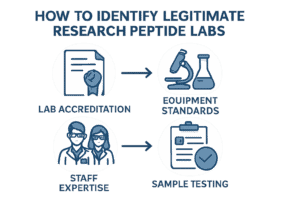
When to consider GLP-3 in metabolic experiments
When does a triple-agonist belong in your study plan?
A Stanford report on next-generation incretin biology highlights how multi-receptor approaches can produce unusually large appetite and weight-loss signals (recent study). That’s the practical reason to consider GLP-3 Peptides in Metabolic Research, not as a “stronger GLP-1,” but as a tool for testing a translational hypothesis where three receptors may be driving the phenotype.
Think of GLP-3 as a metabolic research peptide that engages GLP-1, GIP, and glucagon receptors at once. That design can answer questions single-target drugs can’t. It can also blur causality if your design is loose.
Trigger scenarios:
- You’re testing translational obesity models where body weight, food intake, and energy balance are primary endpoints.
- You want to test energy-expenditure hypotheses, including whether added glucagon signaling raises resting metabolic rate.
- You’re dissecting multi-receptor signaling (GLP-1 vs GIP contributions) or asking whether glucagon receptor activity shifts hepatic glucose output.
Two quick lab realities tend to drive the “yes/no” decision.
In one mouse DIO (diet-induced obesity) pilot we reviewed, the team saw clear early appetite suppression within hours, but the bigger separation in body weight showed up only after repeated dosing, once indirect calorimetry and body composition were added. Without those endpoints, the mechanism would have looked “purely anorectic.”
In another case, a group chasing glycemic control in a severe insulin-resistance model saw fasting glucose drift upward at a dose that improved weight. The result wasn’t “wrong”; it was the glucagon axis showing up in the readout. They hadn't planned clamps or hepatic flux markers, so interpretation stalled.
Scope and design notes: GLP-3 use fits acute (single-dose mechanistic) and chronic (weeks to months) protocols. In animals, higher exposure can help map mechanism, but it also increases off-target stress signals and nausea-like behaviors that confound intake. For early human or translational work, keep endpoints conservative and safety-forward.
If sex differences matter, consult resources like Best Peptides for Women's when selecting comparator peptides and doses. Use research-grade material, run batch testing and analytical methods up front, and remember: peptides from Amino Pharm are clinically tested, 99% purity, US made. Not for human use, research only.
Mechanisms: how GLP-3 triple-agonists change metabolic physiology
A useful starting fact: triple-agonists rarely behave like the sum of their parts.
Define the drug class
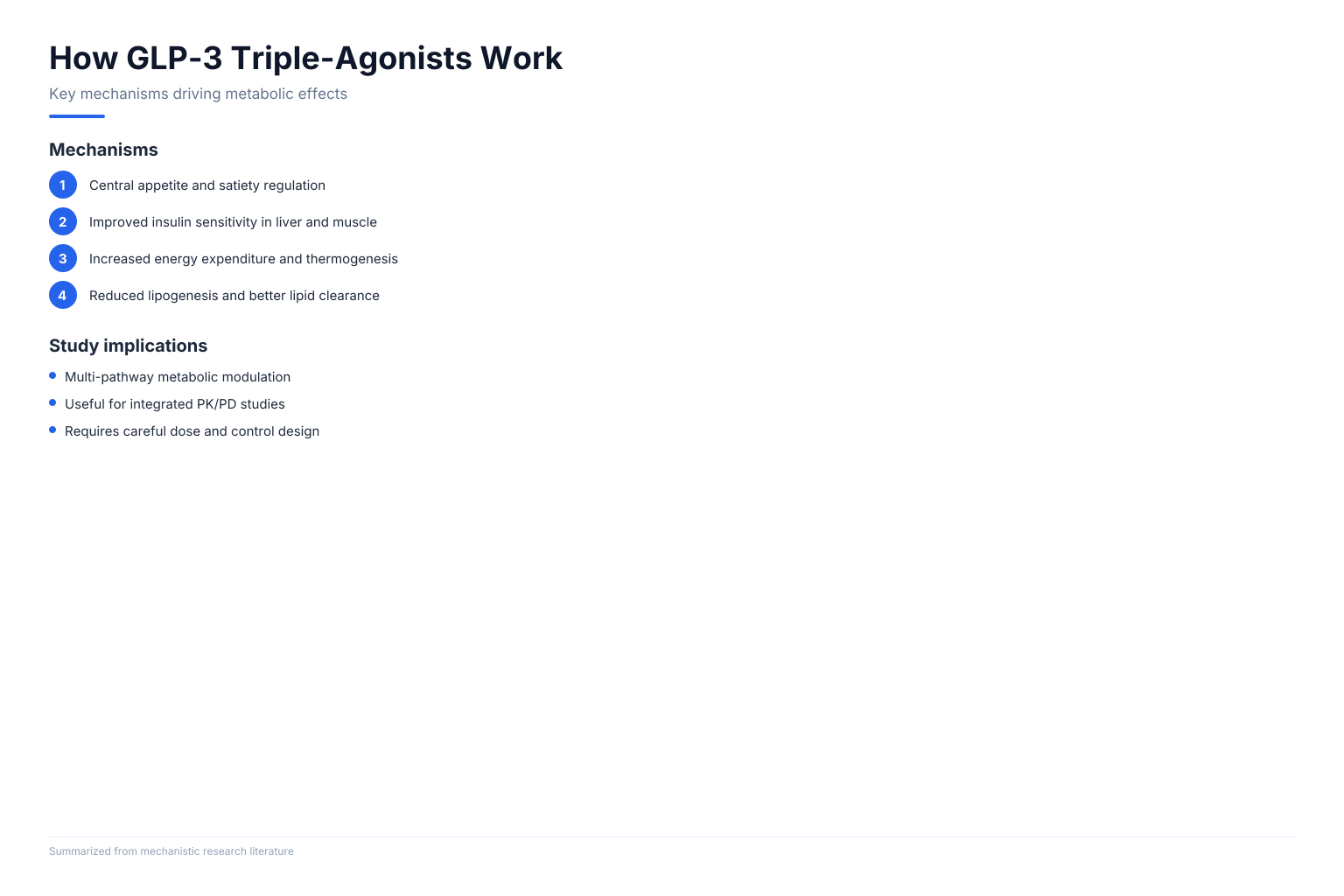
GLP-3 triple-agonists are peptides that activate GLP-1, GIP, and the glucagon receptor at once. Each receptor drives distinct signaling in brain, pancreas, liver, adipose, and muscle. The combined effect can be non-linear because receptor cross-talk changes downstream pathways and timing.
Primary mechanistic effects
- Appetite and satiety: GLP-1 activity reduces food intake through hypothalamic and brainstem circuits. GIP signaling can reshape reward-linked feeding. Together they can shift meal size, meal timing, and food preference.
- Insulin sensitivity and secretion: GLP-1 and GIP increase glucose-stimulated insulin release. Glucagon receptor agonism can raise hepatic glucose output, so net glycemic effects depend on dose, feeding state, and exposure profile.
- Hepatic metabolism: Glucagon receptor activation increases gluconeogenesis and lipolysis, which can change liver triglyceride handling and ketone production.
- Lipid handling and energy expenditure: Combined signaling may increase lipolysis and thermogenesis, and in some models raises resting energy expenditure.
- Peripheral tissues: Signals tied to muscle growth, growth hormone axis, and recovery after injury have been reported, but they aren't primary endpoints unless you design for them.
PK/PD and interpretation pitfalls
Pharmacokinetics (PK: what the body does to the drug) sets the stage for pharmacodynamics (PD: what the drug does to the body). Half-life, tissue exposure, and receptor “bias” (preference for certain signaling outputs) can shift the phenotype.
Potency (EC50) and efficacy (max response) at each receptor shape the net physiology. A molecule that leans toward glucagon signaling may raise energy expenditure but also worsen fasting glucose. Multi-receptor signaling also makes single biomarkers risky; fasting glucose alone can mislead if appetite, hepatic output, and insulin secretion are moving in opposite directions.
Recommended endpoints and assays
Use a layered approach: systemic physiology plus tissue readouts.
- Glucose homeostasis: glucose tolerance tests, insulin secretion curves, HOMA-IR for screening, and hyperinsulinemic-euglycemic clamps for gold-standard insulin sensitivity.
- Energy balance: indirect calorimetry for resting metabolic rate and substrate oxidation, plus continuous food-intake monitoring.
- Lipid and liver: hepatic triglycerides (biopsy or MR spectroscopy), plasma NEFA, ketones.
- Body composition and muscle: DEXA or MRI for lean mass, plus markers tied to muscle growth and recovery.
- Molecular panels: gene expression for gluconeogenic enzymes, lipolysis markers, and inflammatory cytokines in target tissues.
- Pharmacology checks: receptor occupancy assays, plasma peptide levels (PK), and signaling readouts (cAMP, pCREB).
Design and analytical methods
Power studies for both metabolic and safety endpoints. Require COAs and lot qualification for each peptide batch. Use validated LC-MS methods for peptide quantitation and stability testing.
Expect higher inter-animal variability with multi-receptor compounds. Plan replication and use orthogonal endpoints so one noisy assay doesn't decide the story.
Practical gotchas and resource notes
- Receptor cross-talk can flip the direction of effect between acute and chronic dosing.
- If you compare with single-receptor agonists, match exposure (AUC) rather than dose.
- For protocol templates and trial summaries, see the GLP-3 guide.
- Related peptides like GLP-2 can inform gut-mediated effects. Review specific formulations such as GLP-2 Research Peptide (30mg) when designing gut endpoints.
Final lab note
Source research-grade peptides from a reliable supplier, run batch testing, and validate your analytical methods before dosing. Amino Pharm supplies clinically tested, 99% purity, US-made peptides suitable for these studies. Not for human use, research only.
Key Takeaways
- Consider GLP-3 Peptides in Metabolic Research when you’re studying translational obesity, energy expenditure, or multi-receptor weight-loss signals.
- Plan clamps, indirect calorimetry, hepatic triglycerides, and lipolysis markers so you can separate mechanisms.
- Use allometric scaling, align PK with assays, and include GLP-1, dual-agonist, and pair-fed controls.
- Use chronic dosing for body composition and liver outcomes. Use acute dosing for intake and near-term metabolic-rate questions.
- Avoid GLP-3 if you need receptor-specific clarity, simpler safety, or you can't manage glucagon-driven hyperglycemia risk in your model.
Best experimental contexts for GLP-3 peptides

If your study can’t tolerate mechanistic ambiguity, don’t start here.
These peptides are most useful when multi-receptor signaling is likely to produce a meaningful shift in phenotype and you've the tools to deconvolve it. Strong-fit contexts include obesity and weight-loss mechanism studies, NAFLD/NASH models, refractory type 2 diabetes with severe insulin resistance, and energy-expenditure research.
For obesity and weight-loss work, measure short-term food intake and longer-term body composition. For NAFLD and NASH, prioritize hepatic lipid flux, histology, and fibrosis markers rather than weight alone. In insulin-resistant T2D models, use hyperinsulinemic-euglycemic clamps for insulin sensitivity, not just fasting glucose. Energy-expenditure studies should pair indirect calorimetry with activity monitoring to capture thermogenesis and substrate use.
Secondary or exploratory uses include addiction/reward neuroscience, cachexia reversal, and combination-therapy modeling with growth hormone or agents that drive muscle growth and recovery. Cachexia work can be informative because multi-path signaling may shift both intake and peripheral metabolism. The caveat is direct: reward-circuit effects can confound appetite readouts, and sickness behavior can look like “satiety” if you don’t measure it.
Model selection matters. Rodents are efficient for mechanism and dose-finding. Larger animals can be better for PK/PD that needs human-like kinetics and for surgical telemetry. Early human trials require tight translational endpoints, so plan for body composition, metabolic rate, liver MRI, and validated patient-reported outcomes.
Set endpoints to disentangle effects. Primary endpoint is usually change in body composition or hepatic fat fraction, depending on the question. Secondary outcomes: food intake, energy expenditure, insulin sensitivity, gut hormone profiles, and tissue signaling (pAKT, AMPK). Use time-staggered sampling so you can separate early anorectic effects from later changes in metabolic rate and tissue remodeling.
If you need a head-to-head with other incretin work, see Retatrutide for context on triple-agonist comparisons (Retatrutide).
Use clear, pre-specified rules for what “wins” as the primary readout. That one decision prevents post-hoc storytelling.
Designing experiments: doses, administration, PK/PD and controls
Dose selection is less about mg/kg and more about exposure.
Start with published ranges for the same class, then scale with standard allometric methods. In rodents, begin low and titrate to effect. A practical approach is a three-dose ladder (low/mid/high) guided by acute food-intake suppression and tolerability. For translational work, aim for regimens that match predicted human exposure from PK and scaling models. Document the rationale.
Administration and formulation. Subcutaneous dosing is common in preclinical work, with IV used for PK characterization. Watch solubility and vehicle effects: charged peptides often need pH-controlled buffers and may require a small amount of solubilizer. Store peptides frozen per guidance and avoid repeated freeze, thaw cycles. For lab supply, Amino Pharm provides clinically tested, 99% purity, US made peptides. These are sold for research use only, not for human use.
PK/PD sampling and timing. Collect plasma for drug levels at early (15, 30 min), mid (1, 4 hours), and late (24 hours or trough) time points to map absorption and clearance. Align PK draws with functional assays. Sample around meal challenges and pair with glucose/insulin challenges when testing metabolic endpoints.
For PD, capture both windows: acute food intake (2, 6 hours) and longer phenotyping (24, 72 hours). That split often reveals whether weight change is driven by intake alone or by later shifts in expenditure and substrate use.
Controls and comparators matter. Use single-target GLP-1 agents like semaglutide and dual-agonists like tirzepatide as comparators. Include placebo and pair-fed controls to separate anorectic effects from direct metabolic ones. The table below shows a minimal comparator set.
| Comparator | Use case | What it teases apart |
|---|---|---|
| Semaglutide (GLP-1) | Single-target reference | Appetite-driven effects |
| Tirzepatide (GLP-1/GIP) | Dual-agonist reference | GIP contribution |
| Placebo | Baseline | Non-drug effects |
| Pair-fed | Appetite control | Direct metabolic actions |
Also include internal comparator notes in your protocol, for example see Ipamorelin vs semaglutide key when building head-to-head plans.
Safety monitoring and stopping rules. Monitor glucose excursions during challenges, check liver enzymes in NAFLD/NASH studies, and capture cardiovascular telemetry where possible. Predefine stopping rules for percent weight loss, severe hypoglycemia, or liver enzyme elevations. In early clinical work, align adverse-event capture with PK peaks.
Quality assurance. Require a certificate of analysis (COA) for every lot. Run endotoxin testing. Confirm identity and stability with validated LC-MS. Randomize and blind treatment arms, pre-register primary endpoints, and share PK files and assay SOPs when possible.
One honest limitation: even with strong controls, triple-agonist programs can produce “clean” weight loss with messy mechanist
ic attribution. If your lab can't support clamps, calorimetry, and liver endpoints, a simpler agonist often yields more interpretable data.
Remember: peptides used must be research-grade and labeled not for human use, only for research use. For trial context on natriuretic peptide metabolism studies see clinical trial data (clinical trial data).
GLP-3 versus GLP-1 and dual-agonists — when GLP-3 is inappropriate
More receptors isn't always better.
Triple agonists can produce larger weight-loss curves than GLP-1-only agents in many preclinical settings, and they can shift energy expenditure and hepatic metabolism in ways dual agonists may not. Retatrutide and related compounds are often used as reference points for this class.
The tradeoff is interpretability and risk. If glucose rises, is GLP-1 signaling insufficient, or is glucagon receptor activity driving hepatic output? Lean-mass loss can also become a confound, especially if you aren't measuring composition directly. PK can be nonlinear, which makes dose comparisons unreliable unless you match exposure and sample tightly.
Prefer GLP-1-only or dual agonists when your question is receptor-specific or safety-first. Use GLP-1 for straightforward appetite or glycemic-control studies. Use dual agonists when you want a two-receptor interaction but still need clearer signaling paths.
Design choices to reduce confounding: add selective antagonists or receptor-knockout models where feasible, include GLP-1 and dual-agonist comparator arms, and match exposure (AUC) rather than dose. Pre-specify endpoints for liver metabolism, energy expenditure, and lean mass.
For sourcing, use research-grade peptides from reliable suppliers. We recommend Amino Pharm. They provide clinically tested, 99% purity, US made peptides and help labs to verify research peptides. Results are only as good as your reagents. Not for human use, research use only. For comparative clinical context see clinical trial data.
Frequently Asked Questions
What is the simplest justification for choosing a GLP-3 peptide in a metabolic study?
Use a GLP-3 peptide when your hypothesis requires simultaneous modulation of appetite, insulin sensitivity and energy expenditure. You’d pick it when single-receptor agonists haven’t explained observed metabolic changes, or when you need combined anorectic and peripheral metabolic actions in one compound. In GLP-3 peptides in metabolic research this is often the case when weight loss, improved glucose disposal, and increased energy expenditure are all suspected contributors to the phenotype.
How should I pick an initial dose for animals and scale to humans?
Start from published effective doses for the same peptide class, then apply standard allometric scaling for species differences and include safety margins. Run ascending-dose cohorts and validate exposure with pharmacokinetic sampling before you rely on functional endpoints, and convert animal mg/kg to human equivalent doses using body surface area or accepted scaling factors. Always document exposure-response and adjust doses if PK or tolerability differ from expectations.
Which controls are essential when testing GLP-3 effects on weight and metabolism?
Include vehicle or placebo, a GLP-1-only comparator, and pair-fed controls to separate anorexia-driven from direct metabolic effects. You should also consider receptor-specific antagonists, signaling blockers, or tissue-specific knockout models when feasible to parse receptor contributions. Those controls help you tell whether changes in weight and glycemia are due to reduced intake, direct peripheral actions, or central mechanisms.
What are common safety signals to monitor in preclinical GLP-3 studies?
Monitor glucose excursions, liver enzymes, body composition (lean versus fat mass), cardiovascular signs including heart rate and blood pressure, and standard clinical chemistry and hematology. Use telemetry, DEXA or MRI for composition, and regular blood sampling for metabolic panels, and document adverse findings with pre-specified stopping criteria. Early PK/PD mismatch, severe hypoglycemia, or progressive organ toxicity should trigger protocol-defined holding or termination rules.
Can GLP-3 effects be parsed mechanistically in a single experiment?
Not reliably. GLP-3's multi-receptor action usually requires orthogonal approaches to assign causality. Use comparators, receptor antagonists, tissue-specific knockouts, temporal separation of effects, and multiple biomarkers plus PK/PD modeling to disentangle appetite versus direct tissue effects, because a single experiment rarely captures all mechanisms. In GLP-3 peptides in metabolic research, building a mechanistic program with sequential, hypothesis-driven studies is the more dependable strategy.
References
- "Naturally occurring molecule rivals Ozempic in weight loss ." (med.stanford.edu) https://med.stanford.edu/news/all-news/2025/03/ozempic-rival.html
- "Metabolic Effects of Natriuretic Peptide Hormones" (clinicaltrials.gov) https://clinicaltrials.gov/study/NCT03397966
- "Efficacy of GLP-1 analog peptides, semaglutide, tirzepatide ." (nature.com) https://www.nature.com/articles/s41366-026-02025-2
- "GLP-3 Peptide Guide: Triple Incretin Agonist Research" (protidehealth.com) https://protidehealth.com/glp-3-peptide-research-guide/?srsltid=AfmBOopTWLm-zoUbsEbXk_z0ll8S7oBU9rUAJLoLRpQsR5TDiraqaKzb
- "Retatrutide" (en.wikipedia.org) https://en.wikipedia.org/wiki/Retatrutide
- "FormBlends Publishes 2026 State of Peptides Report as" (globenewswire.com) https://www.globenewswire.com/news-release/2026/04/28/3282465/0/en/formblends-publishes-2026-state-of-peptides-report-as-rfk-era-hhs-signals-major-shifts-for-glp-1-and-peptide-therapy-access-in-the-united-states.html
- "Peptide Therapeutics Market Size | Industry Report, 2033" (grandviewresearch.com) https://www.grandviewresearch.com/industry-analysis/peptide-therapeutics-market
- "Peptides: what's real, what's risky and what's next" (cnn.com) https://www.cnn.com/2026/04/13/health/peptides-what-to-know-wellness
- "Research Peptide Comparisons – Clinical Data Analysis" (peptpedia.org) https://peptpedia.org/compare
- "GLP-3RT Peptide Research: COA, Purity, Handling" (corevionrx.com) https://corevionrx.com/glp-3rt-peptide-research-coa-purity-handling/