Among the peptides studied in relation to the growth hormone axis, CJC-1295 and Ipamorelin are two of the most frequently referenced, and they are very often studied together. For researchers exploring growth hormone secretagogue pathways, understanding what these two peptides are, how they differ, and why they are commonly paired in experimental work is a useful foundation. This overview examines both compounds strictly from a research perspective.
As always, an important note first: this article is educational and intended for those handling compounds in controlled laboratory settings. CJC-1295 and Ipamorelin are discussed here as research materials. Nothing here is medical advice, and none of it should be interpreted as guidance for human or veterinary use.
What Is CJC-1295?
CJC-1295 is a synthetic peptide classified as a growth hormone-releasing hormone (GHRH) analog. In other words, it is engineered to resemble the natural signaling molecule that prompts the release of growth hormone, with structural modifications intended to influence its stability in research conditions.
Because it is modeled on GHRH, CJC-1295 is studied for how it interacts with the GHRH receptor and the upstream part of the growth hormone signaling pathway. Its design as a more stable analog is part of why it became a reference compound for researchers examining this axis.
What Is Ipamorelin?
Ipamorelin belongs to a different class. It is a growth hormone-releasing peptide (GHRP), and it is studied as a selective agonist of the ghrelin receptor (also called the growth hormone secretagogue receptor). Rather than mimicking GHRH, it engages a separate receptor that also participates in the regulation of growth hormone release.
Ipamorelin is frequently described in the literature as relatively selective, which is one reason it is popular in research: a more selective compound can produce cleaner experimental data by acting on a narrower set of targets.
Why Are They Studied Together?
The reason CJC-1295 and Ipamorelin appear together so often comes down to their complementary mechanisms. They engage the growth hormone axis through two different receptors and two different upstream pathways: CJC-1295 through the GHRH receptor and Ipamorelin through the ghrelin receptor.
For researchers, this pairing is interesting because it allows the study of how two distinct signaling routes into the same axis behave individually and in combination. Examining them together in a controlled model can reveal more about the architecture of growth hormone regulation than studying either in isolation. This is a recurring theme in peptide research, where signaling pathways intersect in complex ways, a topic we explore more broadly in our overview of how peptides influence cellular signaling pathways.
Mechanisms Studied in Research
In research settings, both compounds are examined for their roles in the signaling cascades that regulate growth hormone. CJC-1295 is studied in the context of GHRH receptor activity, while Ipamorelin is studied for its action at the ghrelin receptor. Investigators often look at how these pathways converge and how dual engagement compares to single-pathway activity.
As with all mechanistic peptide research, these findings describe behavior within defined experimental systems. They are valuable precisely because they illuminate pathway biology in a controlled context, and they should be interpreted within that context rather than generalized.
Research Applications
CJC-1295 and Ipamorelin most commonly appear in experimental work focused on the biology of the growth hormone axis and the signaling pathways that regulate it. Typical applications include in vitro receptor and signaling assays, controlled animal-model studies conducted under appropriate oversight, and comparative experiments that examine the two compounds individually and in combination.
Their frequent pairing also makes them a useful case study in how researchers design experiments around complementary mechanisms, isolating each pathway with the appropriate compound and then observing combined activity.
Selectivity and Why It Matters in Research
One reason Ipamorelin in particular is valued as a research tool is selectivity. A compound that acts narrowly on its intended receptor tends to produce cleaner data, because fewer off-target interactions means fewer confounding variables to account for. In comparative work, pairing a relatively selective ghrelin receptor agonist with a GHRH analog lets researchers attribute observed effects to the intended pathways with more confidence. Selectivity is never absolute, and researchers still design controls to account for it, but it is a meaningful factor when choosing compounds for pathway-level studies.
Stability and Handling in the Laboratory
Both peptides require careful handling to remain viable for research. Like other research peptides, they are sensitive to heat, light, moisture, and repeated freeze-thaw cycling, all of which can degrade the material and compromise results.
Sound laboratory practice includes storing lyophilized peptide cold and dry, protecting it from light, and limiting freeze-thaw cycles after a working solution is prepared. Our detailed guide on factors that influence the stability and storage of research peptides applies directly to both compounds. Researchers should also follow established safety procedures outlined in our guide to handling research chemicals and peptides safely.
Purity and Quality Considerations
Because experiments involving these peptides often examine subtle signaling differences, purity and consistency are critical. Impurities or batch-to-batch variation can obscure real effects or introduce artifacts, particularly in comparative work.
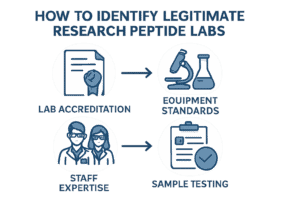
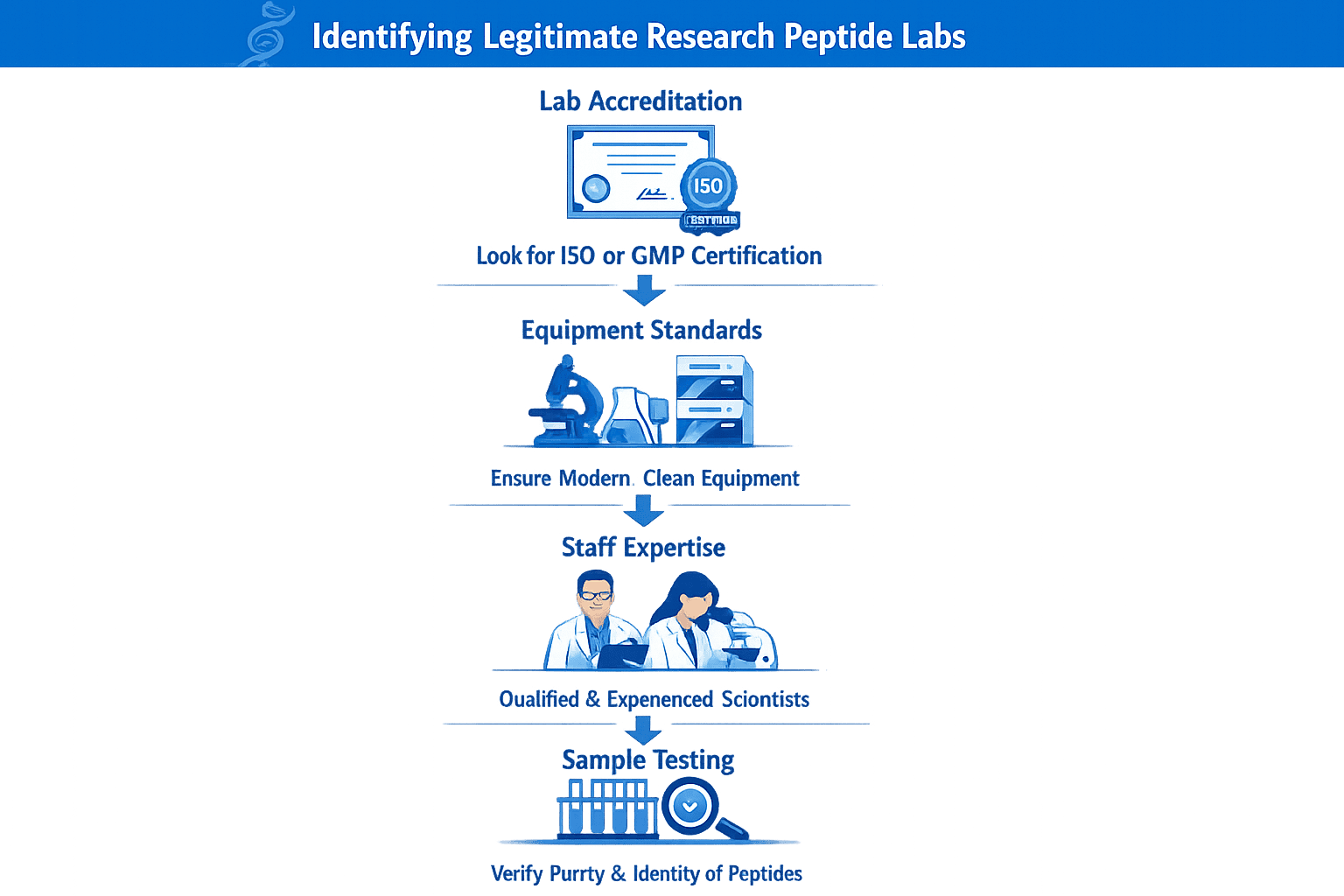
Research-grade material should be accompanied by a Certificate of Analysis with HPLC purity data and mass spectrometry confirmation of identity and molecular weight. When pairing CJC-1295 and Ipamorelin in a study, verifying that both are well-characterized and consistent is essential for drawing valid conclusions.
Understanding the Growth Hormone Axis in Research
To make sense of why these two peptides are studied the way they are, it helps to understand the system they target. The growth hormone axis is a regulatory network involving the hypothalamus, the pituitary, and a set of signaling molecules that control the release and downstream effects of growth hormone. Two of the key upstream signals are GHRH, which promotes release, and ghrelin, which acts through a separate receptor to influence the same process.
Because CJC-1295 maps onto the GHRH pathway and Ipamorelin maps onto the ghrelin receptor pathway, the pair gives researchers two precise tools for probing different entry points into this network. This is what makes them so useful as a methodological set. A researcher can engage one pathway, observe the response, engage the other, observe that response, and then study the two together, building a clearer picture of how the axis is regulated than any single compound would allow. The downstream signaling involved also connects to broader cellular pathways studied across peptide research, including those examined in work on peptide signaling and growth-related pathways.
Designing Studies With Complementary Peptides
Working with two complementary compounds adds design considerations that single-compound studies do not have. The most important is consistency: both peptides should be sourced with documented purity, stored identically, and reconstituted under the same conditions so that any observed differences reflect the biology of the pathways rather than differences in material quality or handling.
Researchers also have to think carefully about controls. Studying complementary mechanisms typically means including conditions for each compound alone and a condition with both, alongside appropriate untreated and vehicle controls. This design allows the independent and combined effects to be distinguished cleanly. Documenting every variable, from concentration and buffer to storage history, is what makes the resulting data interpretable and reproducible.
None of these practices are unique to CJC-1295 and Ipamorelin, but the fact that they are so often studied as a pair makes disciplined, well-controlled design especially important. The value of the pairing comes entirely from the rigor of the experiment built around it.
Key Takeaways for Researchers
CJC-1295 is a GHRH analog studied at the GHRH receptor, while Ipamorelin is a growth hormone-releasing peptide studied as a selective ghrelin receptor agonist. Their complementary mechanisms are exactly why they are so often researched together: the pairing allows investigation of two distinct pathways into the growth hormone axis. As with all research peptides, the reliability of any findings rests on careful handling, documented purity, and disciplined experimental design.
Amino Pharm provides research peptides with analytical documentation to support rigorous, reproducible work on signaling pathways. Reviewing the available analytical data is the right first step for any research program involving these compounds.
Frequently Asked Questions
What is the difference between CJC-1295 and Ipamorelin? CJC-1295 is a GHRH analog that acts at the GHRH receptor, while Ipamorelin is a growth hormone-releasing peptide that acts as a selective ghrelin receptor agonist. They engage the growth hormone axis through different pathways.
Why are they often studied together? Because their mechanisms are complementary, pairing them lets researchers study two distinct signaling routes into the same axis individually and in combination.
Are these compounds for human use? No. They are research materials intended strictly for controlled laboratory study, not for human or animal use.
What quality documentation should they have? A Certificate of Analysis with HPLC purity data and mass spectrometry identity confirmation is the standard for credible research-grade peptides.
Disclaimer: CJC-1295, Ipamorelin, and all products referenced are intended strictly for laboratory and research use only. They are not drugs, foods, or supplements, and are not intended for human or animal consumption, diagnosis, treatment, or any in vivo use. This article is educational and is not medical advice.