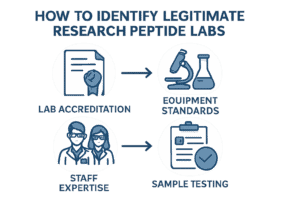
Why Understanding Peptide Differences Matters: Risks and Realities
You might think all peptides are basically the same, just strings of amino acids. But that assumption can get people hurt.
Case in point: in 2023, the FDA issued multiple warnings after unregulated peptide products were linked to severe allergic reactions and other unexpected adverse events. These weren’t paper-cut side effects. Hospitalizations followed, and the common thread was familiar to anyone who’s audited chemical supply chains: weak quality controls, thin documentation, and no meaningful regulatory oversight. Worth noting.
The real question is what are the chemical and regulatory differences between research peptides and pharmaceuticals, because that’s where the risk hides. Research-grade peptides, the ones sold for laboratory research, don’t have to meet the same purity, sterility, stability, or release-testing expectations required for drugs intended for humans. They’re typically synthesized to support experiments on receptor binding, signaling pathways, or molecular mechanisms, not to be injected into patients. Pharmaceutical peptides, by contrast, are manufactured under controlled systems with validated methods, batch release criteria, and ongoing quality assurance so the chemical identity and performance stay consistent over time.
And here’s the part people underestimate: peptides can “match” on a spec sheet and still behave differently in a biological system. When peptides jump from bench to bedside without proper vetting, outcomes get unpredictable fast. A growth hormone secretagogue used in a muscle recovery study might look identical on paper in both research-grade and drug-grade form, but a small impurity profile shift, a truncated sequence, or a storage-related degradation product can change receptor activity, immunogenicity, or apparent potency. Big difference.
Researchers and clinicians have to be clear-eyed about the distinction. Using research peptides as stand-ins for approved drugs can invalidate data, put participants at risk, and invite regulatory consequences. Regulators, meanwhile, are stuck trying to police a market where “research use only” sometimes functions as marketing copy rather than a real boundary. Understanding the chemical and regulatory gap isn’t academic. It’s how you protect subjects, preserve data integrity, and keep peptide science credible.
Chemical Composition: Molecular Purity and Structural Variability
Peptides are chains of amino acids linked in a defined sequence. That’s the simple version. The real world includes post-synthetic modifications such as acetylation, amidation, cyclization, disulfide bond formation, and occasional incorporation of non-proteinogenic amino acids to change stability, receptor affinity, or half-life. Pharmaceutical-grade peptides are specified so those features are intentional, controlled, and verified, because small structural changes can produce big pharmacology shifts in tightly regulated pathways, including those tied to growth hormone release and downstream metabolic effects.
Purity is where the gap becomes measurable. Drug-grade peptides commonly target purity in the >95% range and often 98% to 99%+, supported by validated analytical methods and batch release testing. Those high standards reduce peptide-related impurities such as deletion sequences, truncated fragments, epimerized residues, protecting-group remnants, and synthesis by-products. Each of those can interfere with biological activity or trigger immunogenic responses. Research peptides can be all over the map depending on the supplier and intended use. It’s common to see reported purity anywhere from ~70% to 95%, and “reported” is doing a lot of work there, because the testing depth and sampling practices vary widely.
Impurities don’t just dilute the active peptide. They can change the biology. If a peptide is meant to activate a specific receptor, an impurity that binds a different receptor, or that aggregates, or that carries residual reagents, can create effects you won’t predict from the intended sequence alone. Storage and shipping add another layer, too. Peptides can oxidize, deamidate, hydrolyze, or form aggregates, especially if they’re exposed to heat cycles or moisture (yes, even in transit). Those degradation products may be less potent, more immunogenic, or simply noisy enough to wreck your assay readout.
So how do you separate “looks fine” from “is fine”? Analytical chemistry. High-performance liquid chromatography (HPLC) is a workhorse for purity profiling and impurity separation. Mass spectrometry (MS) confirms molecular weight and can flag subtle modifications that HPLC alone may not identify. In pharmaceutical manufacturing, these tests are typically part of a validated release panel for every batch, with defined acceptance criteria and traceable records. Research peptide vendors may provide a certificate of analysis (CoA), but the reliability depends on whether the data are batch-specific, whether the method is described, and whether the chromatograms and MS spectra actually match the lot you received.
Here’s a quick comparison:
| Feature | Pharmaceutical-Grade Peptides | Research-Grade Peptides |
|---|---|---|
| Purity | >95-99% | Variable, often 70-95%, sometimes lower |
| Structural Modifications | Precisely controlled | May lack full characterization |
| Batch Testing | Mandatory for each batch | Inconsistent or absent |
| Analytical Verification | HPLC, MS, and other rigorous methods | Sometimes limited to basic purity tests |
| Impurities & Degradation | Minimized and monitored | Can be significant and variable |
| The bottom line: pharmaceutical-grade peptide composition is engineered for consistency and safety, which is why you see tighter impurity limits, controlled stability, and more predictable pharmacokinetics. Research peptides are legitimate tools for discovery work, but they aren’t built to the same chemical or documentation standard. That gap matters the moment someone tries to interpret results across lots, replicate a finding, or translate a signal into a clinical hypothesis. |
That’s also why, when sourcing peptides for serious research, our team prefers suppliers that can show real analytical backing, including batch-specific documentation and high purity targets. Amino Pharm, for example, offers US-made peptides listed at 99% purity with supporting documentation (and yes, they’re still labeled not for human use, because research supply isn’t the same thing as an approved drug). If you’re interested in understanding the importance of GMP certification, it’s one of the clearest separators between controlled pharmaceutical manufacturing and looser research-grade production.
For a deeper look at quality and comparability issues in peptide products, see: Building parity between brand and generic peptide products (sciencedirect.com).
Regulatory Frameworks Governing Peptides: FDA, EMA, and Beyond
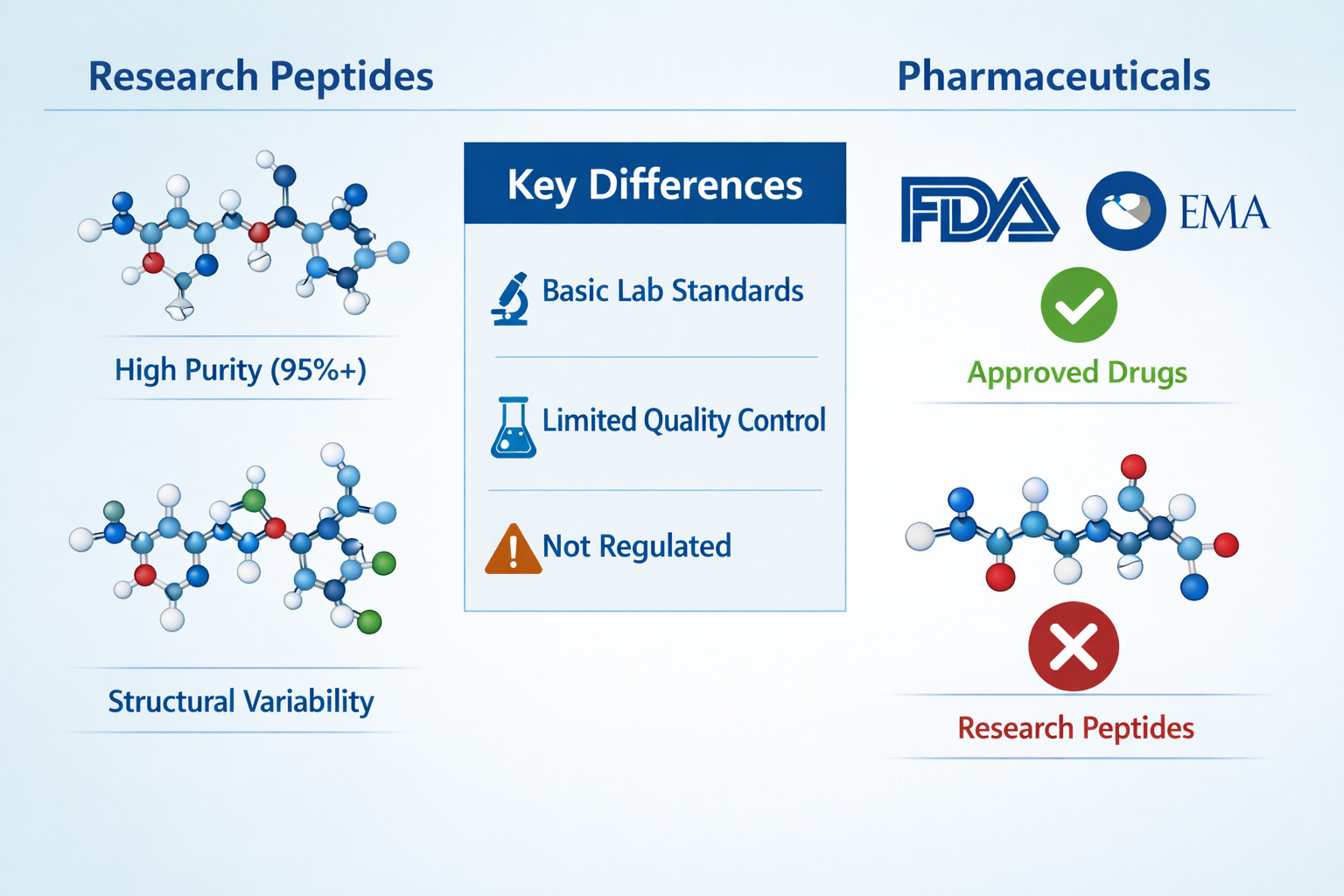
Peptides intended for pharmaceutical use sit under strict regulatory scrutiny worldwide, mainly through the FDA in the United States and the EMA in Europe. Regulators treat these products as drugs, not as “just chemicals,” which changes everything. Development, manufacturing, characterization, labeling, clinical evaluation, pharmacovigilance, the whole chain is expected to meet defined standards designed to demonstrate safety, efficacy, and consistent quality. Since many peptides act through complex signaling pathways, including endocrine axes that influence growth hormone release and metabolic endpoints, agencies expect mechanistic plausibility plus evidence the product behaves predictably in vivo.
In the US, the FDA generally requires an Investigational New Drug (IND) application before a peptide enters clinical trials. That submission isn’t a formality. It includes Chemistry, Manufacturing, and Controls (CMC) information, impurity profiles, specifications, stability data, toxicology, and the proposed clinical protocol. The EMA’s expectations are comparable, with emphasis on characterization, impurity control, pharmacokinetics, and batch consistency. Both agencies care about the same fundamentals: identity, strength, quality, purity, and potency, plus data that support a reasonable risk assessment in humans.
Research peptides sit in a murkier zone by design. They’re sold as “not for human use” materials intended for laboratory research, so they don’t come with the clinical safety and efficacy package required for an approved therapeutic. That classification is exactly why most research peptides ship without comprehensive toxicology, validated stability programs, or human pharmacokinetic data. The label is supposed to draw a bright line. In practice, some sellers blur it, and that’s where enforcement shows up.
This difference in regulatory treatment has real consequences. Marketing research peptides for human use is illegal and can trigger FDA enforcement actions, including warning letters, seizures, injunctions, and financial penalties. Many of the cases that draw attention share the same features: promotional claims that imply treatment, missing or generic CoAs, thin traceability, and no credible evidence of controlled manufacturing. Researchers should treat this as a practical compliance issue, not a theoretical one. If a peptide lacks legal approval, validated batch release testing, and clinical validation, using it as a drug invites safety hazards and regulatory exposure.
The regulatory gap also shapes how peptides enter clinical trials. Pharmaceutical peptides move through a staged process with IND authorization and monitoring. Research peptides can’t legally enter that pathway unless they’re brought up to the same standards, which usually means new manufacturing controls, new documentation, and new nonclinical work. For sourcing, Amino Pharm provides research-grade peptides with certified purity and controlled production practices, paired with the explicit “not for human use” disclaimer. That transparency matters, even if it’s not glamorous.
Understanding what separates research materials from regulated drugs explains why pharmaceutical peptides arrive with extensive documentation and oversight, while research peptides remain tools for discovery rather than treatment. It’s a hard line. Crossing it without approvals is how people end up with preventable harm and preventable legal trouble.
Quality Control and Manufacturing Standards: GMP vs Research-Grade Production
Quality control separates pharmaceutical peptides from research-grade ones like night and day. Pharmaceutical peptides are produced under Good Manufacturing Practices (GMP), a legally enforceable system that covers raw material qualification, equipment validation, in-process controls, deviation handling, change control, stability programs, and batch release testing. GMP isn’t marketing language. It’s a compliance framework with consequences.
Drug-grade peptide lots are typically tested using validated analytical methods, including HPLC and mass spectrometry, to confirm identity and purity (often 98% or higher), along with checks for contamination risks such as bioburden and endotoxins when the product is intended for parenteral use. Specifications aren’t suggestions. They’re acceptance criteria tied to patient safety and product performance.
Research peptides, by contrast, are often produced outside GMP systems. Many are made via standard solid-phase peptide synthesis, then purified to a level that’s “good enough” for a given assay, without the same documentation burden or lot-to-lot controls. Variability creeps in easily: different resin lots, different coupling efficiencies, different purification cut points, different storage conditions. Sterility and endotoxin levels are the classic blind spots. In GMP environments, endotoxin is tightly controlled and tested when relevant. In research-grade supply, it may be unmeasured, inconsistently measured, or reported without method details. That’s not a small technicality if someone is tempted to use the material beyond in vitro work.
Here’s a quick comparison:
| Feature | Pharmaceutical Peptides (GMP) | Research Peptides (Non-GMP) |
|---|---|---|
| Manufacturing Standards | Strict GMP compliance | Variable, often no GMP oversight |
| Purity Requirements | ≥ 98%, verified with analytical methods | Typically 90-95%, less rigorous testing |
| Batch Consistency | High, with documented batch testing | Variable, less documentation |
| Sterility & Endotoxins | Sterile or controlled endotoxin levels | Often not sterile, endotoxin uncontrolled |
| Stability Testing | Long-term stability studies mandatory | Minimal or no stability data |
| Documentation | Full Certificates of Analysis (CoA) | May provide CoA but less detailed |
| GMP quality control affects reproducibility and safety in ways that show up fast. Without verified purity and stability, you can’t assume a peptide will reliably activate the intended pathway, or that its pharmacokinetics will be consistent enough to interpret dose-response data. Changes in synthesis or impurity profiles can shift absorption, distribution, metabolism, or clearance, and that unpredictability is a deal-breaker in clinical settings. |
I once reviewed a pair of research peptide lots for a client after their assay results started drifting. The CoA claimed similar purity, but the HPLC traces told a different story: one lot had a noticeable shoulder peak, and the calculated purity was about 12% lower than the prior shipment. Their “biology problem” was a chemistry problem. Mildly opinionated take: if a vendor won’t share batch-specific chromatograms, you should assume you’re buying variability.
For anyone sourcing peptides, choosing a supplier that provides high-purity material with real analytical confirmation can reduce headaches. Amino Pharm offers peptides listed at 99% purity with documentation, even though they’re still sold for research use only. That combination helps keep experiments from getting derailed by avoidable quality issues. If you want to understand more about quality docume

ntation, consider reading a peptide certificate of analysis a researchers checklist, it’s eye-opening how much (or how little) these sheets can actually tell you.
The bottom line? GMP standards exist for a reason. Skipping them doesn’t just raise legal risk, it can wreck your data, or worse. Research peptides have a place, but mixing categories without respecting the quality gap is asking for trouble (and wasted grant money).
Pharmacological and Toxicological Considerations: Safety Profiles and Risk Assessment
Pharmaceutical peptides are expected to clear a high bar for pharmacodynamics and pharmacokinetics. Developers need to show how the compound interacts with its target, what the dose-response relationship looks like, how it’s absorbed and distributed, how it’s metabolized, and how it’s eliminated. That information isn’t trivia. It drives dosing regimens, helps define therapeutic windows, and flags interaction risks. If a peptide is intended to influence growth hormone release, for example, regulators will expect consistent exposure metrics, predictable half-life, and a defensible rationale for the dosing schedule. Analytical confirmation, including HPLC and MS, supports the basic premise that each vial contains what it claims, at the stated purity, lot after lot.
Research peptides are a different category entirely. They’re synthesized for lab use and often lack comprehensive toxicology packages. That means no reliable safety margins, limited data on off-target activity, and little to no information on chronic exposure risks. Without those studies, using them clinically is guesswork. Contaminants and peptide-related impurities add another layer of uncertainty, because even small changes in impurity profile can alter biological activity or provoke immune responses. The FDA’s guidance on synthetic peptides is clear on this point: impurities can affect both safety and effectiveness, and rigorous batch testing is expected for drugs, but often absent in research-only materials.
This is where people get tripped up: matching amino acid sequence doesn’t guarantee matching clinical behavior. Manufacturing conditions, formulation choices, and storage history can change stability, aggregation tendency, and degradation patterns. Those differences can translate into different apparent potency, different immunogenicity risk, or different adverse event profiles. But you won’t know without the kind of nonclinical and clinical work required for pharmaceuticals.
Regulatory toxicology exists to prevent exactly these failures. Acute and chronic toxicity, reproductive and developmental toxicity, immunogenicity assessment, and other studies are designed to surface risks before humans are exposed. None of that is mandatory for peptides marketed for “laboratory use only.” For human therapeutic use, pharmaceutical-grade peptides remain the only defensible option. Amino Pharm provides peptides with 99%+ purity and batch testing consistency for research purposes, but those products still carry strict disclaimers and shouldn’t be used in patients. That distinction isn’t just legal. It’s basic risk management.
Case Studies: Consequences of Misusing Research Peptides in Clinical Settings
There have been documented cases where research peptides used outside their intended scope led to serious clinical fallout. One example involved off-label growth hormone secretagogues contaminated with bacterial endotoxins. After self-administration, patients reported fever, chills, and inflammatory symptoms consistent with systemic immune activation. Hospital admissions followed, and clinicians were left managing a reaction caused less by “the peptide” than by what came along with it.
Regulators have responded. The FDA has issued warnings and enforcement actions against companies that market research peptides as therapeutic agents, citing unapproved drug violations and public health risks. In many cases, products were mislabeled, lacked meaningful certificates of analysis, or had no credible verification of pharmacokinetics or toxicology. That enforcement trend isn’t subtle, and it reflects a straightforward public health concern: people are being exposed to compounds that haven’t been evaluated as drugs.
One lesson is obvious. The risks tied to research peptides in clinical use aren’t theoretical. Poor quality control, missing pharmacology data, and unverified biological effects can cause acute adverse events and complicate diagnosis and treatment. Healthcare providers should confirm sourcing, insist on regulated pharmaceutical products when treating patients, and be blunt with patients about the dangers of unregulated compounds.
Amino Pharm’s approach, offering peptides with verified purity and analytical confirmation for research use, stands in sharp contrast to the murky end of the market. For those weighing options, comparing Ipamorelin vs Sermorelin might be a good start for understanding why documentation, testing, and controlled manufacturing matter when peptides are discussed in clinical contexts. But let’s be honest: using research peptides outside the lab isn’t “experimental medicine.” It’s a gamble with patient safety.
Navigating Compliance: Best Practices for Researchers and Institutions
Sourcing peptides that actually meet regulatory expectations is no walk in the park. If you’re handling research peptides, especially anything that could end up in a human protocol, the stakes are high. Compliance isn’t about box-checking, it’s about safety, reproducibility, and scientific integrity. Big difference.
Start with the supplier. You want documented purity, consistent batch testing, and traceability you can audit without begging for it. For example, our clinic relies on Amino Pharm, which offers research-grade peptides with 99% purity and full traceability, manufactured in the US under strict quality controls. That level of transparency isn’t “nice to have.” It’s the baseline when you’re working with compounds that touch signaling pathways or influence growth hormone release, muscle growth, and recovery.
IRBs and ethics committees are where a lot of peptide projects either get tightened up or quietly fall apart. Their job is to confirm that sourcing and handling match ethical standards and regulatory frameworks, particularly for human or translational studies. When you submit a protocol, expect to provide peptide origin, purity specs, storage conditions, handling procedures, and intended use. People love to call this red tape. I don’t, because I’ve seen what happens when it’s skipped: studies get paused midstream, samples become unusable, and nobody can defend the data when questions start coming in.
Documentation is the unglamorous part that saves you later. Keep chain-of-custody records for every batch, including certificates of analysis, chromatograms, and stability data. Identity and purity should be supported by analytical methods such as HPLC and mass spectrometry, not just a label that says “research-grade.” Without traceability, you can’t prove the material in your freezer matches what’s described in your protocol, and that’s a fast way to lose credibility with reviewers. I’ve watched labs burn months because they assumed every “research-grade” peptide was comparable. They aren’t.
So how do you stay out of legal trouble and avoid wrecking your own study? Don’t use peptides labeled “not for human use” beyond preclinical or in vitro work unless you have explicit regulatory approval. And yes, even if the mechanism looks promising for muscle recovery or growth hormone modulation. If you bypass compliance, you risk invalid data, sanctions, and a paper you can’t publish. Plan early with your institution’s compliance office, and write your sourcing and QC plan into the protocol from day one (it’s a lot easier than retrofitting it after an audit).
Ethical peptide research takes discipline, from procurement to documentation to disposal. Worth noting.
Future Trends: Emerging Regulatory Changes and Technological Advances
Peptide oversight is changing quickly, and researchers should expect less tolerance for gray-zone sourcing. The FDA’s upcoming 2026 updates are expected to tighten scrutiny on peptide products, with heavier attention on manufacturing controls, impurity profiling, and pharmacokinetics. That could mean more documentation and more formal quality expectations for materials that used to slide by as “for research use only.” Annoying? Sometimes. But it tends to improve reproducibility, which most of us say we want.
On the technical side, synthesis and analytics keep getting better, and that’s raising expectations across the board. Automated solid-phase peptide synthesis can deliver higher yields with fewer side products, and modern LC-MS workflows can detect low-level impurities that older systems routinely missed. That matters because peptide impurities aren’t just “random junk.” You’ll see truncated sequences, deletions, epimerization, oxidation, counterion variability (acetate vs TFA salts), and residual solvents, all of which can change apparent potency, stability, or receptor binding. If you’ve ever had a peptide “stop working” after switching vendors, this is often why (and no, it’s not always user error).
Amino Pharm is one example of a supplier that keeps updating processes to meet tighter specs, and that trend is likely to spread. As more vendors publish better analytical packages, researchers will start asking harder questions about batch-to-batch consistency, impurity identity, and stability under real storage conditions. That’s a good thing for science, even if it makes purchasing slower.
Will these changes erase the line between research peptides and pharmaceuticals? Probably not. The boundary still comes down to intended use, clinical approval, and formal regulatory status, not just whether the COA looks impressive. But the next decade may bring clearer definitions and stricter enforcement, especially for peptides that target high-interest pathways tied to muscle growth, metabolic signaling, or endocrine modulation. And if regulators decide certain categories look more like drug products than research reagents, the compliance burden will show up earlier than many labs expect.
If you want to stay ahead, track FDA guidance and treat supplier qualification like part of your experimental design, not an afterthought. Choose vendors that can provide identity testing, impurity profiling, and stability data that stands up to scrutiny. Curious about the mechanisms behind peptide function and how some of these advances play out? Check out this deep look at the Tb500 peptide mechanism and applications explained.
For a thorough overview of how peptide drug discovery is evolving, the research from Trends in peptide drug discovery (chemie.univie.ac.at) offers solid insight into how science and regulation are moving in tandem.
## Frequently Asked Questions About Chemical and Regulatory Differences in Peptides

What really sets research peptides apart from pharmaceutical-grade versions? It comes down to chemistry, controls, and the legal category the product is sold under. Research peptides are often sold with looser purity targets, commonly in the 95 to 98% range, while drug-grade products are typically pushed to 99% or higher with tighter impurity limits and validated release criteria. Those “last few percent” aren’t trivial. They can include truncated sequences, deletion variants, isomers, oxidized forms, racemization events, residual solvents, or counterion differences, each of which can change biological activity, solubility, or stability.

And the testing expectations aren’t comparable. Pharmaceutical peptides are released with validated methods, documented system suitability, and batch-to-batch comparability packages, often including HPLC/UPLC chromatograms, mass spectrometry confirmation, water content, residual solvent panels, and sometimes peptide content by amino acid analysis. Many research-grade products provide partial data or vendor-generated summaries that aren’t method-validated. That gap is a big part of what people mean when they ask, “what are the chemical and regulatory differences between research peptides and pharmaceuticals.”

Why aren’t research peptides approved for human use? Because “for research use only” isn’t a marketing slogan, it’s a regulatory boundary. These materials usually haven’t gone through the toxicology, pharmacokinetics (PK), stability, sterility assurance, and clinical testing required for FDA approval. They also may not be manufactured under GMP, which means you can’t assume controlled raw materials, validated cleaning, environmental monitoring, or consistent release testing. If you’re thinking about human administration, you’re no longer in the reagent world, you’re in IND territory. That’s the point.

GMP matters because it forces discipline into every step that can otherwise drift. Raw material qualification, synthesis controls, purification parameters, in-process checks, validated analytical methods, deviation handling, and documented change control all become mandatory. I’m mildly opinionated here: if a supplier can’t explain their batch release criteria in plain language, you shouldn’t be putting their peptides anywhere near a serious study. Peptides made under GMP, including those from Amino Pharm, typically come with certificates of analysis that spell out purity (often 99%), identity confirmation, and contaminant controls, plus traceability back to the lot. That’s what you want when you’re studying sensitive signaling pathways or growth hormone analogs where tiny impurities can skew results.

Can research peptides be used in clinical trials? Sometimes, but only after they’re brought up to clinical expectations. That usually means full characterization, stability under defined storage conditions, validated test methods, and regulatory clearance through an Investigational New Drug (IND) pathway or equivalent oversight. Without that, they stay where they belong, in vitro work, animal studies, and early mechanistic experiments. It’s not glamorous, but it’s honest science.

What should you keep in mind when sourcing peptides? Ask for the full analytical package, not a one-line purity claim. Look for COAs with method details, chromatograms, MS confirmation, and clear lot numbers, then match those lot numbers to your internal chain-of-custody records. Don’t ignore storage and handling, either. Freeze-thaw cycles, light exposure, and incorrect reconstitution solvents can create degradation products that look like “vendor problems” later (ask me how I know). And remember, research peptides aren’t a shortcut to clinical-grade pharmaceuticals. They’re discovery tools, not treatments.

If you want peptides for clinical applications, you’ll need GMP manufacturing, validated QC, and the right regulatory pathway. Amino Pharm provides clinically tested, 99% purity, US-made peptides with clear quality documentation, which is the kind of sourcing record that holds up when you’re working in complex biological systems.

If you want to understand more about [GMP](https://aminopharm.com/) and why it matters, that’s a great place to start. For market trends and the evolving role of peptides in therapeutics, the [Peptide Therapeutics Market Size | Industry Report, 2030 (grandviewresearch.com)](https://www.grandviewresearch.com/industry-analysis/peptide-therapeutics-market) offers solid data.

## Frequently Asked Questions

### What are the main chemical differences between research peptides and pharmaceutical peptides?
Pharmaceutical peptides are usually manufactured and released under tighter specifications, with well-characterized molecular identity, impurity profiles, and batch-to-batch consistency. Purity is often reported in the 95 to 99%+ range, but the real differentiator is the impurity strategy: what impurities are allowed, how they’re identified, and how consistently they’re controlled. Research peptides can show wider variability in purity, salt form, residual solvents, truncated sequences, or degradation products, which affects stability, potency, and reproducibility. That’s the practical answer behind what are the chemical and regulatory differences between research peptides and pharmaceuticals.

### Why are research peptides not approved for human use?
They generally lack the safety package required by regulators, including toxicology, pharmacokinetics, stability, and controlled clinical data. Many also aren’t produced under GMP, so the manufacturing environment, raw materials, and QC methods may not meet clinical expectations. Without an IND or comparable authorization and appropriate manufacturing controls, administering them to humans is not legal and can be unsafe.

### How does GMP manufacturing impact peptide quality?
GMP manufacturing requires controlled production conditions and documented quality systems that reduce contamination risk and variability. In practice, that means qualified raw materials, validated processes, defined release specifications, and traceable documentation for every lot. The result is a peptide with more reliable identity, purity, potency, and stability, which is why GMP is the standard for products intended for human use.

### Can research peptides be legally used in clinical trials?
Only if they meet regulatory requirements for human studies, typically through an IND process, and are manufactured under GMP (or an accepted equivalent) with appropriate release testing and documentation. Without those steps, research peptides are restricted to non-human use such as in vitro experiments or animal studies. Using non-compliant material in a clinical setting can trigger regulatory action and puts participants at risk.

### What factors should researchers consider when sourcing peptides?
Verify purity and identity with real analytical support, including HPLC/UPLC and mass spectrometry data, and confirm lot traceability through a certificate of analysis and chain-of-custody documentation. Check manufacturing standards (GMP when relevant), storage and stability information, and the supplier’s willingness to provide full documentation. Supplier transparency and batch consistency directly affect reproducibility, and reproducibility is the currency of credible research.

## References

1. "Building parity between brand and generic peptide products" , sciencedirect.com , [https://www.sciencedirect.com/science/article/abs/pii/S0378517316311930](https://www.sciencedirect.com/science/article/abs/pii/S0378517316311930)
2. "Therapeutic peptides: current applications and future ..." , nature.com , [https://www.nature.com/articles/s41392-022-00904-4](https://www.nature.com/articles/s41392-022-00904-4)
3. "Guidance for Industry- Synthetic Peptides" , fda.gov , [https://www.fda.gov/media/107622/download](https://www.fda.gov/media/107622/download)
4. "Trends in peptide drug discovery" , chemie.univie.ac.at , [https://chemie.univie.ac.at/fileadmin/user_upload/f_chemie/aktuelles_news/dateien/2023_Muttenthaler_Trends_in_peptide_drug_discovery.pdf](https://chemie.univie.ac.at/fileadmin/user_upload/f_chemie/aktuelles_news/dateien/2023_Muttenthaler_Trends_in_peptide_drug_discovery.pdf)
5. "Peptide Therapeutics Market Size | Industry Report, 2030" , grandviewresearch.com , [https://www.grandviewresearch.com/industry-analysis/peptide-therapeutics-market](https://www.grandviewresearch.com/industry-analysis/peptide-therapeutics-market)
6. "Peptide-based therapeutics: challenges and solutions" , link.springer.com , [https://link.springer.com/article/10.1007/s00044-024-03269-1](https://link.springer.com/article/10.1007/s00044-024-03269-1)
7. "Emerging And Approved Therapeutic Peptides" , globalrph.com , [https://globalrph.com/2025/12/emerging-and-approved-therapeutic-peptides-mechanisms-clinical-uses/](https://globalrph.com/2025/12/emerging-and-approved-therapeutic-peptides-mechanisms-clinical-uses/)
8. "Truth About Peptides: They Are Not All Created Equally" , burickcenter.com , [https://burickcenter.com/truth-about-peptides-they-are-not-all-created-equally/](https://burickcenter.com/truth-about-peptides-they-are-not-all-created-equally/)
9. "Peptides Gone Wild: Why Is This So Hard To Pin Down?" , floridahealthcarelawfirm.com , [https://floridahealthcarelawfirm.com/peptides-gone-wild-why-is-this-so-hard-to-pin-down/](https://floridahealthcarelawfirm.com/peptides-gone-wild-why-is-this-so-hard-to-pin-down/)
10. "Development and manufacture of synthetic peptides" , ema.europa.eu , [https://www.ema.europa.eu/en/development-manufacture-synthetic-peptides-scientific-guideline](https://www.ema.europa.eu/en/development-manufacture-synthetic-peptides-scientific-guideline)