Introduction: The Importance of Verifying Research Peptides Legitimately
Research peptides are short chains of amino acids that serve as critical tools in biomedical research, enabling scientists to probe cellular signaling pathways, investigate mechanisms of action, and develop potential therapeutics. These peptides frequently target specific receptors or enzymes, modulating physiological processes such as growth hormone release, muscle growth, and tissue recovery. The legitimacy and quality of these compounds directly influence experimental validity and translational potential, underscoring the necessity to verify research peptides legit before use.
Utilizing non-legitimate or low-quality peptides presents significant risks, including inaccurate data, irreproducible results, and potential safety hazards. Impurities or misidentified sequences can alter pharmacokinetics and biological activity, leading to flawed conclusions or failed drug development efforts. For instance, batch-to-batch variability without proper batch testing may introduce inconsistencies, complicating the interpretation of signaling pathway studies or growth hormone assays. Moreover, contaminated peptides can compromise cellular models or animal studies, wasting resources and time.
Establishing trust in research peptides requires adherence to stringent regulatory standards and scientific consensus. Legitimate suppliers implement Good Manufacturing Practices (GMP), validated analytical methods, and provide Certificates of Analysis (COA) to confirm peptide identity, purity, and concentration. These quality control measures align with ISO quality management standards and FDA guidelines for regulated research products[3]. Peer-reviewed literature consistently emphasizes the importance of sourcing peptides from certified labs with transparent quality assurance to ensure reproducibility and reliability in research outcomes. Researchers should consult detailed [research peptides labs reviews] and verify GMP certification to mitigate risks and uphold scientific rigor, as detailed in resources on understanding the importance of gmp certification.
In summary, verifying research peptides legit is foundational to maintaining experimental integrity. Careful evaluation of peptide provenance, coupled with rigorous quality checks, safeguards both the scientific process and downstream applications in drug discovery and therapeutic development.
Understanding Research Peptides: Definitions and Applications
Research peptides are defined as synthetically produced or naturally derived short amino acid sequences used primarily in laboratory investigations to elucidate biological functions and therapeutic potentials. Typically ranging from 2 to 50 amino acids, these peptides may mimic endogenous hormones, neurotransmitters, or signaling molecules, enabling precise modulation of biochemical pathways. Their classification spans hormone analogs, enzyme inhibitors, receptor agonists/antagonists, and cell-penetrating peptides, each serving distinct experimental objectives.
In biomedical research, research peptides legit are indispensable for dissecting complex signaling pathways that regulate physiological processes such as muscle growth, cellular recovery, and metabolic control. For example, peptides influencing growth hormone release or modulating inflammatory responses are frequently employed to study mechanisms underlying tissue regeneration or disease progression. Additionally, peptide-based probes facilitate drug discovery by enabling structure-activity relationship analyses and pharmacokinetic profiling, essential for identifying candidates with optimal efficacy and safety profiles.
The authenticity and purity of peptides profoundly affect experimental reproducibility and data integrity. Contaminants or sequence deviations can introduce confounding variables, skewing bioactivity assays or altering receptor binding kinetics. High-performance analytical methods, including mass spectrometry and high-performance liquid chromatography (HPLC), are standard for verifying peptide purity and confirming molecular weight, as outlined in analytical methods for peptide purity[1]. Without such rigorous validation, research outcomes risk being non-reproducible, undermining confidence in findings related to signaling pathways or pharmacokinetics.
Therefore, sourcing research-grade peptides from reputable suppliers who perform comprehensive batch testing is critical. This ensures that peptides used in experimental models accurately represent the intended sequences and concentrations, facilitating meaningful insights into biological mechanisms. Researchers interested in peptide applications may also explore specialized resources such as tb500 peptide mechanism and applications explained or delve into exploring the mechanisms of glp 3 peptide in research for deeper understanding of specific peptides’ roles.
By integrating rigorous verification protocols and understanding peptide classifications and applications, scientists can confidently employ research peptides legit to advance biomedical knowledge and therapeutic innovation.
Identifying Legitimate Research Peptides Labs
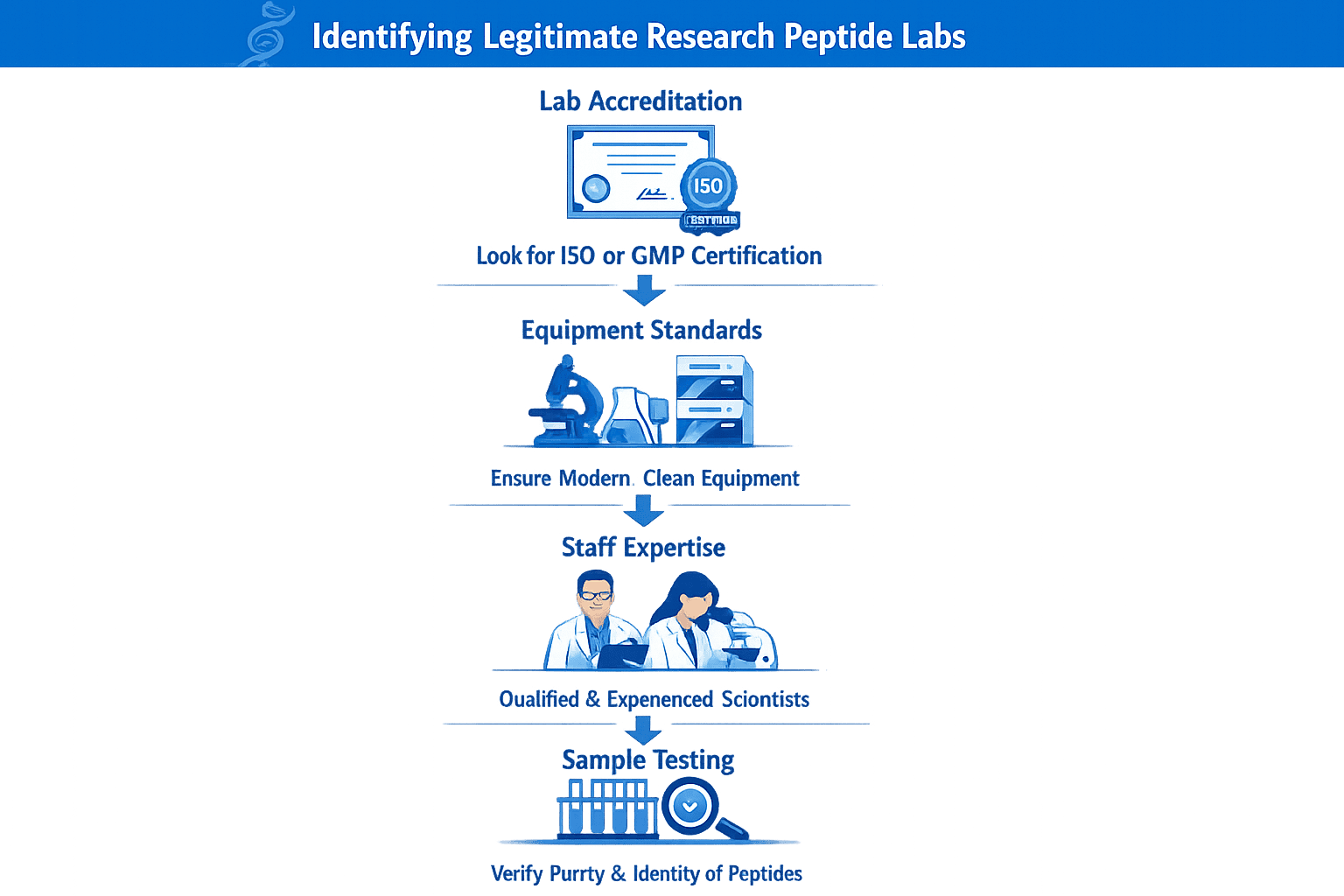
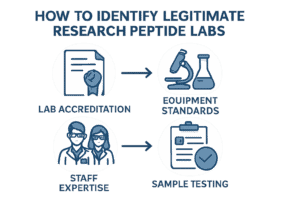
Verifying that research peptides originate from legitimate labs is foundational to ensuring experimental integrity and reproducibility. When evaluating research peptides labs, several critical criteria must be considered, including certifications, reputation, and transparency. Certifications such as Good Manufacturing Practice (GMP) and ISO 9001 quality management standards denote adherence to rigorous production and quality control processes. These standards ensure that peptides are synthesized under controlled conditions, minimizing contamination and batch variability. For a deeper understanding, reviewing importance of gmp certification provides valuable insights into why such credentials are non-negotiable for research-grade peptides.
Reputation is another pivotal factor. Laboratories with a long-standing history of supplying peptides to academic or pharmaceutical research institutions generally maintain stringent quality controls. Researchers should consult peer-reviewed publications, case studies, and independent forums to assess lab credibility. Authentic research peptides labs often publish detailed product information, including pharmacokinetics and mechanism of action, reflecting transparency and scientific rigor.
Utilizing research peptides labs reviews effectively involves cross-referencing multiple sources to identify consistent feedback patterns. Positive reviews typically highlight consistent batch testing results, high purity, and responsive technical support. Conversely, red flags include vague product descriptions, absence of COAs (Certificate of Analysis), or inconsistent batch testing data. Unreliable suppliers may also lack clear contact information or fail to provide detailed answers regarding peptide synthesis pathways and analytical methods used.
Awareness of these warning signs can prevent procurement of substandard peptides that compromise signaling pathways or misrepresent growth hormone analogs, which are critical in muscle growth and recovery studies. By prioritizing labs that demonstrate transparency and uphold industry standards, researchers can confidently source peptides that are not only research peptides legit but also verifiably pure and potent, ensuring the validity of downstream experimental results.
Decoding the Certificate of Analysis (COA): What Researchers Must Know
The Certificate of Analysis (COA) is an indispensable document that substantiates the authenticity and quality of research peptides. It serves as a scientific report that provides detailed information on the peptide’s purity, identity, molecular weight, and assay results—parameters essential for confirming that the peptide meets research-grade standards. A thorough COA interpretation is crucial for researchers aiming to verify that their peptides are research peptides legit, as it directly impacts experimental outcomes related to signaling pathways and pharmacokinetics.
A typical COA begins with the peptide’s identity verification, often confirmed through mass spectrometry (MS) data. MS provides the molecular weight of the peptide, ensuring it matches the theoretical mass calculated from the amino acid sequence. Discrepancies here can indicate synthesis errors or contamination. High-Performance Liquid Chromatography (HPLC) is another key analytical method reported on the COA, used to determine peptide purity. The HPLC chromatogram displays peaks corresponding to the peptide and any impurities. A purity level of 95% or higher is generally expected for research-grade peptides to ensure consistent biological activity, especially when investigating mechanisms such as growth hormone release or muscle growth promotion.
Assay results on the COA quantify the peptide’s active content, verifying that the batch contains the advertised concentration. This is critical when peptides influence recovery or modulate signaling pathways, as dosage variability can lead to inconsistent pharmacodynamic responses. Researchers must also examine the retention times and peak shapes in chromatograms to confirm the peptide’s stability and absence of degradation products.
Interpreting these data requires familiarity with analytical techniques and their relevance to peptide function. For instance, understanding the nuances of mass spectrometry fragmentation patterns or the significance of baseline separation in HPLC can aid in detecting synthetic impurities or isomeric forms. Researchers seeking advanced insights into peptide verification can benefit from reviews on analytical methods for peptide purity and quality control standards.
Incorporating COA interpretation into peptide procurement protocols enhances confidence in the legitimacy of the peptides used, facilitating robust experimental design and reliable data generation. For peptides with specialized applications, such as those detailed in tb500 peptide mechanism and applications explained or exploring the mechanisms of glp 3 peptide in research, careful COA evaluation ensures that the complex molecular mechanisms under study are supported by authentic, high-quality materials.

Laboratory Techniques for Quality Verification of Research Peptides
Verifying the authenticity and purity of research peptides requires a multifaceted approach employing advanced analytical methods. Laboratories specializing in peptide synthesis and quality control routinely utilize techniques such as High-Performance Liquid Chromatography (HPLC), Mass Spectrometry (MS), Nuclear Magnetic Resonance (NMR) spectroscopy, and Amino Acid Analysis (AAA) to conduct rigorous quality checks. Each method contributes uniquely to confirming that peptides meet stringent research-grade standards, thereby ensuring research peptides legit and reliable for experimental applications.
HPLC is the cornerstone analytical technique for assessing peptide purity. It separates peptide mixtures based on their interactions with the chromatographic column, allowing quantification of impurities and degradation products. The resulting chromatogram provides a purity profile, typically requiring >95% purity for research-grade peptides. However, while HPLC excels at purity assessment, it does not directly confirm peptide identity. Therefore, it is often combined with Mass Spectrometry, which determines the molecular mass and sequence-specific fragments of peptides with high accuracy. MS can detect post-synthetic modifications, truncated sequences, or contaminating peptides, offering a robust identity verification complementary to HPLC’s purity data [1].
NMR spectroscopy offers detailed structural information by probing the peptide’s atomic environment. Although less commonly used for routine quality checks due to cost and complexity, NMR can elucidate conformational properties and confirm the presence of specific amino acid residues, critical for peptides involved in complex signaling pathways or receptor binding studies. Amino Acid Analysis complements these techniques by quantifying the peptide’s amino acid composition, verifying that the expected sequence matches the synthesized batch, which is particularly crucial when confirming peptides designed to modulate growth hormone release or muscle growth mechanisms.
Laboratories performing batch testing integrate these analytical methods to generate comprehensive Certificates of Analysis (COA), which document peptide purity, identity, and stability. These quality checks are essential not only for ensuring research peptides legit but also for maintaining consistency across experiments, especially in pharmacokinetics and recovery studies where peptide integrity directly impacts biological outcomes. Reviews of research peptides labs underscore that facilities adhering to standardized protocols, such as those aligned with ISO quality management standards, demonstrate superior reproducibility and data reliability [2].
In summary, the synergy of HPLC, MS, NMR, and AAA in peptide quality verification enables researchers to confidently select and utilize peptides that meet rigorous scientific criteria. Understanding these methods and their limitations is critical for interpreting COAs and assessing supplier credibility within research peptides labs reviews. Transitioning from laboratory verification, the next section will explore best practices researchers should adopt to maintain peptide quality and authenticity throughout procurement and experimental usage.
Best Practices for Researchers: Ensuring Peptide Quality and Authenticity
To guarantee research peptides legit and effective for experimental protocols, researchers must adopt stringent best practices spanning procurement, storage, and documentation. Ordering peptides from reputable suppliers begins with requesting detailed Certificates of Analysis (COAs) and batch-specific data. These documents provide transparency on purity, identity, and stability, often including chromatograms and mass spectra from batch testing. Verifying COAs against analytical methods such as HPLC and MS ensures the peptides align with the intended sequence and quality parameters, crucial for studies involving signaling pathways or muscle growth [1].
Proper storage and handling are equally vital to preserving peptide integrity. Research-grade peptides are sensitive to temperature fluctuations, moisture, and light exposure, all of which can induce degradation or aggregation. Lyophilized peptides should be stored at -20°C or below, preferably under inert atmospheres or vacuum-sealed conditions. Upon reconstitution, peptides must be kept on ice and used promptly or aliquoted and frozen to minimize freeze-thaw cycles that compromise pharmacokinetics and biological activity. Adhering to these protocols extends peptide shelf-life and maintains the fidelity of recovery or growth hormone-related experiments.
Maintaining meticulous records of peptide verification steps and storage conditions enhances reproducibility and compliance with regulatory frameworks, especially in multi-laboratory collaborations. Documenting batch numbers, COA details, and any deviations in handling protocols supports traceability and quality assurance. This level of documentation aligns with regulatory guidance on regulated products [3] and reinforces the credibility of research outcomes.
Researchers interested in peptide applications can further explore targeted peptides by reviewing resources such as the best muscle building peptides for athletes or delving into peptide-specific pharmacodynamics via content like tb500 peptide mechanism and applications explained. For those working with novel peptides affecting metabolic signaling, references such as exploring the mechanisms of glp 3 peptide in research and semaglutide peptides understanding mechanism of semaglutide research peptide provide additional mechanistic insights.
Incorporating these best practices ensures researchers maintain high standards of peptide quality and authenticity, reinforcing the scientific validity of their investigations and supporting the broader goal of advancing peptide-based research innovations.
Common Challenges and How to Overcome Them in Peptide Verification
Verifying research peptides legit can be fraught with challenges, primarily due to inconsistent or incomplete Certificates of Analysis (COAs). Many suppliers provide COAs that lack critical data points such as peptide purity percentages, mass spectrometry results, or batch-specific pharmacokinetics profiles. Without these, researchers face difficulty confirming the peptide’s authenticity and efficacy. To overcome this, it is essential to demand comprehensive COAs that include detailed analytical methods such as high-performance liquid chromatography (HPLC) and mass spectrometry, which are internationally recognized for peptide purity assessment [1]. Moreover, cross-referencing COAs with recognized quality standards, such as ISO quality management standards, can help validate the documentation’s integrity [2].
Another common obstacle arises from conflicting lab reviews and supplier claims. Research peptides labs reviews often vary widely, influenced by subjective user experiences or incomplete data disclosure. This inconsistency can hinder researchers trying to identify reputable vendors. A strategic approach involves consulting multiple sources, including peer-reviewed publications and independent third-party testing reports, to triangulate the quality signals. Engaging suppliers who participate in regular batch testing and provide transparent data on peptide stability and pharmacokinetics facilitates more reliable procurement decisions.
Independent verification remains a gold standard for overcoming verification challenges. Outsourcing peptide samples to accredited laboratories that employ advanced analytical methods—such as nuclear magnetic resonance (NMR) spectroscopy and tandem mass spectrometry—enables objective quality checks beyond supplier claims. Third-party testing not only confirms the peptide’s sequence fidelity and purity but also reveals potential contaminants or degradation products that may impact biological activity. This multilayered verification process is critical to ensure research-grade peptides interact as intended with signaling pathways implicated in muscle growth and recovery. For further insight on maintaining supplier integrity, see understanding the importance of gmp certification.
Transitioning from current challenges, emerging technologies promise to transform the landscape of peptide verification, enhancing the reliability and transparency of quality checks.
Future Trends in Research Peptide Verification and Quality Assurance
The future of verifying research peptides legit is being reshaped by cutting-edge analytical technologies and digital innovations designed to elevate quality assurance standards. Advanced techniques such as ultra-high-resolution mass spectrometry and two-dimensional liquid chromatography are enabling unprecedented specificity in peptide characterization. These methods allow researchers to dissect subtle structural variants and post-synthetic modifications that influence peptide pharmacokinetics and mechanism of action. Integration of machine learning algorithms with spectrometric data is further enhancing the accuracy of peptide authentication by identifying patterns indicative of synthesis inconsistencies or impurities.
Blockchain technology is emerging as a powerful tool for digital traceability in lab certification and peptide supply chains. By embedding immutable records of batch testing, COA issuance, and GMP certification status into blockchain ledgers, stakeholders can verify the provenance and quality of peptides in real time. This transparency mitigates risks associated with counterfeit or substandard products and streamlines compliance audits. Such innovations align with increasing regulatory scrutiny, as authorities worldwide move toward harmonized frameworks that mandate comprehensive quality checks and traceability for research-grade peptides.
Regulatory developments are anticipated to tighten controls on peptide manufacturing and distribution. Agencies like the FDA are expanding guidelines on regulated products, emphasizing rigorous batch testing and documentation to ensure product safety and consistency [3]. Enhanced regulatory oversight will likely require suppliers to demonstrate adherence to ISO quality management standards and GMP protocols, reinforcing the importance of labs that uphold these certifications. Researchers will benefit from this evolution by gaining access to peptides with verified purity and bioactivity, ensuring more reproducible outcomes in studies involving growth hormone signaling pathways or muscle growth applications. For detailed insights into peptide mechanisms and quality assurance, consult resources such as tb500 peptide mechanism and applications explained and exploring the mechanisms of glp 3 peptide in research.
As these technological and regulatory trends converge, the verification of research peptides will become more robust, empowering researchers to confidently utilize peptides in advancing biomedical science and therapeutic development.
Frequently Asked Questions
What is the Certificate of Analysis (COA) and why is it important?
A Certificate of Analysis (COA) is an official document provided by peptide manufacturers or labs that verifies the purity, identity, and quality of research peptides. It includes detailed test results from various analytical methods, ensuring the peptide meets specified standards. The COA is crucial for confirming research peptides legit status, as it guarantees the material is suitable for scientific experiments and free from harmful impurities.
How can I find trustworthy research peptides labs?
To find reliable research peptides labs, look for those with recognized certifications and transparent policies on providing COAs. Check for positive reviews from the scientific community and ensure the lab complies with industry standards and regulations. Trustworthy labs prioritize quality control and customer support, which helps confirm the authenticity and legitimacy of research peptides.
What lab techniques are used to verify peptide quality?
Common lab techniques for verifying peptide quality include High-Performance Liquid Chromatography (HPLC) to assess purity, Mass Spectrometry (MS) for molecular weight confirmation, Nuclear Magnetic Resonance (NMR) for structural analysis, and Amino Acid Analysis (AAA) to verify composition. These methods collectively ensure the peptide’s identity and purity meet research-grade standards.
Why is peptide purity critical for research?
Peptide purity is essential because impurities can interfere with experimental outcomes, leading to inaccurate or irreproducible results. High purity ensures that observed effects are due to the peptide itself, maintaining scientific integrity. Using peptides with verified purity supports consistent and valid data, which is fundamental in research settings.
Can I verify peptides independently without a lab?
While basic visual inspection or solubility tests can be done in-house, rigorous verification of peptide identity and purity typically requires specialized lab equipment and expertise. Independent verification without access to techniques like HPLC or Mass Spectrometry is limited, making the COA from reputable labs the most reliable proof of authenticity.
What should I do if the COA data seems inconsistent?
If COA data appears inconsistent or suspicious, first contact the supplier for clarification and additional documentation. You can also request third-party testing from an independent lab to verify peptide quality. Additionally, cross-reference the supplier’s reputation and reviews from other researchers to ensure the research peptides legit status and avoid compromised products.