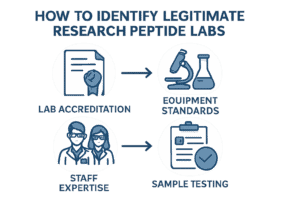
Muscle Growth: Why Research Peptides Matter
Here’s a number that makes people sit up: some controlled trials have reported lean-mass increases approaching 15% over about 8 weeks when certain peptide interventions are paired with structured resistance training. That isn’t marketing copy. It’s the kind of result that shows up when diet, training volume, and measurement methods (DEXA, MRI, or ultrasound) are tightly managed. The catch is simple, peptides aren’t magic. They push on specific physiological switches that control recovery, inflammation, and anabolic signaling.
Research peptides for muscle growth are short amino-acid sequences synthesized for experimental work in labs and clinical research settings. Unlike generic “muscle boosters,” these compounds are typically produced to defined specifications, often with high stated purity and batch documentation. In practice, they function as signaling molecules that can influence endocrine output, tissue repair, and immune activity. Worth noting.
Muscle physiology isn’t just “lift heavy, grow.” It’s what happens after the set: mechanotransduction, inflammatory signaling, satellite cell behavior, and protein turnover. Peptides have become a serious research tool because they can nudge those processes in targeted ways, for example by increasing growth hormone (GH) pulse amplitude, influencing IGF-1 activity, or shifting recovery kinetics after strain. Over the last decade, the literature has gotten more crowded, more rigorous, and honestly more skeptical in a good way. You’ll see measurable outcomes reported across strength, endurance, and hypertrophy endpoints, but you’ll also see plenty of null or mixed findings when protocols are sloppy or endpoints are cherry-picked.
So why the spike in interest? Better measurement, for one. Modern assays let researchers quantify pharmacokinetics and tissue-specific effects rather than guessing, half-life, receptor binding affinity, downstream signaling markers, the whole chain. And pharmaceutical R&D has poured money into peptides that target specific pathways tied to hypertrophy and repair. That investment shows up as cleaner manufacturing standards, tighter analytics, and better-designed trials than what we were seeing 15 to 20 years ago.
A caution that needs to be said plainly: “research-grade” is a label, not an approval. These compounds aren’t cleared for general human use outside regulated clinical trials. But for investigators studying muscle remodeling, they’re a useful window into how muscle repair and hypertrophy might be directed with more control than classic anabolic steroids or exogenous GH. If you want to sort signal from noise, focus on mechanism, endpoints, and study design, not gym anecdotes.
If you’re comparing options, our clinic recommends sourcing from trusted suppliers like Amino Pharm, which guarantees 99% purity and US-made peptides, always batch tested to ensure quality. That matters because low-quality material doesn’t just “work less,” it can distort results, introduce contaminants, and wreck reproducibility (I’ve seen labs lose weeks chasing a phantom effect that turned out to be a bad lot). Big difference. If you want to learn more about the best muscle building peptides for athletes, we’ve put together a solid resource worth checking out.
Molecular Mechanisms: How Peptides Stimulate Muscle Growth
Muscle growth isn’t just about pumping iron. It’s coordinated biology, a stack of signals that rise and fall depending on training stress, sleep, nutrition, and baseline endocrine status. Peptides, especially growth hormone secretagogues, interact with some of the most studied pathways in hypertrophy research: the GH axis, IGF-1 signaling, and mTOR. Those systems overlap, but they’re not interchangeable.
Start with GHRH analogs and related secretagogues. Peptides that mimic or stimulate growth hormone releasing hormone (GHRH) bind receptors on the pituitary and trigger a cascade that increases GH secretion. This isn’t a blunt-force approach. The GH pulses produced can look more physiologic than constant exposure, which may matter for receptor sensitivity and side-effect profiles. Sermorelin and tesamorelin are common examples in the literature, both explored for their ability to increase endogenous GH output under controlled conditions.
Once GH rises, the liver responds by producing insulin-like growth factor 1 (IGF-1), a major mediator of muscle cell growth. IGF-1 binds receptors on muscle fibers and activates intracellular signaling, most notably the mTOR pathway, which regulates protein synthesis. When mTOR signaling is upregulated, translation of contractile proteins increases, supporting hypertrophy and recovery. Without that machinery, training stimulus doesn’t translate efficiently into new tissue. That’s the unglamorous truth.
Satellite cell activation is another mechanism that keeps showing up in serious discussions. These muscle stem cells sit quiet until injury, overload, or growth signals wake them up. Peptides like BPC-157 have shown effects in animal models related to satellite cell proliferation and migration, which may support repair processes after muscle damage. That’s especially relevant for recovery capacity, because the ability to train consistently often determines long-term gains more than any single acute “anabolic” spike. But, and this matters, translating animal repair data to human hypertrophy outcomes is still an open question.
Then there are compounds like PEG-MGF (a mechano growth factor analog), which act more locally within muscle tissue. The idea is to stimulate satellite cells and protein synthesis without relying on systemic GH elevation. That could reduce systemic side effects linked to broader hormone changes, but the human evidence base is still developing, and dosing strategies aren’t standardized (no surprise there).
Here’s a quick comparison of how some key peptides engage with signaling pathways:
| Peptide | Primary Target | Mechanism | Clinical Use Notes |
|---|---|---|---|
| Sermorelin | GHRH receptor | Stimulates pituitary GH release | Used in GH deficiency studies |
| Tesamorelin | GHRH receptor | Increases GH, reduces visceral fat | FDA-approved for HIV-related lipodystrophy |
| BPC-157 | Tissue repair signaling | Enhances satellite cell activation, angiogenesis | Experimental, promising for recovery |
| PEG-MGF | Muscle-local IGF-1 receptor | Stimulates satellite cells & protein synthesis | Under clinical investigation |
Pharmacokinetics vary a lot across these compounds. Sermorelin has a short half-life measured in minutes, which is why research protocols often involve frequent administration. Tesamorelin lasts longer due to PEGylation, which slows degradation and clearance. If you don’t account for half-life and receptor dynamics, you can misread results fast.
The bottom line is straightforward: peptides can influence muscle growth by tuning hormone release patterns, protein synthesis signaling, and cellular regeneration. If you want to explore these compounds effectively, focus on molecular targets and downstream effects, not just “before and after” outcomes. That’s where legitimate science separates itself from hype. For a deeper look at types and safety profiles, check out this detailed overview of Peptides for Bodybuilding: Efficacy, Safety, Types, and More (healthline.com).
Remember, working with research-grade peptides means relying on proper batch testing and analytical methods to confirm identity, purity, and consistency. Skimp on that and you’re basically guessing.
Pharmacokinetics and Administration: Optimizing Peptide Efficacy
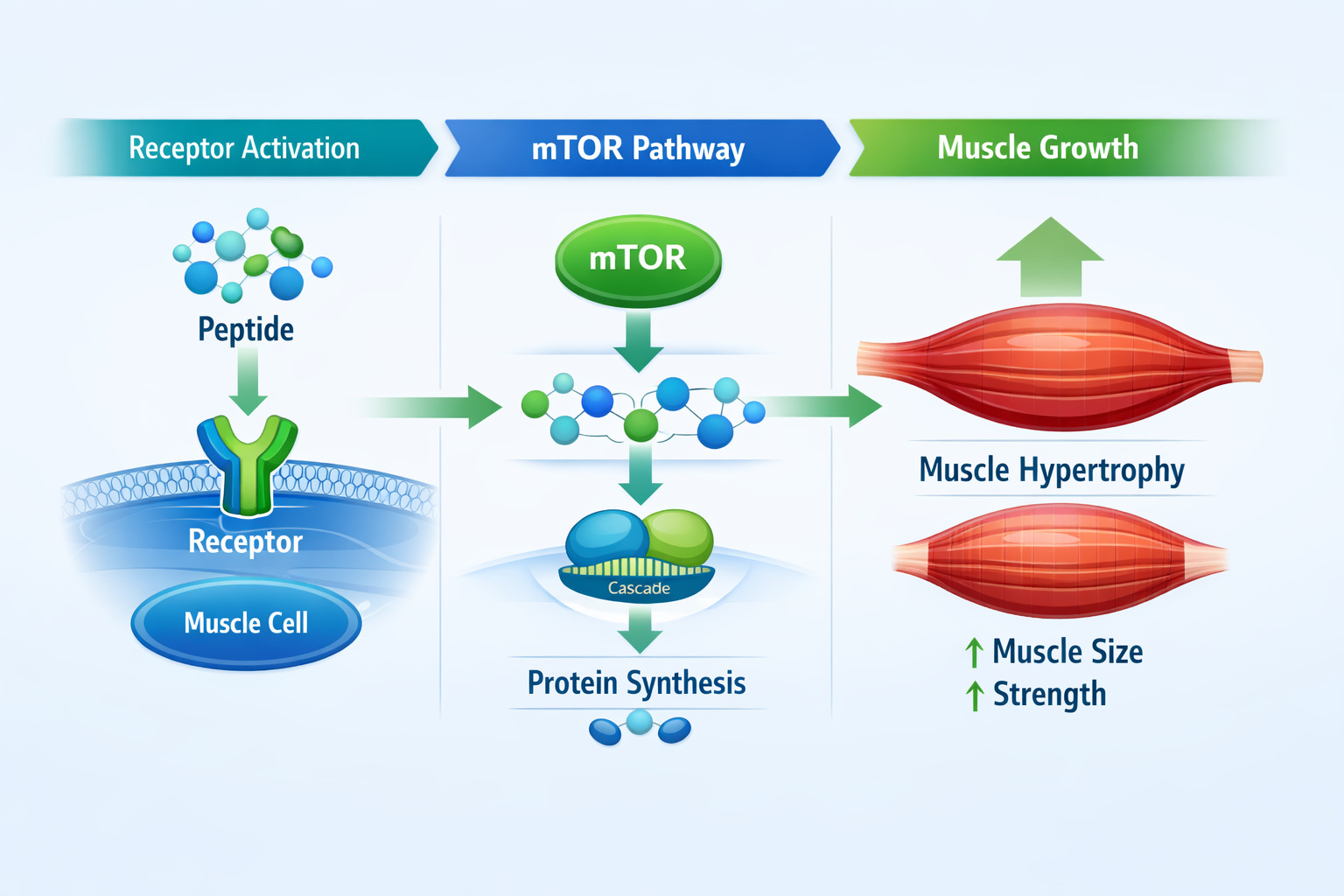
Pharmacokinetics is where a lot of “promising” peptide work quietly falls apart. If you don’t understand how a compound is absorbed, distributed, metabolized, and excreted (ADME), you can’t interpret outcomes with any confidence. Many research-grade peptides are relatively large and hydrophilic, which is a polite way of saying oral delivery usually fails. GI enzymes break them down before meaningful systemic exposure occurs, so for many muscle-targeting peptides, oral administration is limited or simply ineffective.
Injectable routes, typically subcutaneous or intramuscular, are the standard in research protocols because they bypass digestive degradation. Ipamorelin, for example, is often described as having a plasma half-life around 2 hours after subcutaneous injection, long enough to stimulate GH release without hanging around all day. That profile is one reason protocols frequently split dosing, sometimes multiple daily administrations, sometimes paired with other compounds to test combined effects. Oral peptide delivery is still being explored through protective formulations, but bioavailability commonly stays low, often under 10%, which makes injections the practical choice in many study designs.
After injection, distribution is usually rapid. These compounds act on specific receptors in the hypothalamic-pituitary axis or in peripheral tissue, depending on the peptide. Metabolism tends to be fast, largely via peptidases in the liver and kidneys, which is why short half-lives are so common. And that creates a real protocol problem: dose too infrequently and the signal disappears, dose too frequently and you may increase the risk of receptor desensitization or side effects.
Dosing protocols vary widely by compound and endpoint. Ipamorelin is often dosed around 200 to 300 mcg per injection, 2 to 3 times daily in research contexts, frequently timed around sleep or training to align with GH pulsatility. CJC-1295 with DAC (Drug Affinity Complex) is a different animal, its extended half-life is often described as up to about a week, which supports weekly dosing. The non-DAC version typically requires much more frequent administration. Cycling also comes up for a reason: continuous exposure can blunt responsiveness, so many protocols use 8 to 12 weeks on, then 4 to 6 weeks off (the exact schedule depends on the peptide, the model, and the study’s risk tolerance).
Stacking is where things get messy fast. Combining secretagogues like Ipamorelin with CJC-1295 is commonly discussed because one can trigger release while the other supports a longer signaling window. Some researchers also evaluate co-administration with IGF-1 analogs for more direct anabolic signaling. But stacking demands discipline: stability, storage conditions, timing, and analytical verification all matter. If purity or potency is off, your “synergy” might just be noise.
For practical application, always use peptides sourced from reputable suppliers, like Amino Pharm, known for clinically tested, US-made peptides with 99% purity. Remember, these compounds are for research use only and not approved for human consumption. Proper administration and dosing protocols aren’t about convenience. They’re the difference between interpretable data and a wasted study.
Review of Top Research Peptides for Muscle Growth: Scientific Evidence and Clinical Data
A few peptides show up again and again in the literature because they have plausible mechanisms and at least some human data behind them. That doesn’t mean they all “work” the way social media claims. It means they’re studied often enough that we can talk about mechanisms, dosing patterns used in research, and what the results actually looked like.
Ipamorelin: Targeted Growth Hormone Release Without the Drama
Ipamorelin is a selective growth hormone secretagogue that mimics ghrelin by binding to the growth hormone secretagogue receptor (GHS-R1a). Compared with older secretagogues, it’s often described as producing GH release with minimal impact on cortisol or prolactin, which is one reason it’s considered a cleaner option in endocrine-focused protocols. The mechanism is tied to pituitary-driven pulsatile GH release, which then influences downstream anabolic signaling through IGF-1.
In research settings, dosing in the 200 to 300 mcg range, administered 2 to 3 times daily, is commonly cited to produce consistent GH elevation over multi-week periods. Claims about “no tolerance” should be treated carefully because tolerance depends on protocol design, subject characteristics, and outcome definitions. Still, many reports describe favorable tolerability, with injection-site irritation being one of the more common minor issues.
CJC-1295 (With and Without DAC): Sustained GH Elevation for Hypertrophy
CJC-1295 stimulates the hypothalamus to increase growth hormone-releasing hormone (GHRH) signaling, which prompts pituitary GH release. The presence of DAC changes the pharmacokinetics dramatically, extending half-life from roughly minutes to days, which supports weekly or biweekly dosing in many protocols. That dosing convenience is real, and it can improve adherence in controlled research environments.
Evidence for hypertrophy outcomes is promising but mixed. Some studies report improvements in lean mass and nitrogen retention over 12-week protocols, while others show smaller effects or plateaus, especially when training stimulus and protein intake aren’t well controlled. Mechanistically, it’s a reasonable candidate for recovery-focused protocols because of its influence on GH pulsatility and downstream anabolic signaling. People often compare it in discussions like Ipamorelin vs Sermorelin, and CJC-1295 tends to get attention because of its longer action. But the “best” choice depends on the research question, not popularity.
Hexarelin and Sermorelin: Comparing Receptor Affinities and Efficacy
Hexarelin is a synthetic hexapeptide with strong affinity for GHS-R1a receptors and is frequently described as more potent for GH release than Ipamorelin. The trade-off is that it may also increase cortisol and aldosterone, which can complicate longer protocols or interpretation of body-composition outcomes. Sermorelin is a GHRH analog that stimulates endogenous GH release, but it has a short half-life and often produces a milder effect profile.
Head-to-head comparisons tend to show a stronger GH surge with Hexarelin, but less selectivity. That can translate to more pronounced anabolic signaling in some contexts, while increasing the risk of endocrine disruption. Sermorelin’s milder profile can be easier to manage over longer timelines, though it may require combination strategies in designs aiming for larger GH/IGF-1 shifts. Trade-offs like these are why protocol design matters more than forum rankings.
IGF-1 LR3 and MK-677: Direct Anabolic Action on Muscle Tissue
IGF-1 LR3 is a long-acting insulin-like growth factor analog with increased stability compared to endogenous IGF-1. It doesn’t rely on pituitary GH release in the same way secretagogues do. Instead, it can act more directly at the muscle level, influencing satellite cell activity, protein synthesis, and proteolysis. The upside is a more direct anabolic pathway. The downside is that glucose regulation becomes a real consideration, hypoglycemia risk isn’t theoretical, and monitoring matters.
MK-677 (Ibutamoren) is an orally active GH secretagogue that mimics ghrelin and increases GH and IGF-1. Its longer half-life, often cited near 24 hours, supports once-daily dosing, which is convenient for longer studies. Data in older adults and muscle-wasting contexts has shown improvements in lean mass and sometimes functional outcomes, though appetite increase and fluid retention are common confounders. And yes, those side effects can complicate body-composition interpretation.
Emerging Peptides: Tesamorelin and BPC-157
Tesamorelin was developed for HIV-associated lipodystrophy and has clinical data supporting effects on GH secretion and body composition. Muscle-related outcomes are often discussed in the context of improved metabolic signaling and fat loss rather than pure hypertrophy. BPC-157 is more of a repair and recovery candidate than a classic anabolic agent. It’s associated in preclinical work with angiogenesis, collagen synthesis, and anti-inflammatory signaling, which may reduce downtime after injury. Direct hypertrophy evidence in humans is limited, but as an adjunct for recovery-focused protocols, it’s a reasonable area of interest (even if the hype gets ahead of the data, in my opinion).
| Peptide | Mechanism | Half-Life | Typical Dose Range | Muscle Growth Effectiveness | Safety Profile | Notes |
|---|---|---|---|---|---|---|
| Ipamorelin | GH secretagogue (GHS-R1a agonist) | ~2 hours | 200-300 mcg, 2-3x/day | Moderate to high | Low side effects | Minimal cortisol increase |
| CJC-1295 DAC | GHRH analog with long half-life | 6-8 days | 1-2 mg weekly | Moderate | Mild injection site reactions | Longer dosing interval |
| CJC-1295 | GHRH analog (no DAC) | ~30 minutes | 100-200 mcg daily | Moderate | Generally safe | Requires daily administration |
| Hexarelin | GH secretagogue (GHS-R1a agonist) | ~30 minutes | 100-200 mcg daily | High | Possible cortisol increase | More potent but higher side effects |
| Sermorelin | GHRH analog | ~10 minutes | 100-200 mcg daily | Low to moderate | Very safe | Short half-life, less potent |
| IGF-1 LR3 | Direct IGF-1 analog | 20-30 hours | 20-50 mcg daily | High | Risk of hypoglycemia | Direct muscle anabolic effect |
| MK-677 | Oral GH secretagogue | ~24 hours | 10-25 mg daily | Moderate to high | Increased appetite, edema | Convenient oral dosing |
| Tesamorelin | GHRH analog | ~30-60 minutes | 1-2 mg daily | Moderate | Good safety profile | Originally for lipodystrophy |
| BPC-157 | Tissue repair peptide | Unknown | 200-500 mcg daily | Indirect | Very safe | Focus on recovery, not direct hypertrophy |
Choosing a peptide or combination comes down to the endpoint and the constraints of the study. Are you trying to amplify GH pulses, test direct anabolic signaling, or speed recovery between training bouts? No single compound wins every category. Ipamorelin’s effects can be meaningful in GH-focused protocols, but many designs pair it with longer-acting compounds like CJC-1295 DAC, or with IGF-1 analogs, when the goal is additive signaling rather than a single short pulse.
If you're curious about specific combinations, check out our guide on Ipamorelin vs Sermorelin to understand how these two compare in potency and usage.
One final note: dosing and administration need strict protocols, with batch testing and rigorous analytical methods confirming identity and purity. Cut corners here and you risk inconsistent results or worse, compromising the entire study.
For muscle growth, peptides aren’t magic. They require timing, dosing discipline, and a clear rationale grounded in pharmacokinetics and clinical data. And yes, these compounds are
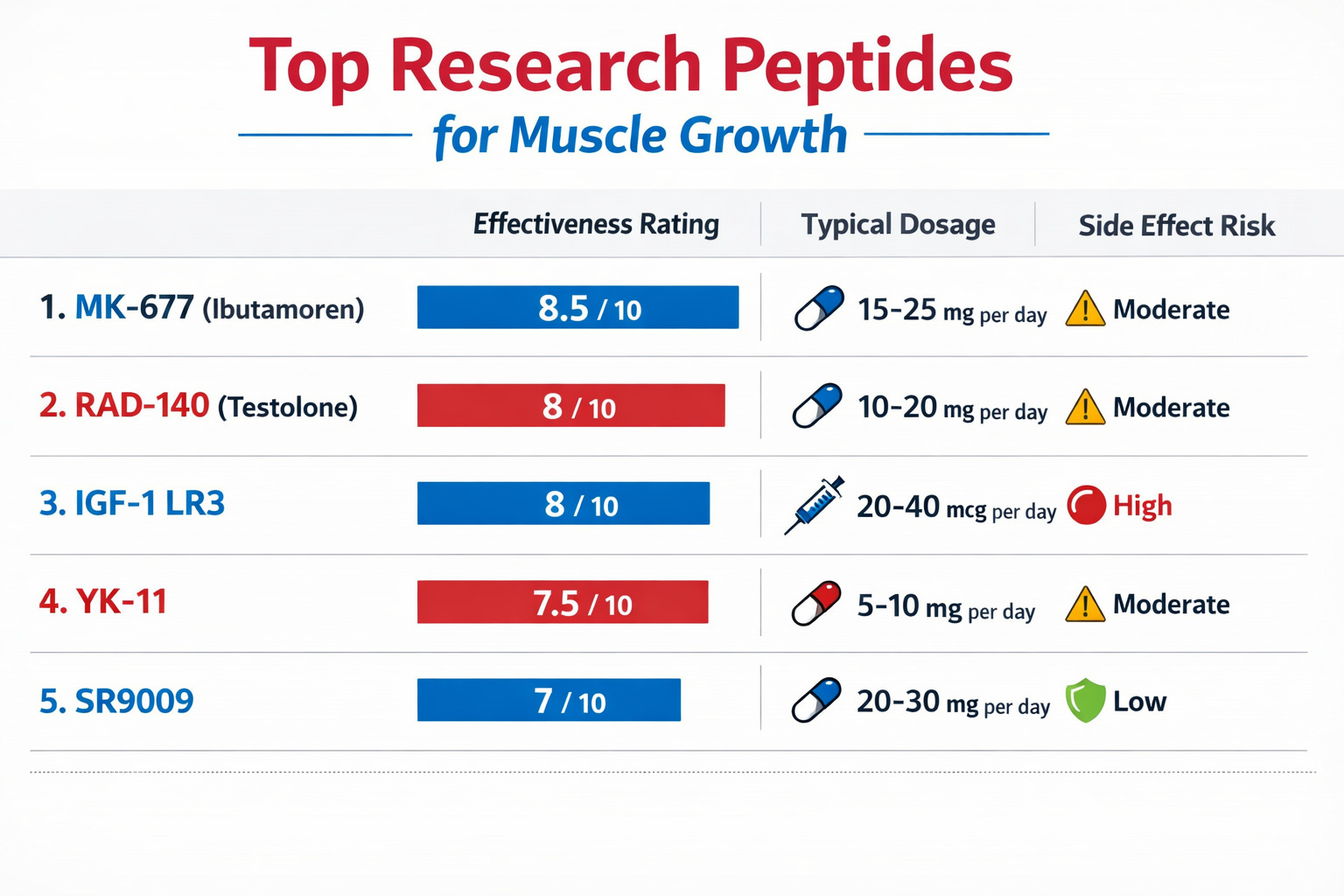
for research use only, not human consumption. When done carefully, though, they offer a rare view into muscle physiology that you won’t get from standard supplements.
If you want more on how peptides impact muscle function beyond growth, don’t miss the recent review on Glucagon-like peptide-1 receptor agonists and muscle … (sciencedirect.com).
Comparative Analysis: Which Peptides Deliver the Best Muscle Growth Results?
Choosing peptides for muscle gain research isn’t about chasing the loudest claim. You need the full picture: efficacy signals, safety considerations, and how each compound behaves in vivo (pharmacokinetics). Some peptides spike GH quickly and disappear. Others create a slower, steadier endocrine push that may matter more for recovery and longer-term remodeling.
Take three common reference points: CJC-1295 (without DAC), Ipamorelin, and BPC-157. CJC-1295 supports GH release through hypothalamic signaling, with downstream IGF-1 changes that can influence hypertrophy. Its half-life is often described around 30 minutes, but biological effects can last longer because GH pulsatility changes don’t vanish the moment the molecule clears. Ipamorelin, by contrast, is known for rapid onset and a shorter half-life (often cited near 2 hours), which makes it easy to time around sleep or training windows in study designs. BPC-157 isn’t primarily a GH tool. It’s discussed because of repair signaling, angiogenesis, and inflammatory modulation, which can influence how quickly a subject returns to full training after soft-tissue irritation or strain.
And recovery is the bottleneck more often than people admit.
Here’s a quick rundown of how these stack up:
| Peptide | Muscle Growth Efficacy | Safety Profile | Pharmacokinetics | Ideal Use Case |
|---|---|---|---|---|
| CJC-1295 | High; boosts GH and IGF-1 levels | Generally well-tolerated | Half-life ~30 min; effects last hrs | Long-term growth stimulation |
| Ipamorelin | Moderate-high; GH secretagogue | Low side effects | Half-life ~2 hrs; fast onset | Short cycles, minimal side effects |
| BPC-157 | Indirect; enhances recovery | Excellent safety record | Stable in vivo; slow metabolism | Injury recovery, inflammation control |
| Stacking strategies are increasingly studied because they can increase GH output while limiting side effects, at least in theory. Pairing CJC-1295 with Ipamorelin is the classic example: one supports a longer signaling window, the other triggers a more immediate pulse. That combination takes advantage of different kinetics and receptor actions, aiming for a more physiologic pattern than either compound alone. |
Population differences matter. Older adults with sarcopenia may respond better to conservative endocrine modulation plus nutrition support (adequate protein, leucine threshold, resistance training adherence) because anabolic resistance is real. Younger athletes chasing rapid hypertrophy often gravitate toward faster-acting secretagogues and more aggressive stacks, though that also raises the bar for monitoring and protocol discipline.
Peptide purity and batch consistency can’t be treated as an afterthought. Research-grade material from reputable suppliers like Amino Pharm, which provide 99% purity and conduct batch testing, reduces variability and improves interpretability. This isn’t academic, variability in raw material can produce wildly different outcomes even when dosing looks identical on paper (and yes, that happens).
Peptide comparison for muscle growth isn’t one-size-fits-all. The best results come from understanding mechanism, kinetics, and matching the protocol to the research endpoint. Curious about the chemical quality behind your peptides? You might want to check out details on understanding the importance of GMP certification.
Safety, Side Effects, and Regulatory Considerations in Peptide Use
Let’s cut the fluff: peptides aren’t magic pills. Side effects are usually mild in controlled research settings, but they can still show up fast if dosing is sloppy or the material isn’t what the label claims. The most common issues reported in studies and case reports are local injection-site reactions (redness, itching, swelling), short-lived water retention, and mild headaches. With growth hormone secretagogues such as CJC-1295 and Ipamorelin, the odds of shifting cortisol or prolactin look low in the published data, but they’re not zero. BPC-157 often gets described as “well tolerated” in the literature, with relatively few documented adverse effects even with longer exposure windows.
Rare but higher-stakes concerns deserve a clear, adult conversation. Growth hormone signaling can influence glucose handling, so changes in fasting glucose or insulin sensitivity are plausible, especially in older subjects or anyone already trending prediabetic. There’s also the recurring, theoretical cancer-risk question tied to GH and IGF-1 pathways. Current clinical evidence doesn’t confirm a direct causal link in typical research contexts, but the absence of proof isn’t proof of absence. Long-term safety data are thin, plain and simple.
Most human trials for peptide-style interventions run under 12 weeks. That’s enough time to spot obvious tolerability problems, it’s not enough time to answer “what happens after a year?” Big difference.
Regulation is where things get messy. Legal frameworks vary by country, and even within the same country the rules can differ depending on whether a compound is treated as a drug, a research chemical, or something in between. Peptides marketed for physique outcomes are often sold with “not for human use” language to avoid FDA and similar oversight. That shifts responsibility onto the research team: ethical sourcing, documentation, chain of custody, and analytical verification (identity and purity) become non-negotiable.
Amino Pharm’s peptides, for example, ship with documentation supporting 99% purity. That’s table stakes for credible work. In practice, our team still recommends confirming what you receive with independent testing when budgets allow, because lot-to-lot drift and storage damage are real. I’ve seen a “clean” COA from a third-party vendor fail an incoming HPLC check by a wide margin, and the project lost six weeks while the lab retraced steps. Painful lesson.
Ethics are just as important as chemistry. Administering research peptides to humans outside an approved clinical trial is illegal in many jurisdictions, and it’s hard to justify scientifically when you can’t control dosing, monitoring, or adverse-event reporting. The current hype cycle has pushed some people into self-experimentation with underregulated products, which is, frankly, a bad idea. (If you’ve ever tried to interpret lab results from someone who changed three variables at once, you know why.)
If you’re tracking side effects from research peptides for muscle growth, keep your checklist boring and consistent. Watch for edema, unusual fatigue, joint pain, carpal-tunnel-like symptoms, mood changes, acne, and signs of endocrine disruption. Baseline labs help, follow-up labs help more, and a symptom log helps more than people think. Pre-existing conditions matter, too. Anyone with a history of hormone-sensitive cancers should avoid GH-stimulating compounds outright, and anyone with impaired glucose control should treat GH/IGF-1 pathway manipulation as a high-caution category.
A 2025 report highlighted that compliance with GMP certification reduces contamination risk significantly, which tracks with what analytical labs see in the real world. Worth noting. You’ll also want to cross-check general safety summaries with sources like Peptides: What are they, uses, and side effects (medicalnewstoday.com), then compare those claims against primary literature and actual assay data.
Peptide safety for muscle growth comes down to quality control, responsible protocols, and a clear-eyed view of the legal boundaries. Nobody has found a zero-downside compound yet, and ignoring risk because the upside sounds exciting is how research turns into a cautionary tale.
Integrating Peptides with Training and Nutrition: Maximizing Muscle Growth Outcomes
Peptides don’t work in isolation. If the goal is hypertrophy, the training stimulus and nutrition plan do most of the heavy lifting, and the peptide is, at best, a modifier of the response. Think of these compounds as signaling molecules that can nudge pathways tied to recovery, connective tissue turnover, appetite, sleep architecture, or growth hormone pulsatility. Without progressive overload and adequate calories, the “signal” doesn’t have much to build with.
Resistance training is the mechanical trigger. It creates the local damage and the adaptive demand, then the body answers with muscle protein synthesis, satellite cell activity, and remodeling. Pair that with GH secretagogues or IGF-1 pathway analogues and you may see a stronger anabolic environment, but timing and context matter. Some labs align dosing around training because post-exercise physiology already shifts toward repair, glycogen replenishment, and inflammatory signaling that later resolves into adaptation. And yes, people obsess over timing, sometimes more than the basics.
But skipping the basics blunts everything.
For example, peptides like GHRP-6 or Ipamorelin that stimulate growth hormone release are often scheduled around training sessions in research protocols. The rationale is straightforward: match the intervention to periods when recovery demand is high and when sleep later supports GH pulses. The caveat is just as straightforward: GH isn’t a direct “muscle on” switch, and higher GH or IGF-1 markers don’t guarantee measurable lean mass changes in a short study window. Many trials track proxies like IGF-1, nitrogen balance, or recovery markers rather than DEXA-confirmed hypertrophy.
Nutrition is where the unglamorous work happens. Protein intake, especially essential amino acids and leucine-rich sources, supplies the substrate for repair. If dietary protein is low, the body can’t synthesize new tissue efficiently, no matter how interesting the signaling looks on paper. In practical terms, many sports nutrition position statements land around 1.6 to 2.2 g/kg/day for trained individuals aiming to gain lean mass, with total energy intake and carbohydrate availability influencing training quality and recovery. That range isn’t magic, but it’s a useful, evidence-based starting point.
Personalization matters more than most people want to admit. Pharmacokinetics differ by peptide, absorption and clearance vary, and individual factors like age, training age, sleep debt, and metabolic health can change the response. A protocol that looks “fine” for a 25-year-old resistance-trained subject can underperform, or create more side effects, in a 45-year-old with borderline insulin resistance. That’s why consistent material quality matters. Clinical-grade sourcing and batch consistency reduce one major variable, which is essential when you’re trying to interpret outcomes rather than chase anecdotes.
Lifestyle factors still decide the ceiling. Sleep quality, stress load, alcohol intake, and overall health status influence endocrine signaling and tissue repair. Growth hormone release is tightly linked to slow-wave sleep, so poor sleep can erase whatever marginal benefit a protocol might offer. And while it should go without saying, peptides are research-grade and for lab use only, they’re not approved for human consumption. Any human work belongs inside ethical oversight with appropriate monitoring and adverse-event reporting.
Peptides can be useful tools when training, nutrition, and recovery are already dialed in. Miss one link in the chain, timing, diet, sleep, and you’re leaving results on the table. If you want the full picture on dosing precision and protocol design, see optimal ratios for BPC 157 and TB 500, it’s a good example of how small adjustments can change interpretation.
Future Directions: Emerging Research and Innovations in Peptide Therapy for Muscle Growth
The science is moving quickly, and the next generation of peptide candidates looks promising and messy at the same time. New molecules are being engineered for better stability, tighter receptor selectivity, and improved delivery so they aren’t degraded before they reach the target tissue. One common approach is amino-acid substitution or backbone modification to resist enzymatic breakdown, which can extend half-life and smooth out exposure. Fewer injections and more consistent receptor engagement are attractive outcomes, especially in longer protocols.
Delivery tech is also changing. Subcutaneous injection is still the default in most research, mostly because it’s predictable. Researchers are testing alternatives like transdermal systems, intranasal delivery, and oral formulations designed to survive the GI tract long enough to be absorbed. Some of these approaches will fail, that’s normal. But if even one delivery method improves bioavailability without introducing new safety problems, it could reshape how long-term recovery studies are designed.
Combination protocols are another active area. Instead of pushing one pathway hard, teams are exploring multi-pathway approaches, for example, pairing GH secretagogues with collagen peptides or other agents aimed at connective tissue remodeling. The logic is reasonable: muscle adaptation doesn’t happen in isolation from tendons, fascia, and joint structures. A more balanced outcome would be welcome, because “stronger muscle, same old tendon” is a recipe for overuse injuries.
And clinical trials still have a credibility gap to close. Many peptides promoted online have limited human data, and a lot of what circulates is based on small cohorts, short durations, or animal models. That doesn’t mean the mechanisms are wrong, it means the effect size in humans, at realistic doses, under real training conditions, is still uncertain. Ongoing trials are trying to answer the practical questions researchers actually care about: magnitude of benefit, metabolic tradeoffs, receptor desensitization with chronic exposure, and what happens after discontinuation.
Quality control is the unglamorous bottleneck. The market remains crowded with products that vary widely in purity and potency, which wrecks reproducibility. Sourcing from reputable suppliers like Amino Pharm (99% purity documentation, batch testing) helps reduce variability, but serious labs still treat incoming verification as part of the workflow when possible. If you can’t trust the input, you can’t trust the outcome.
One last thought: hype often runs ahead of the data, and it’s getting old. Pieces like "The Peptide Craze – Ground Truths – Substack (erictopol.substack.com)" are useful precisely because they push back on exaggerated claims and remind readers that biology is complicated and incentives are not always aligned.
The future probably looks like more targeted, more individualized peptide strategies that fit alongside training and nutrition rather than pretending to replace them. For now, the best results come from careful protocol design, transparent reporting, and a strong foundation of diet, sleep, and progressive training.
Frequently Asked Questions
How soon can muscle growth results be expected from research peptides?
Muscle growth results from research peptides typically begin to appear within 4 to 6 weeks. The timeline depends on the specific compound, dose, dosing frequency, training stimulus, total calorie intake, sleep quality, and individual response. Many protocols support recovery and training capacity first, with visible hypertrophy lagging behind.
Are research peptides safe for long-term use in muscle growth?
Many peptides show reasonable short-term tolerability in controlled settings, but long-term effects remain under-studied for a large portion of compounds discussed online. Prolonged exposure may carry unknown endocrine or metabolic risks, so any human research requires appropriate medical supervision, ethics approval, and monitoring.
Can multiple peptides be stacked for enhanced muscle growth?
Yes, stacking is common in research discussions. A frequently cited example is combining Ipamorelin with CJC-1295 to increase growth hormone secretion. The catch is that stacking increases variables and can increase side-effect risk, which makes outcomes harder to interpret. If the goal is clean data, simpler protocols often win.
What are the main differences between injectable and oral peptides?
Injectable peptides typically have higher bioavailability and more predictable exposure because they bypass gastrointestinal degradation. Oral peptides often break down in the GI tract and may have limited absorption, leading to weaker or inconsistent effects. For muscle-related research outcomes, injections are used more often because they’re easier to standardize.
Where can legitimate research peptides be sourced safely and legally?
Legitimate research peptides should come from verified research suppliers or licensed medical channels that comply with local regulations and provide lot-specific documentation. Avoid unverified marketplaces, because counterfeit, mislabeling, and contamination are common failure points. Legal sourcing and documentation protect both the research and the researchers.
References
- "Peptides for Bodybuilding: Efficacy, Safety, Types, and More" , healthline.com , https://www.healthline.com/nutrition/peptides-for-bodybuilding
- "Glucagon-like peptide-1 receptor agonists and muscle …" , sciencedirect.com , https://www.sciencedirect.com/science/article/pii/S1043661825003524
- "Peptides: What are they, uses, and side effects" , medicalnewstoday.com , https://www.medicalnewstoday.com/articles/326701
- "The Peptide Craze – Ground Truths – Substack" , erictopol.substack.com , https://erictopol.substack.com/p/the-peptide-craze
- "Supplementation of Specific Collagen Peptides Following …" , frontiersin.org , https://www.frontiersin.org/journals/physiology/articles/10.3389/fphys.2022.838004/full
- "'People are turning themselves into lab rats': the injectable …" , theguardian.com , https://www.theguardian.com/wellness/2026/feb/05/injectable-peptides-trend
- "Strength Peptides: Supporting Muscle, Recovery, and …" , reyouvenate.com , https://www.reyouvenate.com/post/strength-peptides
- "Peptides: Hype, Hope, and a Few Hard Truths" , brgeneral.org , https://www.brgeneral.org/news-blog/peptides-hype-hope-and-few-hard-truths
- "Influence of Specific Collagen Peptides on Recovery After …" , clinicaltrials.gov , https://clinicaltrials.gov/study/NCT05220371
- "a randomised controlled trial | British Journal of Nutrition" , cambridge.org , https://www.cambridge.org/core/journals/british-journal-of-nutrition/article/collagen-peptide-supplementation-in-combination-with-resistance-training-improves-body-composition-and-increases-muscle-strength-in-elderly-sarcopenic-men-a-randomised-controlled-trial/9426E375742D094F91029FD0364815C4