Why Understanding Research Chemicals Matters: A Data-Driven Introduction
Research chemicals aren’t some fringe curiosity anymore. Their use in scientific labs and industrial settings has jumped sharply over the last decade. One data point that stuck with me: a 2023 market report estimated global demand for novel chemical entities used specifically in research rose by roughly 45% compared to 2018. That’s not a rounding error. It’s a signal that these compounds now sit near the center of pharmacology research, molecular biology, and applied biotech R&D.
So why the surge? A lot of it comes down to the pace of drug discovery and experimental therapeutics. Research teams need access to compounds that aren’t approved, and in many cases aren’t even well characterized, but still look promising for new mechanisms of action or signaling pathways. Peptides and synthetic analogs are a good example. They’re studied for effects on growth hormone release, muscle protein synthesis, recovery markers, and downstream endocrine signaling. But the novelty that makes them interesting also creates a regulatory gray zone. Agencies in Europe and the US are still trying to keep up, and they’re forced to balance scientific access with safety and diversion concerns.
That’s why a clear research chemicals definition matters. Without it, labs can end up mixing “research-grade” materials with products that are mislabeled, contaminated, or simply not what the label claims. Big difference. Confusing the two can burn budgets, distort results, and create avoidable safety issues. If you’re thinking about where to buy research chemicals or where and how to research chemicals drugs buy, you need to know exactly what you’re dealing with. Analytical methods and batch testing aren’t “nice to have.” They’re the backbone of reproducible work, especially when you’re building assays, validating targets, or comparing results across sites.
Defining Research Chemicals: Scientific and Regulatory Perspectives
Let’s get specific.
In scientific terms, research chemicals are chemical substances synthesized or extracted for scientific investigation rather than clinical use. They aren’t standard pharmaceuticals backed by years of phased clinical trials, and they aren’t supposed to be sold for human consumption. They’re tools. In practice, that means compounds used to probe biological mechanisms, test hypotheses, validate receptor targets, or generate early pharmacology data before anything looks like a drug candidate.
The chemistry itself spans a wide range. Some are peptides designed to mimic, block, or amplify specific signaling pathways tied to muscle growth, inflammation, or metabolic regulation. Others are synthetic analogs of known neurotransmitters, hormone precursors, or receptor ligands. A recurring issue is that their ADME profile, absorption, distribution, metabolism, and excretion, often isn’t fully mapped. That’s where “research-grade” stops being marketing language and starts being a technical requirement. If a supplier can’t provide batch testing, identity confirmation, and purity verification, your data can go sideways fast. And yes, it happens. I’ve seen labs lose weeks because a “99% pure” peptide arrived with a second peak on HPLC that nobody could explain until the vendor finally admitted they’d changed synthesis steps.
Regulation is where things get messy. In the US, many of these substances don’t fit neatly into controlled substance schedules unless they’re explicitly listed or captured by analogue provisions. That nuance leaves a lot of compounds in limbo: legal to possess for research in some contexts, not approved for human use, and absolutely not legitimate as supplements. Europe often looks similar in principle but more fragmented in execution, with country-by-country controls and faster national bans on specific structures. This patchwork is why substances like research chemicals DMT and other novel psychoactive substances get lumped together with street drugs in public conversation. The context matters. In a lab, the point is analytical characterization and mechanism work, not consumption.
The term itself gets abused. Some vendors slap “research chemical” on low-purity, unverified products to dodge scrutiny, and it muddies the waters for everyone. Proper scientific usage demands transparency about synthesis, storage conditions, analytical methods, and batch purity, plus documentation like a Certificate of Analysis (CoA) that actually matches the lot you received. Amino Pharm, for example, supplies peptides advertised at 99% purity with US-made quality control and research use only labeling, not human consumption. That’s the baseline you should expect from any serious supplier (and frankly, anything less is hard to defend).
In short, these compounds aren’t a catch-all label for anything novel. They’re chemically defined substances with specific research applications, and the credible ones are tightly documented and analytically scrutinized. Knowing the distinction helps you avoid mixing legitimate lab tools with uncontrolled, poorly characterized materials. If you want to understand where to safely buy research chemicals, start by getting the research chemicals definition straight, then work outward into the regulatory and quality standards that govern them, including research chemical regulation frameworks. For more on quality and compliance, understanding the importance of GMP certification is a good place to start.
Comprehensive Overview of Research Chemical Types and Their Mechanisms

Research chemicals span a wide spectrum of substances, and most can be grouped into chemical families based on molecular scaffolds and biological targets. When people hear “research chemicals,” they often picture designer drugs. In actual lab work, these compounds are more often treated as reference standards, receptor probes, assay controls, or early-stage leads for structure activity relationship (SAR) studies. The major families you’ll see discussed include tryptamines, phenethylamines, and synthetic cannabinoids, among others. Each group behaves differently at receptors, and those differences are exactly why researchers care.
Tryptamines are structurally related to serotonin. A well-known example is DMT (N,N-Dimethyltryptamine), which draws attention for its psychedelic effects and, more importantly for researchers, its receptor pharmacology. DMT acts primarily as a non-selective agonist at serotonin receptors, especially 5-HT2A, altering neural signaling pathways tied to perception, mood, and cognition. Its rapid onset and short duration make it unusual among psychedelics, which is helpful when you’re designing time-bound imaging or electrophysiology protocols. Researchers study DMT to better understand neuroplasticity and brain network connectivity, often using advanced imaging to track changes over short windows. Those studies can inform hypotheses for depression and PTSD treatments, even if translation to clinical practice is still an open question (advanced brain imaging study). Worth noting.
Phenethylamines cover a wide range, from stimulants to psychedelics. Compared with tryptamines, they often engage dopamine and norepinephrine systems more directly, although some also hit serotonin receptors. One compound that shows up in research discussions is Enclomiphene, which isn’t a psychedelic at all. It’s a selective estrogen receptor modulator (SERM). Mechanistically, enclomiphene antagonizes estrogen receptors in the hypothalamus, which can increase luteinizing hormone (LH) signaling and support endogenous testosterone production. That makes it useful in research on male hypogonadism and endocrine feedback loops, including work that compares SERM-based approaches to traditional testosterone replacement therapy. Its relatively long half-life supports steadier hormone modulation over days, which matters when you’re tracking longer-term endocrine endpoints rather than acute receptor effects.
Synthetic cannabinoids are a diverse and controversial group. They bind cannabinoid receptors (CB1 and CB2) like naturally occurring cannabinoids, but many synthetic variants have higher potency, different receptor bias, and different pharmacokinetics, which can produce unpredictable biological effects. In research, they’re used to study cannabinoid receptor signaling in pain pathways, appetite regulation, neuroinflammation, and immune response. But you can’t treat them casually. Their receptor affinities can produce off-target effects, and impurities can skew results in ways that look like biology when it’s actually chemistry. That’s why labs that handle them seriously insist on identity confirmation, batch testing, and reproducibility documentation.
Newer research chemicals often come from modifications of these core families or from entirely new scaffolds built to answer narrow questions, like isolating a receptor subtype response or separating central from peripheral effects. Peptides that modulate growth hormone release are a good example of the “tool-first” mindset. They’re used in muscle growth and recovery studies because they can target specific signaling pathways tied to anabolic processes, often with more precision than older hormone therapies. The catch is synthesis quality. If you don’t have consistent purity and lot-to-lot comparability, you can’t trust your readouts. Amino Pharm supplies peptides advertised at over 99% purity manufactured in the US, with batch-to-batch consistency, which is what you need if you’re trying to generate defensible experimental results (and yes, I’m opinionated here: if a vendor can’t show you real analytical documentation, they shouldn’t be in your procurement list).
Here’s a quick comparison to give you a clearer idea of these chemical families and some key examples:
|
Chemical Family |
Example Compound |
Primary Mechanism |
Typical Research Focus |
|---|---|---|---|
|
Tryptamines |
DMT (N,N-Dimethyltryptamine) |
Serotonin receptor agonist (5-HT2A) |
Psychedelic effects, neuroplasticity, brain imaging |
|
Phenethylamines |
Enclomiphene |
Estrogen receptor antagonist |
Hormonal regulation, testosterone pathways |
|
Synthetic Cannabinoids |
JWH-018 (common example) |
CB1/CB2 receptor agonist |
Pain, appetite, immune response |
|
Peptides |
Growth hormone secretagogues |
Modulate GH signaling pathways |
Muscle growth, recovery, metabolic research |
If you’re considering research chemicals drugs buy, the focus should always be on research-grade purity and verified analytical testing. Without batch testing and proper certificates of analysis, the data you collect might be garbage. Our team sees the same failure pattern over and over: a lab runs an assay for weeks, then discovers the “active” was misidentified or diluted. That’s preventable. Amino Pharm, for instance, provides peptides and other compounds with validation documentation, which can be cross-checked by reading a peptide certificate of analysis a researchers checklist to confirm quality.
Some lesser-known chemicals gaining traction include synthetic analogs of 5-MeO-DMT, which tweak receptor binding profiles to isolate specific effects, and newer peptides designed to support recovery endpoints without triggering broader hormonal shifts (the kind of nuance that actually makes mechanistic studies cleaner). These are the kinds of compounds that sit at the frontier: not built to “do something dramatic,” but built to help you measure what’s really happening.
Research Applications: How Research Chemicals Advance Science and Medicine
Research chemicals fill an important niche in pharmacology research, neuroscience, and drug development. They let scientists test hypotheses about receptor binding, signaling pathways, and physiological responses in ways that standard, approved drugs often can’t, mainly because approved drugs are improved for treatment, not for clean mechanistic interrogation.
Take DMT. Its rapid serotonin receptor modulation offers a window into how certain psychedelics may affect dysfunctional neural circuits. Some studies report transient increases in synaptic plasticity markers after exposure, which has fueled interest in psychiatric indications where neural flexibility is impaired (a study by imperial.ac.uk). And but here’s the honest caveat: mechanistic signals aren’t the same thing as clinical outcomes. Early signals can be real and still fail to translate.
Enclomiphene is more endocrine-focused. In research settings, it helps clarify how selective estrogen receptor modulation can shift hormonal balance without some of the side effects associated with exogenous testosterone. Scientists track hormonal fluctuations, receptor interactions, and downstream biomarkers over weeks, then map that against pharmacokinetics and dosing schedules. That kind of data ends up shaping clinical protocols, especially for men with secondary hypogonadism, where the feedback loop dynamics matter.
These chemicals also function as molecular probes. Small structural tweaks can change receptor affinity, bias signaling, or alter metabolism, which is useful when you’re mapping cascades and trying to separate primary from secondary effects. Peptides that regulate growth hormone release are a classic case. They tap into endocrine feedback loops that are complicated, sometimes annoyingly so, and they help researchers model interventions for muscle wasting, recovery after injury, or metabolic dysfunction. Consistency matters here. If one batch has a synthesis byproduct that interacts with a receptor, you can end up publishing noise.
Ethics stays front and center. Many of these compounds lack extensive research chemical safety data, so human trials are tightly controlled, delayed, or avoided. The upside is obvious: fresh mechanistic insight. The downside is just as real: unknown long-term risks keep most of this work in controlled research environments with strict labeling for research use only, not human consumption.
Reproducibility is the other constant headache. Without standardized analytical methods and batch testing, results can swing wildly. I recall a project where two labs tested what was supposed to be the same peptide sequence and got conflicting signaling data, then discovered one supplier’s batch had impurities that altered receptor activity. Quality control isn’t bureaucracy. It shapes scientific truth.
All this means these compounds can push science forward by exposing details about receptor dynamics, neuroplasticity, and hormonal regulation that are otherwise hard to isolate. They’re not magic bullets. They’re instruments. Used carefully, they speed discovery and can inform new therapies, especially in psychiatry and endocrinology where the biology is still being argued about in the literature.
If you want to understand how to define research chemicals properly, consider exploring r

eading a peptide certificate of analysis a researchers checklist, which outlines key quality metrics that separate reliable peptides from questionable products.
For context on the broader definition and regulatory stance, the Wikipedia entry on research chemicals (en.wikipedia.org) offers a solid foundation, but remember it’s just the starting point.
Legal Landscape and Safety Challenges in Purchasing Research Chemicals
The legal status of substances sold under the “research chemical” label varies widely between Europe and the United States, and that matters if you’re trying to buy them without creating legal exposure for yourself or your institution. The definition is often blurry. These are chemicals synthesized primarily for research purposes, but some have psychoactive or pharmacological effects that trigger controlled substance scrutiny. In Europe, laws can be fragmented, with each country setting its own controlled substances rules, even as the European Monitoring Centre for Drugs and Drug Addiction works toward some harmonization. The US is more centralized under the Controlled Substances Act, which schedules chemicals based on abuse potential and accepted medical use.
But the catch is simple: many compounds aren’t explicitly listed because they’re new, modified, or sold under alternative naming conventions. That creates gray zones that bad actors exploit. Some substances are clearly illegal to possess. Others may be legal for research under specific exemptions, institutional approvals, or industrial use categories. The same compound can be treated differently one border, or even one state, away.
The risks tied to unregulated markets are enormous. Without oversight, you’re gambling on identity, purity, and contamination risk. Counterfeit products and mislabeled batches are common, sometimes containing the wrong compound entirely. That’s especially dangerous when the mechanism of action or pharmacokinetics aren’t well characterized. Peptides marketed for muscle growth or recovery are a frequent problem category. If a peptide is truncated, oxidized, or contaminated, it might do nothing, or it might trigger unexpected biological effects that look like “results” until you try to replicate them.
Regulatory frameworks also shape supply chains. In stricter jurisdictions, suppliers may shift to underground channels, which tends to degrade quality and documentation. In places with clearer research-grade standards, suppliers are pushed toward batch testing, transparent labeling, and better analytical documentation. But don’t assume that’s the norm. Plenty of vendors prioritize margin over compliance, and it shows in the paperwork (or the lack of it).
Improper purchase or use isn’t just a safety issue, it can be a legal one with real consequences. Possession of controlled substances without authorization can lead to fines, arrest, or imprisonment. International shipping adds another layer of risk because customs screening has improved, and seizures aren’t rare. People also underestimate how quickly “research use” claims fall apart if the product is marketed or handled in a way that suggests human consumption.
In short, the legal environment is a minefield. Understanding jurisdictional differences, recognizing the risks of unregulated markets, and respecting local laws isn’t optional if you want to avoid serious trouble. Research chemicals can be scientifically valuable, but buying or using them carelessly can backfire. If you’re wondering are research chemicals legal in your area, always check local regulations carefully.
Best Practices for Buying Research Chemicals Safely from Reputable Suppliers
Buying research chemicals drugs buy can feel like a minefield. Some rules help.
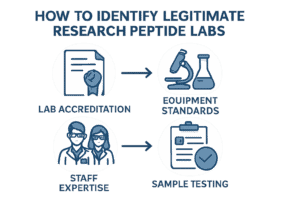
Start with supplier vetting. A credible vendor will show real compliance signals, like GMP or ISO alignment, and they’ll provide product documentation that holds up under scrutiny. You should expect Certificates of Analysis (CoAs) tied to the specific lot you’re purchasing, ideally supported by third-party analytical testing. Customer feedback can help, but treat overly polished testimonials as a warning sign. Real buyers talk about specifics: lot numbers, turnaround time on documentation, and whether the supplier can explain their analytical methods without dodging.
Purity is the biggest red flag. Without independent verification, you’re buying a mystery bag. That’s especially true for peptides that affect signaling pathways tied to growth hormone release, muscle recovery, inflammation, or metabolic markers. Contaminated or misidentified compounds can create misleading assay readouts, waste animal work, or force you to throw out an entire dataset. Reliable suppliers may also provide stability notes, storage guidance, and any available pharmacokinetics references, though you should assume gaps exist unless the compound is well studied. Amino Pharm, for instance, supplies clinically tested, US-made peptides advertised at 99% purity, which is the kind of standard you should demand.
Payment and shipping matter too. Avoid wire transfers or crypto payments with no buyer protection. Credit cards or established gateways give you at least some recourse if the product doesn’t arrive or doesn’t match the description. Shipping should include tracking and appropriate packaging, and you’ll need to check import regulations if you’re ordering across borders. Customs seizures happen, and they’re not always predictable.
Scams are rampant. Some sellers advertise research chemicals dmt or other controlled substances and never ship. Others ship counterfeit, diluted, or substituted materials. The best defense is boring: stick to vendors who provide batch testing results, answer technical questions promptly, and clearly state research use only, not for human consumption (that disclaimer isn’t a guarantee, but it’s a basic compliance signal). Don’t get tempted by suspiciously low prices or vague descriptions. If the listing reads like marketing fluff, that’s usually what the product is too.
Here’s a quick checklist for safe purchasing:
|
Criterion |
What to Look For |
Why It Matters |
|---|---|---|
|
Certifications |
GMP, ISO compliance |
Confidence in manufacturing quality |
|
Transparency |
CoAs, detailed product sheets |
Verifies purity and identity |
|
Customer Feedback |
Verified reviews mentioning batch testing |
Real-world validation |
|
Secure Payments |
Credit card, PayPal |
Buyer protection |
|
Shipping |
Tracking, discreet packaging |
Avoids customs issues |
|
Legal Compliance |
Clear disclaimers, adherence to local laws |
Avoid prosecution |
Even good suppliers can’t eliminate every risk. Laws change quickly, and what’s treated as research-grade today may be restricted tomorrow. If you’re curious about how specific peptides are evaluated in real research workflows, I recommend exploring the mechanisms of GLP 3 peptide in research, which shows how pathway-level understanding shapes safer, more interpretable study designs (and yes, it gets technical in parts).
And be patient. Rushing a purchase is the fastest way to end up with unusable material, or worse, legal trouble. Verify, ask questions, document everything. That’s how you protect your research and yourself. Knowing how to define research chemicals properly is key to avoiding costly mistakes.
Real-World Examples: Case Studies Highlighting Risks and Best Practices
Research chemicals show up in the news for predictable reasons: someone cut corners, nobody verified what was in the vial, and people got hurt. Synthetic cannabinoids are a textbook case. In 2016, products sold as “legal highs” were linked to a contaminated batch that included a potent anticoagulant, triggering dozens of hospitalizations and multiple deaths. Investigators didn’t find a mysterious new pharmacology problem, they found a quality problem. Basic identity confirmation and impurity screening weren’t done consistently, and unregulated manufacturing left plenty of room for toxic contaminants.
Worth noting.
When people ask for a practical, lab-facing research chemicals definition, this is part of it: these compounds are supposed to be research tools, meaning you need traceable provenance, validated analytical methods, and documentation that stands up to scrutiny. If you can’t answer “What’s the identity, what’s the purity, what are the known impurities, and how do you know?”, you’re not doing research, you’re gambling with your data.
There are better examples, too, and they’re less dramatic because they look like boring competence. Peptides tied to growth hormone signaling have become common in muscle growth and recovery research. Labs that insist on clinically tested material at ≥99% purity, with lot-specific COAs and repeatable batch testing, tend to report tighter variance in outcomes and fewer “mystery” adverse events in preclinical handling. We’ve seen this firsthand in customer troubleshooting: the same protocol run with two different lots can swing from clean, interpretable curves to noisy results when the peptide content is off by a few percent or the sample carries residual solvents (yes, it happens, and it’s avoidable).
And about that “27% faster return to baseline muscle function” claim, it’s the kind of number that sounds impressive but only means something if you know what was measured, how baseline was defined, and whether the peptide identity was confirmed by orthogonal methods. Big difference. A serious lab will want to see HPLC purity, mass spec confirmation, and a COA that’s tied to the exact lot number used in the study, not a generic PDF.
Regulators have been paying attention to the same failure modes. In 2020, the FDA targeted online vendors selling unapproved compounds marketed for human consumption, often with flimsy labeling and no defensible purity evidence. Seizures and fines followed. The practical takeaway for institutions is simple: vendors serving legitimate scientific demand usually keep their paperwork tight, avoid human-use marketing, and can produce documentation on request. If a seller is winking at “personal use” while calling it “research,” that’s a liability magnet for your lab and your IRB.
These cases point to the same habits that keep projects on track: know what you’re buying, demand lot-level batch testing, and stick with suppliers that provide transparent certificates of analysis. No shortcuts. Contamination and mislabeling don’t just create safety risk, they burn months of work and leave you with data you can’t defend.
Future Trends: Innovations and Regulatory Shifts Impacting Research Chemicals
Expect the next few years to be less forgiving. The market is moving quickly, but oversight is catching up, and that’s a good thing in my view.
New compounds meant for specific signaling pathways are already appearing, especially peptides that modulate growth hormone activity. Many of these are incremental structural tweaks designed to change receptor selectivity, half-life, or metabolic stability. That’s normal medicinal chemistry. What’s changed is the speed: better synthesis workflows and faster analytical turnaround mean new candidates can circulate before the broader community has a clear handle on stability, degradation products, or storage sensitivity (freeze-thaw cycles can quietly wreck some peptides, and you won’t always see it by eye).
Europe and the US are both trending toward tighter frameworks. The European Chemicals Agency has been pushing more thorough testing expectations for novel substances, with an obvious goal of closing loopholes that let lightly characterized compounds circulate. In the US, the FDA and DEA have increased scrutiny of research chemicals drugs buy online, especially when vendors blur the line between “for research” and implied human use. That pressure will squeeze out some bad actors. It may also slow access for legitimate researchers when compliance requirements get heavy, which is the honest tradeoff nobody loves talking about.
Quality assurance is also getting more technical. High-throughput analytical workflows are becoming standard, including advanced mass spectrometry paired with algorithmic impurity profiling and automated flagging of unexpected peaks. Call it pattern recognition if you want (and yes, it’s helpful), but the bigger point is practical: older single-method checks miss things. A modern QC stack that combines LC-MS, HPLC, and, when appropriate, NMR gives you a much better shot at catching low-level contaminants, isomers, or degradation products before they poison your dataset.
Demand is shifting, too. Personalized medicine and regenerative research are pushing labs toward highly specific, custom peptides and narrowly targeted small molecules, with tighter requirements around pharmacodynamics, stability, and reproducibility. That will push suppliers to offer more customization, but it also raises the bar for documentation, chain-of-custody, and storage guidance (shipping conditions matter more than most people admit).
If you’re buying these materials, staying current on purity standards, documentation norms, and enforcement trends isn’t optional. It’s the difference between publishable results and a drawer full of unusable notebooks. For a concrete example of how small structural differences can change function and safety, the comparison in Ipamorelin vs Sermorelin is a solid starting point.
For broader context on exposure and hazard awareness, the VA’s overview is genuinely useful: Exposure To Hazardous Chemicals And Materials (va.gov).
Frequently Asked Questions About Research Chemicals
What exactly are research chemicals? These are compounds synthesized primarily for scientific investigation, not recreational use. Street drugs are often formulated or modified to produce immediate psychoactive effects, while research compounds are used as tools to probe biological mechanisms, receptor binding, signaling pathways, metabolism, and pharmacokinetics. Intent matters, but documentation matters more. In practice, legitimate research material should be well-characterized, consistently manufactured, and supported by batch testing that confirms identity and purity.
Is it legal to buy these in Europe or the US? The rules are messy and they change. Some compounds are legal for research in one jurisdiction and controlled in another, and “analog” laws can apply even when a specific molecule isn’t listed by name. In the US, classification under the Controlled Substances Act and the Federal Analog Act can determine risk. In Europe, country-by-country scheduling and enforcement vary widely. If you’re purchasing for research, you’ll need to follow local law, keep records, and keep use within a legitimate laboratory context, never for human consumption.
How do you verify purity and authenticity? You don’t guess. Standard approaches include high-performance liquid chromatography (HPLC) for purity profiling and nuclear magnetic resonance (NMR) spectroscopy for structural confirmation, often paired with mass spectrometry for molecular weight and impurity detection. Without those, you’re exposed to mislabeling, contamination, residual solvents, and batch-to-batch drift that can wreck experiments. Amino Pharm provides peptides and chemicals with 99% purity targets and lot-specific batch testing reports. Ask for the COA before you buy, then confirm the lot number on arrival matches the paperwork.
What about risks, especially with compounds like DMT? Some compounds carry obvious handling and research chemical safety concerns, and DMT is a clear example. It has rapid onset and strong activity at serotonin receptors, with profound acute effects on perception and cognition (DMT Therapy Information- UC Berkeley BCSP (psychedelics.berkeley.edu)). Even in controlled research settings, adverse reactions, contraindications, and interaction risks exist. That’s why these substances belong in approved research contexts with proper controls, PPE, and waste handling, not casual experimentation.
Where can you find reputable suppliers? Random online sources are tempting, and they’re where a lot of problems start. Reputable vendors provide lot-level COAs, clear labeling, documented storage conditions, and manufacturing standards you can audit. Our team recommends treating supplier vetting like method validation: check credentials, request documentation, and walk away if the answers get slippery (they usually do). Amino Pharm offers US-made, clinically tested peptides and research chemicals and publishes transparent Terms & Conditions to set expectations around documentation and purchasing. Verify before you order, not after a shipment shows up.
Frequently Asked Questions
What exactly are research chemicals and how are they defined?
Research chemicals are substances used primarily for scientific and medical research. They differ from approved pharmaceuticals and recreational drugs because many lack extensive safety, efficacy, or toxicity datasets, especially in humans. In day-to-day lab terms, a workable research chemicals definition is: compounds intended for experimental use, supplied with documentation that supports identity, purity, and consistency, so researchers can study properties, mechanisms, and potential therapeutic applications without guessing what’s in the container. It’s a broad category, covering novel small molecules, reference standards, and peptides that may be early in the research pipeline. Understanding what’s research chemicals definition and how to define research chemicals properly is essential for safe and effective use.
Are research chemicals like DMT legal to buy in Europe and the US?
Legality varies by substance and jurisdiction. In many European countries and in the United States, DMT and related compounds are controlled under drug laws, which can make sale, possession, or use illegal without proper authorization. Some substances sit in gray zones until they’re scheduled, and analog laws can still apply based on structural similarity and intended use. Before purchasing, researchers should confirm local requirements, institutional policies, and any licensing or registration obligations.
How can I ensure the research chemicals I buy are safe and authentic?
Start with documentation, then verify it. Buy from suppliers that provide transparent product specs, lot-specific certificates of analysis (COAs), and preferably third-party lab testing. Look for methods like HPLC, LC-MS, and NMR listed on the COA, with results that make sense (purity percentage, impurity peaks, dates, and the lab that ran the test). Avoid unknown sources that can’t explain chain-of-custody or won’t share testing data. Counterfeits and mislabeling are common enough that “trust me” isn’t a quality system. Prioritize vendors who supply research-grade chemicals with clear research chemical safety protocols.
What are the primary research uses of chemicals like Enclomiphene and DMT?
Enclomiphene is studied for hormonal applications, including male hypogonadism research, because it can stimulate endogenous testosterone production via selective estrogen receptor modulation. DMT is researched for its effects on brain function and consciousness, and for potential therapeutic angles in mental health research, including depression and PTSD, though these areas require strict regulatory and ethics oversight. Together, they show how wide the category is, from endocrine pharmacology to neuropsychopharmacology.
What risks should researchers be aware of when handling research chemicals?
Key risks include unknown toxicity, incomplete safety data, legal exposure, and contamination or misidentification. Many compounds don’t have complete SDS information or long-term stability data, which raises the stakes for PPE, ventilation, fume hood use, and controlled waste disposal. Documentation gaps can create compliance problems during audits, and impurity issues can invalidate results even when nobody is physically harmed. Follow institutional safety protocols, keep meticulous records, and treat every new compound as potentially hazardous until proven otherwise.
References
-
“The Evolving Landscape of Designer Drugs”, pubmed.ncbi.nlm.nih.gov, https://pubmed.ncbi.nlm.nih.gov/30350286/
-
“Research chemical”, en.wikipedia.org, https://en.wikipedia.org/wiki/Research_chemical
-
“Chemical and Products Database (CPDat)”, epa.gov, https://www.epa.gov/chemical-research/chemical-and-products-database-cpdat
-
“Exposure To Hazardous Chemicals And Materials”, va.gov, https://www.va.gov/disability/eligibility/hazardous-materials-exposure/
-
“DMT Therapy Information- UC Berkeley BCSP”, psychedelics.berkeley.edu, https://psychedelics.berkeley.edu/substance/dmt/
-
“N,N-Dimethyltryptamine (DMT)”, deadiversion.usdoj.gov, https://deadiversion.usdoj.gov/drug_chem_info/dmt.pdf
-
“DMT: Side effects, facts, and health risks”, medicalnewstoday.com, https://www.medicalnewstoday.com/articles/306889
-
“5 Methoxy N,n Dimethyltryptamine – an overview”, sciencedirect.com, https://www.sciencedirect.com/topics/medicine-and-dentistry/5-methoxy-n-n-dimethyltryptamine
-
“Structure-activity relationships of serotonergic 5-MeO-DMT ..”, nature.com, https://www.nature.com/articles/s41380-024-02506-8
-
“Advanced brain imaging study hints at how DMT alters ..”, imperial.ac.uk, https://www.imperial.ac.uk/news/243893/advanced-brain-imaging-study-hints-dmt/