Why Amino Acid Pharmaceuticals Are Revolutionizing Modern Medicine
Here’s a stat that should make any drug developer pause: the pharmaceutical amino acid market cleared $27 billion in 2023 and analysts expect it to approach a doubling by 2030. That isn’t marketing fluff. It’s a signal that amino acid derived actives are moving from “nice to have” to core therapeutic strategy. Amino acid pharmaceuticals aren’t just supplements or nutrition adjacents anymore. In many programs, they’re bona fide active pharmaceutical ingredients (APIs) with defined mechanisms and measurable clinical endpoints.
So what’s different about them? A lot of classic small molecules work by broadly modulating receptors or enzymes, which can be effective but messy. Amino acid based drugs, especially peptides, can be engineered to engage specific signaling pathways tied to muscle protein synthesis, immune modulation, or tissue repair. That specificity often translates to fewer off-target effects and cleaner pharmacology. And yes, pharmacokinetics matters here too, absorption, distribution, metabolism, and excretion (ADME) can look very different depending on size, charge, and formulation. Big difference.
Peptides built from amino acids can also mimic endogenous biology in a way most synthetic scaffolds can’t. Think hormone analogs, receptor agonists, or fragments that influence cytoskeletal dynamics. When I reviewed a peptide impurity profile for a collaborator a few years back, one minor truncation (under 1%) shifted the in vitro potency curve enough to force a repeat run. That’s the level of sensitivity we’re dealing with, highlighting the importance of controlling peptide impurities and ensuring peptide stability.
The research surge isn’t hard to explain. These compounds are versatile. They can be building blocks for complex peptide therapeutics, or they can stand alone as small molecules used in metabolic pathways. Drug discovery teams are pushing them into metabolic disease, neurodegeneration, oncology, and targeted delivery, with clinical trials steadily filling in the “does it work in humans?” gap. And while the headlines often fixate on performance enhancement, the more interesting work is in cachexia, wound healing, and recovery after major illness or surgery (less flashy, more meaningful).
This isn’t just academic chatter. Demand for high-purity peptides and amino acids from trusted suppliers like Amino Pharm reflects a real shift in procurement standards. These compounds live or die by batch testing and analytical verification, identity, purity, residual solvents, water content, stability. Modern medicine is moving past blunt instruments. These APIs can act more like a scalpel than a sledgehammer, when they’re made and characterized properly, ensuring amino acid drug purity.
Fundamentals: What Are Amino Acid Pharmaceuticals and How Do They Work?
Let’s define terms before the jargon gets out of hand. Amino acid pharmaceuticals include single amino acids and short chains called peptides, designed and synthesized for therapeutic use. At the chemistry level, amino acids are organic molecules with both an amino group (-NH₂) and a carboxylic acid group (-COOH). The side chain (the “R group”) is where the personality lives, it drives charge, polarity, and how the molecule behaves in water, membranes, and binding pockets.
In drug design, these molecules aren’t chosen at random. They’re grouped by properties that actually change performance: essential vs. Non-essential, polar vs. Non-polar, acidic/basic vs. Neutral. Those labels sound like textbook trivia until you’re trying to keep a peptide soluble at physiological pH or prevent it from sticking to plasticware. Classification affects solubility, receptor binding, and metabolic stability. For example, positively charged residues like lysine can strengthen binding to negatively charged receptor regions, which can help when you’re aiming at a specific signaling axis. This amino acid classification is foundational to understanding their behavior in drug design and peptide drug design.
How do these therapeutics work once they’re in the body? Usually through mechanisms tied to cellular communication and metabolism. Many act as ligands that activate or block receptors, modulate enzyme activity, or serve as precursors for bioactive molecules. Some peptides mimic endogenous hormones that stimulate growth hormone secretion, which can shift muscle protein turnover and recovery dynamics. But they’re not “magic,” they’re chemistry meeting physiology, and the results depend on dose, route, and patient context.
Pharmacokinetics is where the trade-offs show up fast. Molecular size and polarity influence how quickly a compound is absorbed and cleared. Smaller amino acid derivatives may diffuse quickly but clear quickly too, short half-life, frequent dosing. Peptides can be engineered to resist enzymatic degradation through sequence choices, terminal modifications, cyclization, or other chemistry, which can extend activity. And that’s exactly why batch testing and analytical methods matter so much: they confirm purity and stability, and they catch subtle changes that can alter bioactivity and amino acid stability.
A concrete example helps. The tb500 peptide mechanism and applications explained walks through how a research-grade peptide derived from amino acids supports tissue repair by modulating actin dynamics in cells. That’s a specific, testable mechanism, not vibes. And if you’re thinking about combination approaches (because many researchers are), the discussion of optimal ratios for bpc 157 and tb 500 is a useful starting point for how people structure synergistic protocols, with the obvious caveat that “combination” still needs careful controls and reproducible endpoints.
Bottom line: these drugs operate at the molecular level, adjusting the body’s native systems with a degree of specificity that many traditional small molecules struggle to match. They aren’t cure-alls. They also aren’t generic. If you understand the biochemical functions and molecular mechanisms, including enzyme modulation, the momentum behind this class makes a lot more sense, especially when considering amino acid drug mechanisms.
Therapeutic Applications: From Metabolic Disorders to Targeted Drug Delivery

These compounds have earned a real place in medicine, far beyond their role as protein building blocks. Their applications range from correcting metabolic defects to acting as targeting elements in drug delivery systems. And some of the therapies people now consider “standard of care” lean heavily on amino acid chemistry, even if patients never hear that part.
Take enzyme related metabolic disorders. Phenylketonuria (PKU) is the classic example most clinicians learn early, impaired phenylalanine metabolism leads to toxic accumulation and, without management, severe neurologic injury. Modern care has historically relied on diet, but pharmaceutical strategies increasingly focus on pathway intervention, including enzyme substitution or enzyme activity modulation, and amino acid grade inputs matter because stereochemistry and impurity profiles can change biological behavior. Worth noting, especially in enzyme substitution therapy.
Neurotransmitter precursors are another well established use case. L-DOPA, a dopamine precursor, remains foundational in Parkinson’s disease management because it crosses the blood brain barrier and is converted into dopamine in the CNS. That’s a clean mechanistic story: replace what’s missing, then manage peripheral conversion with adjuncts. Tryptophan and downstream metabolites are also being studied for roles in mood regulation and sleep, though the data quality varies by indication and study design, so it’s smart to read beyond abstracts.
Cancer therapy is where peptides get especially interesting. Short amino acid chains can be designed to bind tumor associated targets, disrupt signaling, or deliver payloads more selectively than many cytotoxics. Some experimental agents aim at angiogenesis, blocking the blood vessel formation tumors rely on. But I’ll say this plainly: “more precise than chemotherapy” is often true in concept, yet it doesn’t guarantee better outcomes in every tumor type. Biology rarely cooperates that neatly.
Personalized medicine fits naturally here because sequence changes can tune binding, half-life, and tissue distribution. Modify a peptide by a residue or two, add a stabilizing modification, change the net charge, and you can shift exposure profiles in ways that matter clinically. Recent work on growth hormone related peptides, for example, shows how pharmacokinetic tuning can influence recovery and muscle wasting endpoints in disease settings, not just in sports adjacent conversations. And yes, the line between “research interest” and “clinical utility” is still being drawn in several of these areas, especially as targeted therapy peptides gain traction.
All of this complexity raises the bar for quality. Batch testing and analytical characterization aren’t paperwork exercises, they’re what keeps studies interpretable. Amino Pharm, for example, supplies research-grade peptides reported at over 99% purity, made in the US under strict quality controls. That level of precision matters because small structural variations, deamidation, oxidation, truncations, can materially change receptor activity and affect amino acid peptide drugs’ effectiveness.
Looking ahead, the therapeutic reach will likely expand as peptide therapeutics mature and as we map signaling pathways with better resolution. If you want the mechanistic details, don’t miss our piece on exploring the mechanisms of glp 3 peptide in research. The potential isn’t hype. It’s already changing how teams approach complex disease biology.
Manufacturing Challenges and Solutions in Amino Acid Pharmaceutical Production
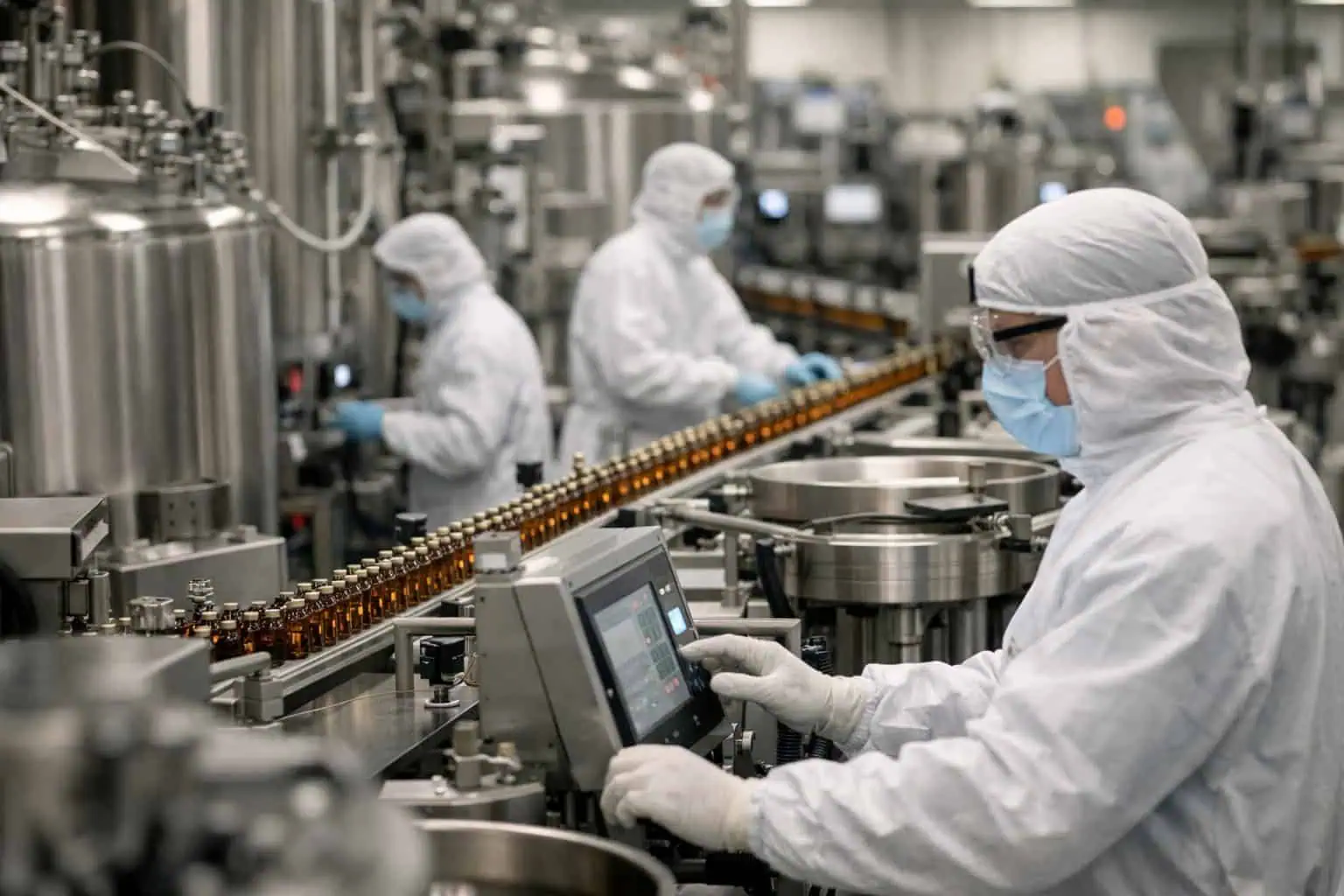
Manufacturing amino acid pharmaceuticals isn’t easy. It’s chemistry, biology, and quality systems all pulling on the same rope, and every step can introduce variability. The two main production routes, chemical synthesis and biotechnological fermentation, each come with predictable pain points.
Chemical synthesis offers tight control over sequence and stereochemistry, which matters because the wrong stereoisomer can be inactive or harmful. But long peptide synthesis is slow, costly, and error-prone. Incomplete coupling, side reactions, and protecting group issues can create impurities that are hard to remove, so rigorous batch testing becomes non-negotiable. Complexity scales the headache. Some residues are also sensitive to heat or solvent conditions, leading to degradation or unwanted modifications that only show up later in stability data.
Fermentation, by contrast, uses engineered microbes to produce amino acids and peptides at scale. It can be more sustainable because it relies on renewable feedstocks and milder conditions. But it isn’t a free pass. Yield consistency can drift. Strains can mutate or lose productivity over time, and process control becomes its own discipline. Stereochemistry is often simpler because biology tends to produce L-amino acids, but downstream purification can turn into the bottleneck. After fermentation you’re separating your target from a complex mixture of host cell proteins, metabolites, salts, and closely related analogs.
Stability is another recurring hurdle. Many of these compounds degrade with moisture, heat, or light. Formulation work ends up being as important as synthesis. Some peptides aggregate or adsorb to surfaces during storage and handling, so manufacturers have to improve excipients, containers, and cold chain logistics (and yes, a “minor” shipping delay can ruin a sensitive lot). Maintaining amino acid stability is critical for therapeutic efficacy and peptide stability.
Solutions exist, but they’re not glamorous. Solid-phase peptide synthesis with automation reduces human error and improves reproducibility. Recombinant DNA approaches can produce peptides with specific post-translational modifications that improve stability or activity. Analytical methods like HPLC and mass spectrometry are central for in-process control and final release, they catch purity drift, confirm identity, and flag degradation early.
Aminopharm, for instance, addresses these constraints by pairing fermentation capabilities with strict chemical purity standards. Their peptides are research-grade, clinically tested, and consistently above 99% purity. That outcome reflects process discipline and quality control, not luck.
Still, don’t expect these products to be cheap or simple. Synthesis complexity, stereochemical requirements, and stability constraints make production demanding. The payoff is real, though. Without manufacturing advances, many therapies for metabolic disorders, recovery suppor
t, or tumor targeting simply wouldn’t be available at the scale or quality that clinical research requires.
If you want a closer look at how these peptides behave in cells, you might find value in exploring the mechanisms of glp 3 peptide in research, which connects production quality to biological function in a way that’s easy to miss if you only read spec sheets.
Ensuring Research-Grade Quality: Analytical Techniques and Regulatory Standards
When you’re working with this class of therapeutics, the quality bar is unforgiving. Purity, structural integrity, and lot-to-lot consistency determine whether your data is interpretable or just expensive noise. Research-grade quality is the baseline. Anything less is a liability.
Start with the critical quality attributes. Purity is usually first, and for many peptides, 99%+ is the expectation because trace contaminants can skew receptor assays or cell signaling readouts. Identity confirmation is just as important: you need to know the molecule is exactly what the label claims. Then come stability, moisture content, counterion composition, and residual solvents, all of which can influence ADME behavior and downstream bioactivity, including amino acid drug absorption. A small deviation can flip a result from “signal” to “artifact.”
The analytical toolkit has matured quickly. HPLC remains the workhorse for purity and quantification, separating components into reproducible peaks that can reveal impurities at fractions of a percent. But purity alone doesn’t prove identity. Mass spectrometry pairs naturally with HPLC, confirming molecular weight and providing fragmentation patterns that support sequence verification. In practice, that LC-MS combination is what many teams trust most for release decisions.
NMR spectroscopy adds another layer. It can confirm backbone structure, but it also reveals conformational behavior in solution, cis-trans isomerization, and dynamics that influence receptor engagement. Amino acid analysis, often via ion-exchange chromatography after hydrolysis, checks composition and can catch substitutions or degradation that might slip past a single purity metric. And yes, you’ll sometimes see disagreements between methods, which is why orthogonal testing is standard in serious programs.
Regulatory expectations are evolving and, frankly, complicated. If materials are moving toward clinical use, agencies like the FDA and EMA expect thorough documentation of manufacturing controls and quality systems. GMP principles apply, even when the product starts as “research-grade,” because reproducibility and contamination control aren’t optional. Batch testing is mandatory in any credible supply chain. Each lot is typically assessed for identity, purity, potency related attributes, and stability indicators before release.
For researchers, supplier choice can make or break a project. There’s a big difference between generic chemical sources and clinically tested, US-made peptides with documented batch testing and traceable analytical reports. Amino Pharm, for example, provides peptides with 99% purity and full analytical traceability, which is what you want when assay variability is already high enough. And I’ll be mildly opinionated here: if you’re spending weeks on cell work and animal studies, saving a few dollars on poorly characterized material is a bad bet.
Comparing Amino Acid Pharmaceuticals with Conventional Small-Molecule Drugs
How do amino acid pharmaceuticals compare with conventional small-molecule drugs? The differences start at the molecular level and show up everywhere else, delivery route, half-life, specificity, and formulation constraints.
Small molecules are typically compact and often sufficiently nonpolar to cross membranes readily. Their ADME profiles are frequently predictable and well mapped, which is one reason oral dosing is so common. Amino acid based drugs and peptides tend to be larger, more polar, and more vulnerable to enzymatic degradation in the gut and bloodstream. Oral delivery is harder, half-life can be shorter, and injectable or other parenteral routes are often required, which complicates dosing and patient adherence.
But the trade-off can be worth it. These therapeutics often offer higher target specificity because they can mimic endogenous ligands or engage defined signaling pathways with tight binding. That can reduce off-target activity compared with many small molecules. Growth hormone related peptides are a simple example: they can influence recovery and muscle related endpoints through receptor mediated pathways without some of the broader systemic toxicity profiles seen with less selective agents. But specificity doesn’t automatically mean “no side effects,” it just changes the risk profile.
Stability remains a persistent challenge. Peptides can aggregate, oxidize, deamidate, or lose bioactivity if storage and handling aren’t controlled. Their pharmacokinetics may require frequent dosing or modified-release strategies, which adds cost and operational complexity. Small molecules are often easier to formulate and more forgiving in distribution, which is why they still dominate many therapeutic areas.
|
Feature |
Amino Acid Pharmaceuticals |
Small-Molecule Drugs |
|---|---|---|
|
Molecular Size |
Larger, often peptides or small proteins |
Small, low molecular weight |
|
Stability |
Prone to enzymatic degradation, sensitive |
Generally stable chemically |
|
Delivery |
Mostly injectable or specialized formulations |
Oral or various routes, easier |
|
Specificity |
High, targets signaling pathways precisely |
Moderate, sometimes off-target effects |
|
Pharmacokinetics |
Short half-life, complex metabolism |
More predictable ADME profiles |
|
Toxicity |
Lower systemic toxicity |
Potential for broader side effects |
And if you want a concrete case study in why certain amino acid peptide drugs perform so well, semaglutide is a good one. Patients using semaglutide peptides understanding mechanism of semaglutide research peptide often see benefits that many small molecules struggle to match, largely because of receptor specificity and engineered pharmacokinetic behavior.
The takeaway is straightforward. This class isn’t a universal replacement for small molecules, but it fills important niches where biological mimicry and target precision outweigh convenience. You get lower off-target risk in many cases, and you pay for it in stability and delivery constraints. Knowing those trade-offs early makes study design, and eventual clinical translation, a lot less painful.
Future Directions: Innovations and Research Trends in Amino Acid Pharmaceuticals
What’s next for amino acid pharmaceuticals? The category is moving fast, and not always in the directions people expect.
Peptides, which are built from amino acids, are getting serious attention well beyond “classic” hormone analogs. One of the most active research threads is peptide-based vaccines. Instead of presenting a whole pathogen or a large protein antigen, these candidates use short, defined peptide epitopes engineered to provoke a specific immune response. In theory, that tighter design can reduce off-target immune effects and improve tumor antigen targeting in oncology settings. In practice, it’s complicated. Peptides can be cleared quickly, and immunogenicity depends heavily on formulation, adjuvants, and HLA presentation. Worth noting.
Researchers are also testing amino acid derivatives as helpers in gene therapy workflows, for example as parts of delivery systems or as pathway modulators that influence uptake and intracellular trafficking. You’ll see this discussed alongside lipid nanoparticles, cell-penetrating peptides, and receptor-targeted conjugates. The promise is real, but so are the constraints: small changes in charge, stereochemistry, or linker chemistry can swing biodistribution and toxicity in ways that don’t show up until in vivo work.
AI and machine learning are now routine in early-stage drug design, especially for peptide therapeutics. Computational models can screen sequence variants for predicted binding affinity, protease susceptibility, solubility, and basic pharmacokinetic behavior before anyone orders reagents. That saves time and money, and it reduces dead-end synthesis. But the models aren’t magic, and anyone who’s watched an in silico “top hit” fail a simple stability assay knows the feeling (it’s humbling). Our team has seen candidates with beautiful predicted receptor selectivity degrade in hours once exposed to common serum proteases, so wet-lab confirmation still does the real decision-making.
Some of the more interesting work targets endocrine pathways, including growth hormone signaling, with peptides designed to bias receptor activation while limiting off-target activity. The goal is straightforward: keep the biology you want, avoid the biology you don’t. Big difference. Even then, pharmacokinetics can be unforgiving. Half-life extension strategies like PEGylation, lipidation, albumin binders, or sequence cyclization can help, yet each comes with tradeoffs in potency, immunogenicity risk, and manufacturability.
Manufacturing is changing too, partly because sustainability is becoming a procurement requirement rather than a nice-to-have. Traditional peptide synthesis can be solvent-heavy and wasteful, especially at scale, and the E-factor can look ugly once you tally protecting groups, coupling reagents, and purification steps. Green chemistry approaches focus on reducing solvent use, improving atom economy, and replacing harsh reagents where possible. Enzymatic synthesis and biofermentation are gaining traction as cleaner routes for certain amino acids and intermediates, though scale-up and batch-to-batch consistency remain the hard parts of amino acid synthesis.
Amino Pharm, for example, focuses on US-made peptides with 99% purity produced under strict analytical methods. That’s a solid baseline. And yes, I’m mildly opinionated here: if a supplier can’t show you the actual analytical package (HPLC trace, MS confirmation, and a clear CoA tied to a batch ID), they shouldn’t be selling “research-grade” anything.
This mix of computational design, new therapeutic roles, and cleaner manufacturing isn’t hype. It’s the direction the field is taking. The challenge is staying honest about validation. Predictions and early assays are useful, but reproducible batch testing, stability data, and pharmacokinetic studies are what turn promising molecules into reliable research compounds you can trust, especially as clinical trials amino acid drugs continue to expand.
Frequently Asked Questions About Amino Acid Pharmaceuticals
What exactly are amino acid pharmaceuticals?
They’re therapeutic agents built from amino acids, peptides, or modified amino acid derivatives that influence biological function. Some are simple, single, amino acid drugs used clinically for defined metabolic needs, while others are complex peptide therapeutics designed to hit specific receptors, enzymes, or signaling pathways.
Are amino acid pharmaceuticals safe for human use?
Many commercially available peptides and amino acids sold online are intended for research use only, not human administration. “Research-grade” typically means the supplier is tracking identity and purity with batch testing, but it doesn’t mean the material is approved for treatment. Clinical safety requires controlled trials, validated manufacturing under appropriate GMP standards, and regulatory review.
How do amino acid drugs affect muscle growth and recovery?
Certain peptides can influence growth hormone release or downstream anabolic signaling, which may affect muscle protein synthesis and recovery biology. But responses vary by sequence, dose, route of administration, and individual physiology. And pharmacokinetics matters a lot here, a peptide that looks active in vitro may never reach relevant tissue concentrations in vivo without a delivery strategy.
What’s the difference between peptides and amino acid pharmaceuticals?
Peptides are chains of amino acids. The broader category includes peptides, plus single amino acids used as drugs, non-natural amino acids, and chemically modified derivatives (for example, stabilized analogs or conjugates) designed to change receptor binding, half-life, or tissue distribution.
Where can I find reliable peptides for research?
Aminopharm offers clinically tested peptides with 99% purity, made in the US, tailored for rigorous research. For those interested in muscle applications, exploring the best muscle building peptides for athletes is a solid start. Just keep your standards high: ask for a batch-specific CoA, confirm the analytical methods used (HPLC and mass spectrometry are common), and check whether the supplier can speak clearly about storage conditions and stability.
How is quality ensured in these compounds?
Quality control usually comes down to identity, purity, and consistency. That means analytical verification (often HPLC for purity profiling and MS for molecular weight confirmation), stability checks under defined storage conditions, and batch-to-batch documentation so results are reproducible across studies. If you’re running sensitive assays, even small impurity peaks can skew outcomes, especially in receptor binding or cell-based functional readouts.
If you want to dig into supply chain challenges or production trends, this detailed analysis on Analyzing the Vitamin and Amino Acid Supply Chain (ifeeder.org) gives a solid overview.